What front desk operations cover
Front desk operations are everything the reception team does to take a guest from a booking to a paid bill. In an independent hotel that is usually a small team, sometimes one person per shift, doing five jobs at once: answering booking calls and messages, checking guests in and out, moving rooms, keeping each guest’s bill up to date and minding the cash drawer.
None of these jobs is hard on its own. What goes wrong is the gap between them: a booking taken on the phone that never reaches the register, a room given before housekeeping has finished it, a restaurant bill that misses the folio, or a drawer handed over without a count. A good front desk routine closes those gaps in the same order every day.
A day at the desk, hour by hour
Every hotel’s hours differ, but the shape of the day is the same almost everywhere. Here is a typical day for a hotel with a noon check-out and a 2 p.m. check-in.
| When | What the desk does |
|---|---|
| Start of the morning shift | Count the drawer you take over, read the night’s handover note, print or open Arriving today and Leaving today. |
| Morning | Check-outs: settle folios, take keys back, tell housekeeping which rooms are free. |
| Late morning | Agree with housekeeping which rooms are needed first for today’s arrivals. |
| Midday | Answer booking requests, confirm tomorrow’s arrivals, follow up guests overdue to leave. |
| Afternoon | Check-ins, starting with guests whose rooms are ready. Handle room moves and requests. |
| End of each shift | Count the drawer, write the handover note, hand over open problems by name. |
| Evening | Late arrivals, restaurant bills charged to rooms, guests asking to stay longer. |
| Night | Sort the last arrivals, close the cash shifts, run the Night audit. |
Start with Arriving today and Leaving today
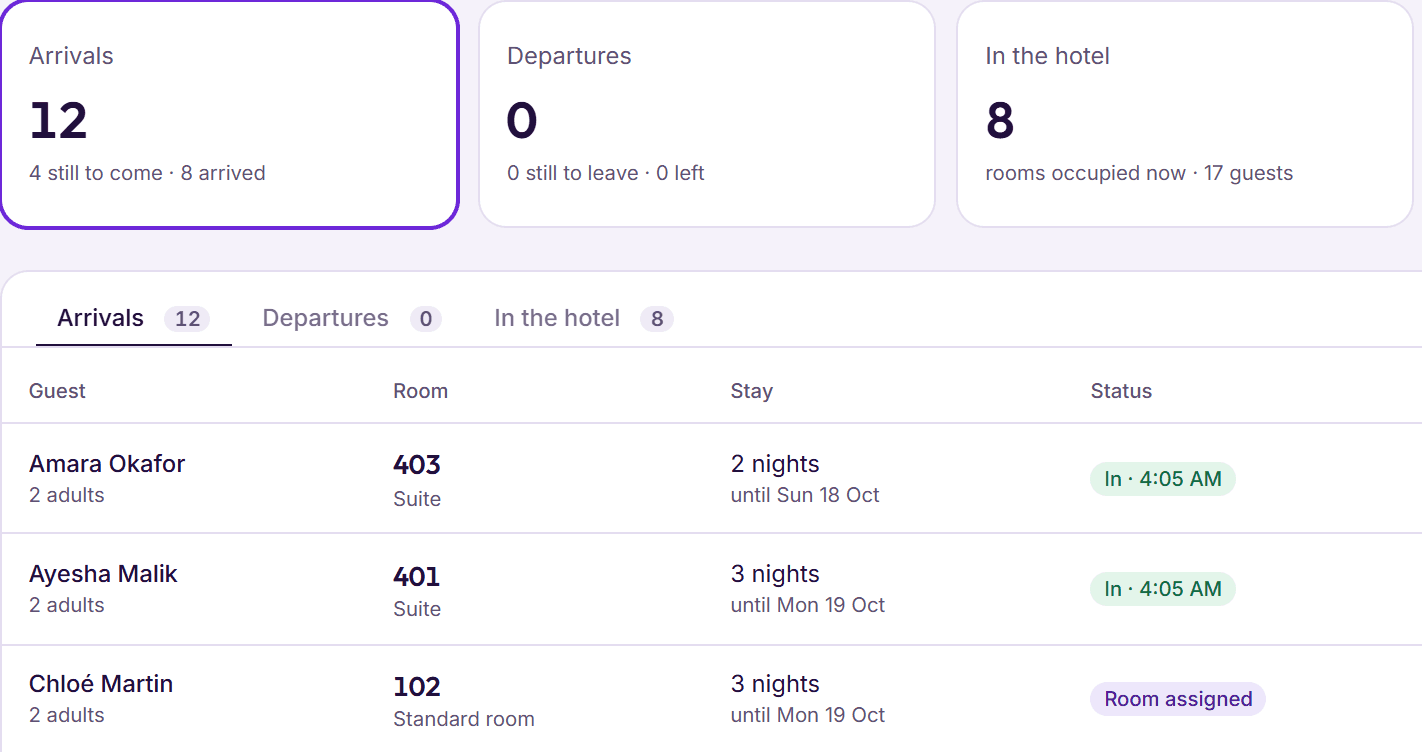
The two lists that run the desk are the arrivals and the departures for the hotel date. In BedKeys they are called Arriving today and Leaving today. Before the first guest comes down, the person on shift should know how many of each there are, which arrivals have no room yet, which ones have paid an advance, and which guests leaving have a balance to settle.
- Arrivals with special requests: a cot, an early check-in, a quiet room. Pass them to housekeeping now, not at 2 p.m.
- Arrivals with no advance: confirm them by phone or message if your rules ask for one.
- Departures who owe money: know the amount before the guest is at the desk with a taxi waiting.
- Company stays: check which charges the company pays and which the guest pays, so nobody argues at check-out.
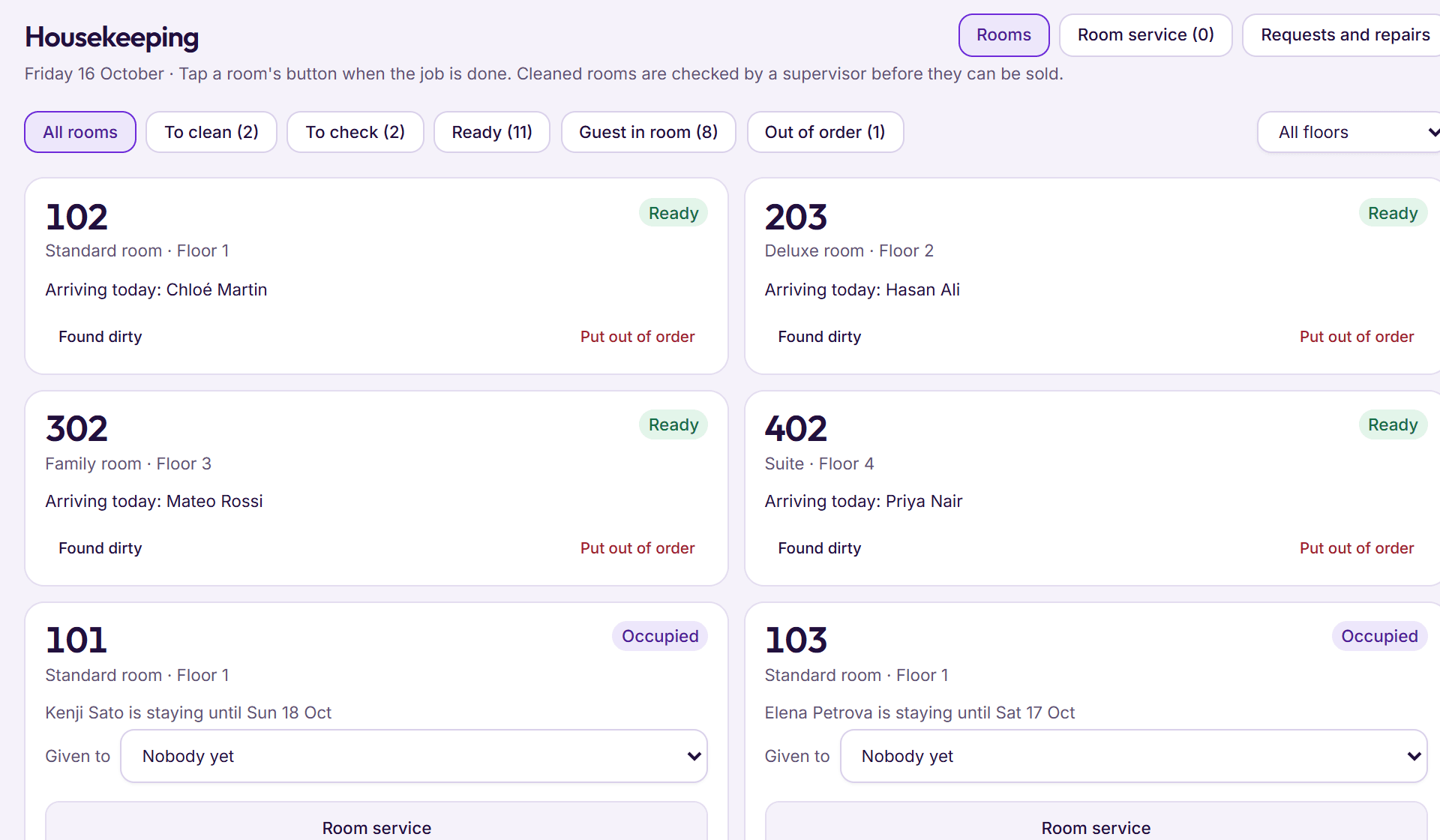
Agree the order of rooms with housekeeping early. Rooms with a guest arriving today should be cleaned first, then the rest. The housekeeping checklist and daily workflow covers the housekeeping side of that conversation.
Taking bookings at the desk
Bookings reach the desk by phone, by message, from booking sites, from the hotel’s own website and from guests who walk in. Whatever the source, a booking needs the same few things before it is saved: the dates, the room type, the rate, the guest’s name and a way to reach them, and what has been paid.
Before you save a booking
- The dates and the number of guests are read back to the guest.
- The guest has heard the total price for the stay, with tax, not just the nightly rate.
- The cancellation rules for the rate have been explained in one sentence.
- A phone number or email is on the booking, so the hotel can confirm or follow up.
- Any advance payment is recorded with a receipt, as cash, card, bank transfer or wallet.
- Returning guests are found by name or phone, so their profile isn’t duplicated.
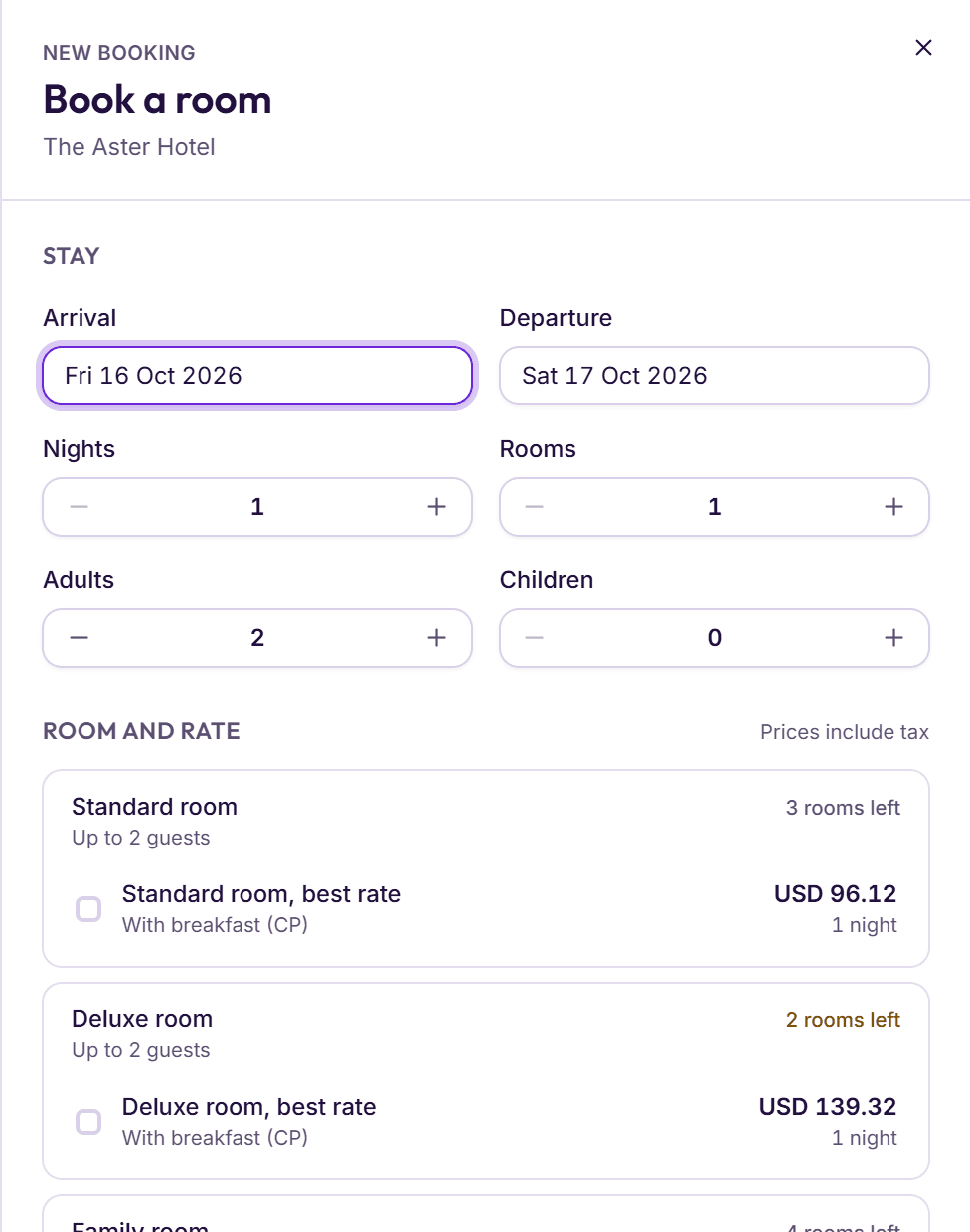
Quote the total, not the nightly rate. A guest who hears “$120 a night” and then sees nearly $400 for three nights with tax at check-out feels misled, even though nothing was wrong. Saying the total once, at booking, saves that conversation.
Check-in: only ready rooms, ID and an advance
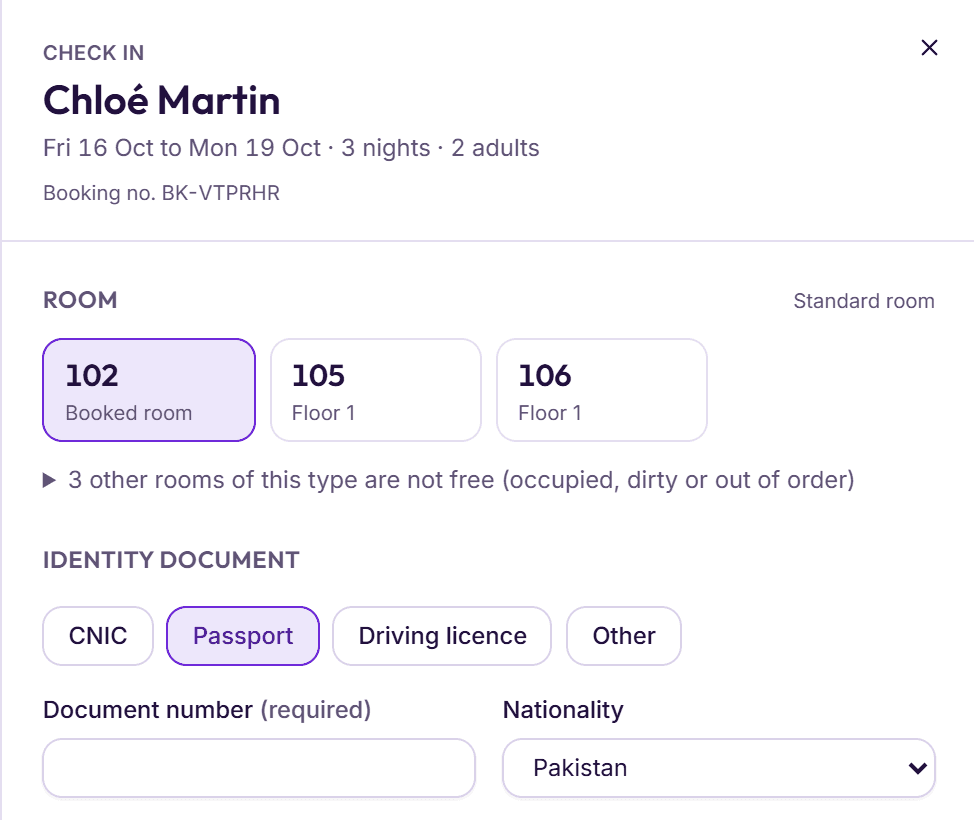
Check-in is the guest’s first impression of the hotel and the hotel’s best chance to get the paperwork right. It has three parts: the right room, the guest’s identity, and the money. The room must be ready, not just empty. The guest’s ID is recorded and the registration card signed. And any advance payment, plus anything still to pay, is clear before the key is handed over.
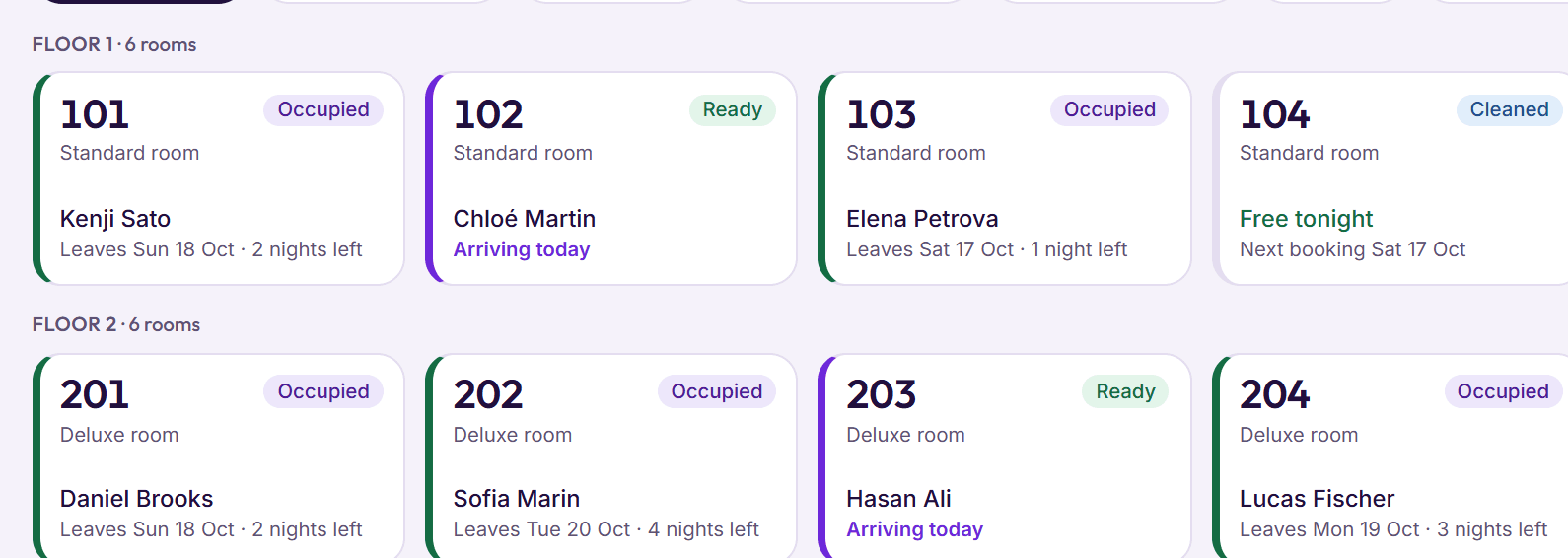
Giving a room that hasn’t been checked by housekeeping is the most common cause of a bad first five minutes: a towel missing, a bed not made, last night’s guest’s bottle under the desk. If no room is ready, offer the guest a seat, a drink or the luggage room, and give a time. The full routine is in the hotel check-in procedure, and what each room status means is in hotel room status codes explained.
Room moves and changes to a stay
Guests change rooms for real reasons: the air conditioning fails, a family wants rooms side by side, a guest asks for a bigger room. Guests change their dates too, staying a night longer or leaving a day early. Each change touches the price, and the price is where mistakes hide.
Agree the price first
A move to a dearer room type is either an upgrade at the same price or a charge at the new rate. Decide which before the guest moves, and tell them.
Record the reason
“Air conditioning broken in 204” or “Guest asked for a sea view.” A move with no reason looks the same as a favour to a friend.
Tell housekeeping
The old room now needs cleaning, and the new one must be ready before the guest walks in.
Check the folio
The nights from the move on should be charged at the agreed price, on the same folio.
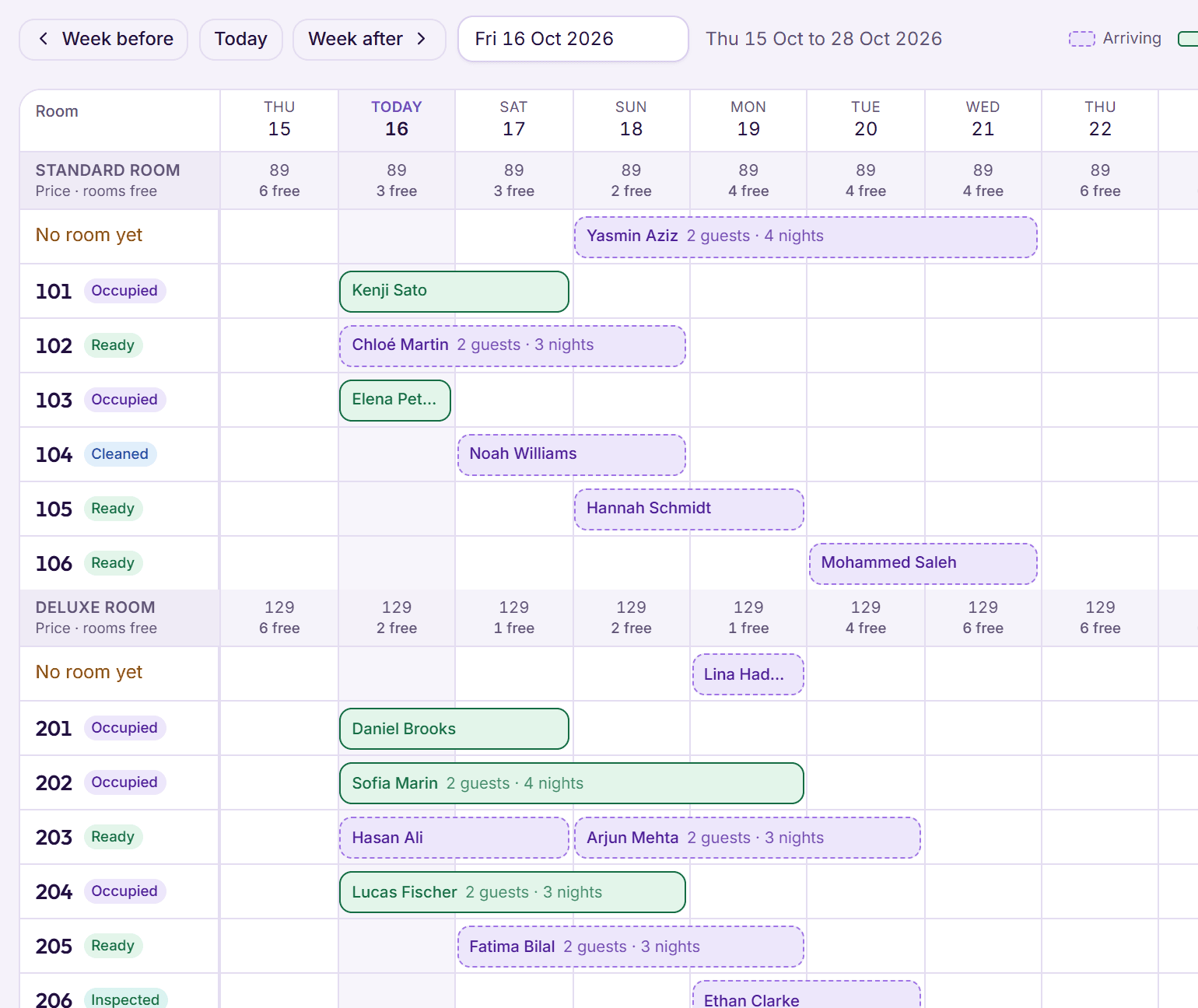
A broken room should come off sale straight away, marked Out of order with a reason, so nobody books a guest into it tonight.
Folios: the bill that runs through the stay
A folio is the running bill for a stay: every charge and every payment, with the balance. It is opened at check-in and closed at check-out, and in between everything the guest owes goes on it: room nights, the restaurant, laundry, the minibar, an airport pickup.
- Add charges when they happen. A laundry bill written on a slip and added at check-out is a laundry bill that gets forgotten.
- Restaurant bills go on the room only while the guest is checked in. Check the name and room number before charging.
- Correct, don’t delete. A wrong charge should stay on the folio crossed out, with the reason, so the history is still there.
- Know who pays. A company may pay the room nights while the guest pays the restaurant. Decide it at check-in, not at check-out.
- Read the balances every day. A guest owing $900 on the fifth night of a stay is a conversation to have now, not on the last morning.
Folios are also where most of a hotel’s quiet losses happen: discounts with no reason, charges never added, guests leaving with a balance. Hotel revenue leakage lists the ten most common ones.
Check-out: read the bill together
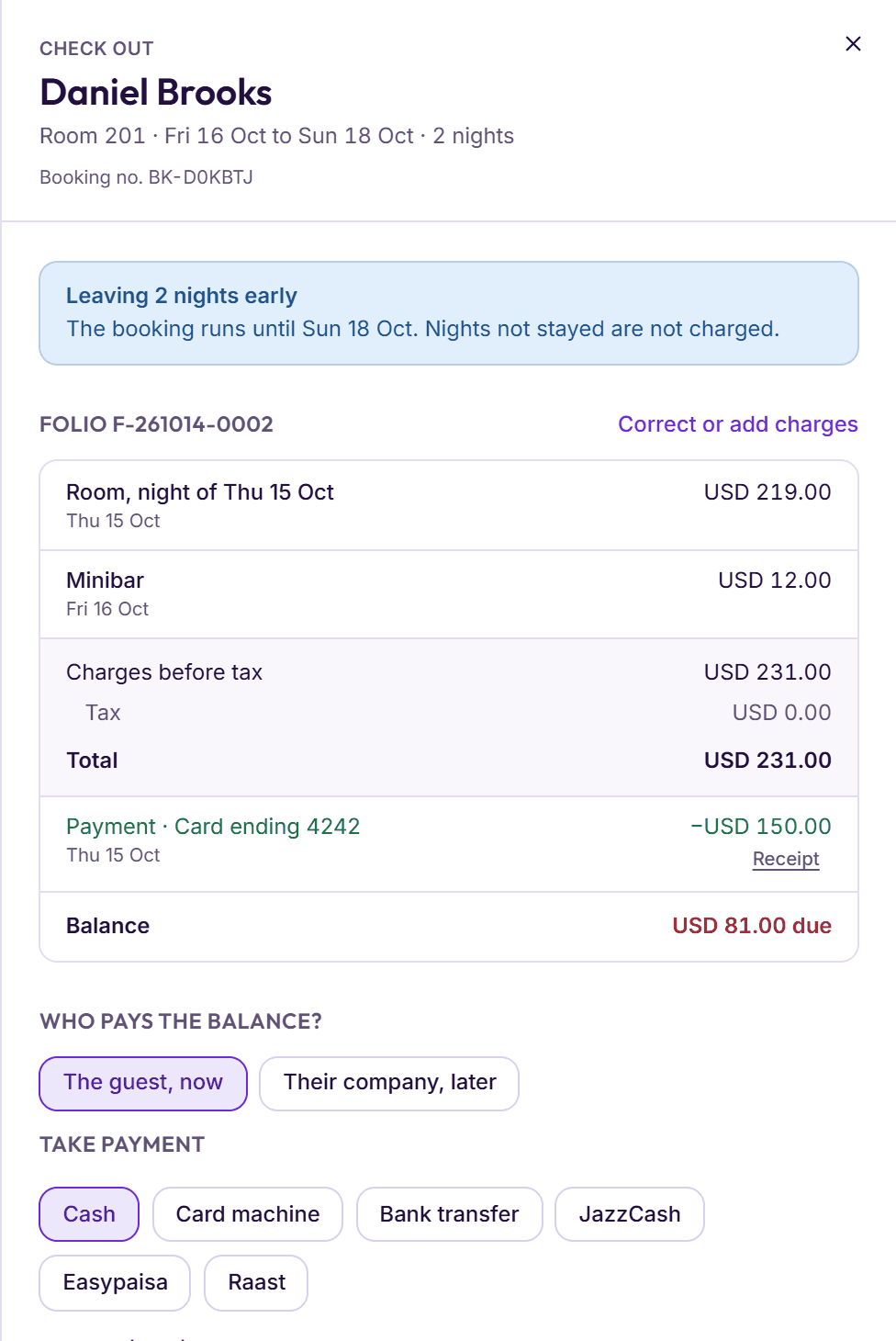
A good check-out takes a few minutes because the folio is already complete. The desk reads it with the guest, takes payment for the balance, and makes sure the balance is zero before the guest leaves.
At check-out
- Ask if anything was used this morning: minibar, breakfast, a late laundry item.
- Show the guest the folio and go through anything they question.
- Take payment for the balance, or move it to the company’s account if the company pays.
- Check the balance is zero. A guest in credit gets their money back first.
- Charge a late check-out fee only if your rules set one and the guest agreed to it.
- Take the key back and tell housekeeping the room is free.
- Thank the guest by name, and ask how the stay was.
The shift handover
Most desks change shift two or three times a day. Each handover has two parts: the cash and the open problems.
The cash: the person leaving counts their drawer before they go, the shortfall or overage is written down with a reason, and the person arriving counts what they take over. One drawer, one person, one shift. The full routine, with a printable checklist, is in the front desk cash handover guide.
The open problems: a short note, by room, of anything the next shift must follow up. “Room 112 wants a taxi at 6 a.m.” “Room 305 disputes the minibar charge; the manager will call.” “Arrival for room 208 paid an advance of $100 by bank transfer, not yet seen in the account.” A note that names the room and the next step is worth more than a long story.
The Night audit closes the day
The desk’s day ends with the Night audit, the close that settles who arrived, who left, what each room earned and what cash was taken. Every arrival is checked in, moved to new dates or marked Did not arrive. Every departure is checked out or extended on purpose. Every cash shift is counted and closed. Then the night’s room charges go on each in-house guest’s folio and the hotel date moves on.
If the desk has done its job through the day, the Night audit takes minutes. If it hasn’t, the audit is where the loose ends show up. The Night audit guide has a checklist for the night shift.
Common front desk mistakes
- Two registers. A paper book at the desk and a system on the computer will disagree by the end of the week. Pick one.
- Rooms given on trust. “It should be clean by now” is how a guest walks into an unmade room. Check the status, every time.
- Prices changed at the desk with no reason. A discount should carry a reason and a name, or the owner can’t tell a good deal from a lost night.
- Charges saved for later. Every slip of paper waiting to be added to a folio is a charge that may never be.
- Shared drawers. When two people work one drawer, a shortfall belongs to nobody.
- No-shows left as arrivals. A guest who didn’t come should be marked Did not arrive at the end of the day, so the room counts as free and any fee can be charged.