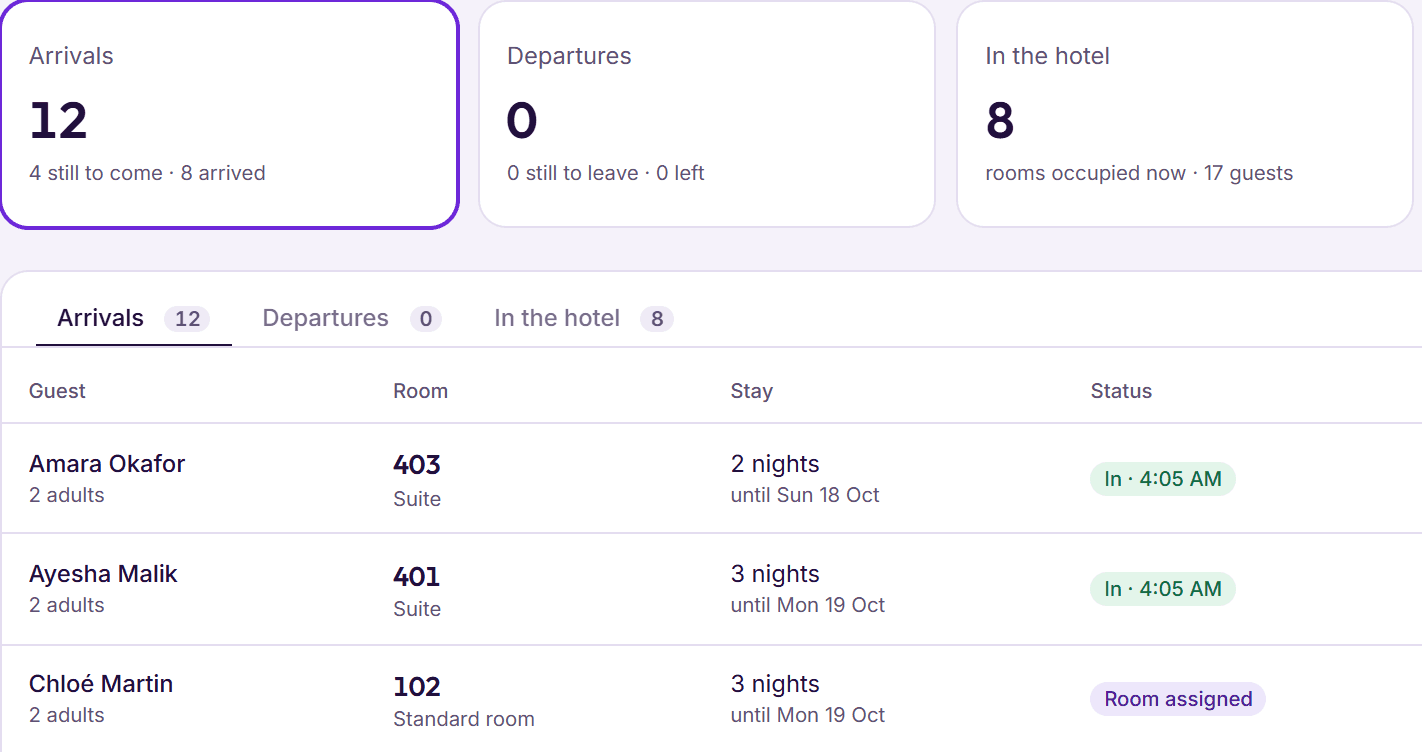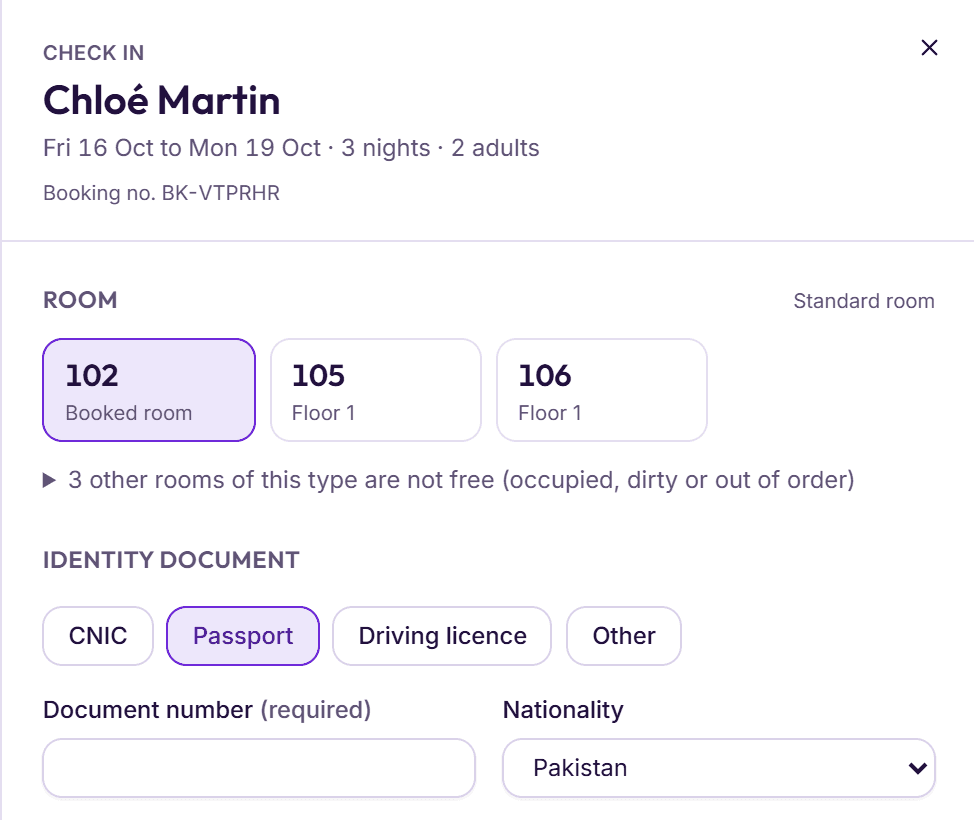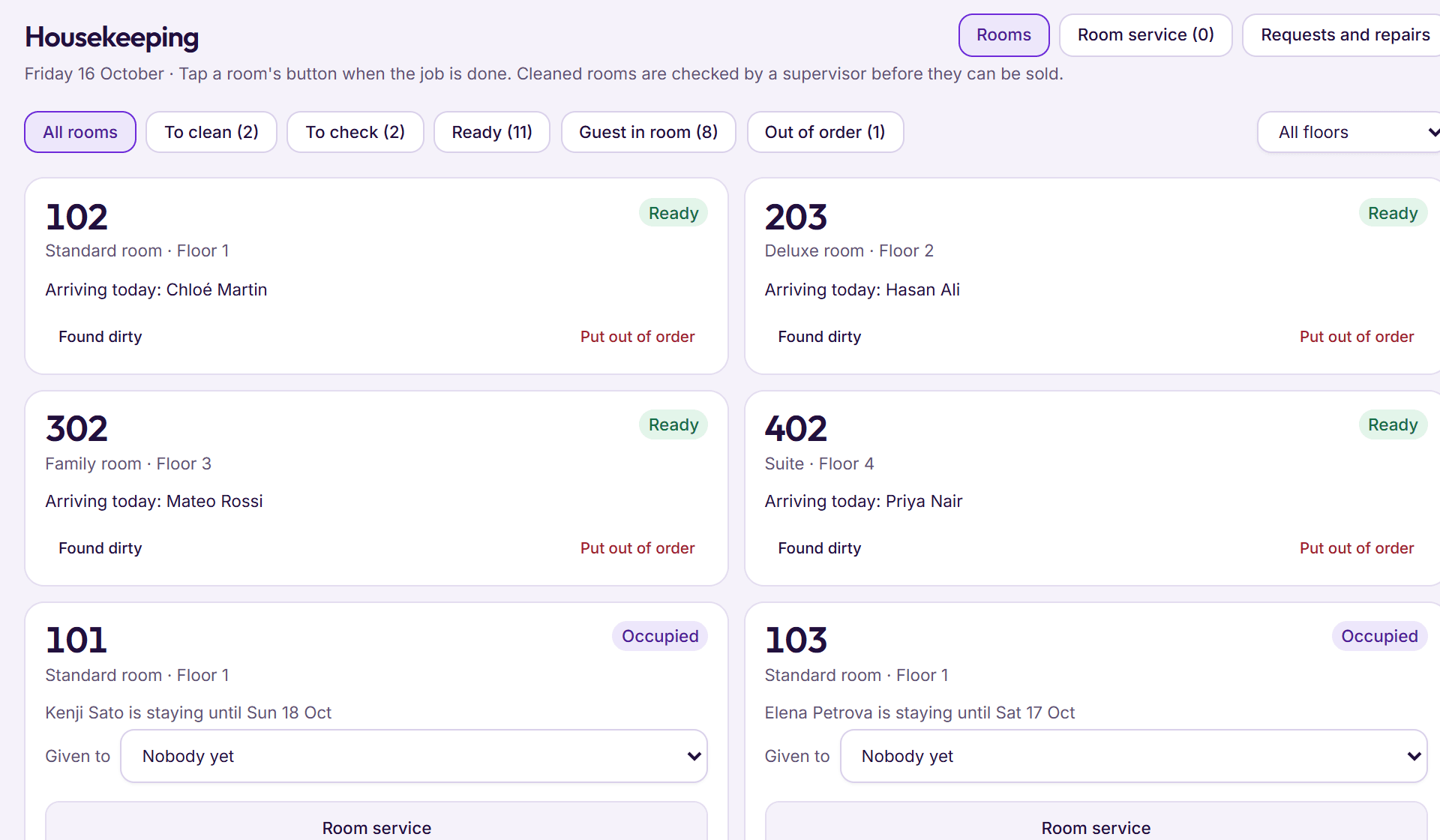
The housekeeping day at a glance
Housekeeping in a hotel is a race against check-in time. Guests leave through the morning, new guests start arriving in the afternoon, and every room in between has to be cleaned, checked and handed back to the front desk. The work doesn’t change much from day to day, which is exactly why a fixed routine pays off.
| When | What housekeeping does |
|---|---|
| Start of the shift | Read today’s arrivals and departures, collect linen and supplies, give out the rooms. |
| Morning | Service stay-over rooms whose guests are out, and start on early check-outs. |
| Late morning to 2 p.m. | Clean check-out rooms, starting with those that have a guest arriving today. |
| Through the day | Inspect cleaned rooms and mark them ready, handle guest requests and report repairs. |
| Afternoon | Finish the remaining check-outs and stay-overs, then any deep cleaning planned for today. |
| End of the shift | Count dirty linen out and clean linen back, log lost property, hand over what is left. |
Arrivals first, then check-outs
Not every dirty room is equally urgent. A room with a guest arriving at 2 p.m. matters more than a room nobody will sleep in until tomorrow. Clean in the order the front desk needs rooms, not in the order they appear along the corridor.
Rooms needed for today’s arrivals
Check-out rooms with a guest arriving today, earliest arrival first. Early check-ins and VIP guests go to the top of this list.
Other check-out rooms
Rooms whose guests have left and that nobody is due in today. They still need cleaning, but they can wait an hour.
Stay-over rooms
Rooms with guests staying on. Service them while the guest is out, and come back later to any room with a do-not-disturb sign.
Rooms nobody is using
Rooms that have been empty for a few days: a quick check, a dust and a fresh look before they are sold again.
The front desk should tell housekeeping as soon as a guest checks out, and housekeeping should tell the desk as soon as a room is ready. Every minute between the two is a minute a guest may be waiting. Hotel front desk operations covers the desk’s side of the same day.
Assigning rooms to housekeepers
At the start of the shift, give each room to one named housekeeper. Shared floors, where “whoever is free” takes the next room, lead to rooms cleaned twice and rooms missed. A named list also means that when a guest finds a problem, the manager knows who to ask.
- Balance the work, not the room count. A check-out room takes longer than a stay-over; a suite takes longer than a single.
- Keep each housekeeper on one floor or one wing where you can, so less time is spent walking.
- Spread the urgent rooms. If six arrivals are due at 2 p.m., give them to three housekeepers, not one.
- Change the list when the day changes. An early check-out or a room move means a room moves up someone’s list.
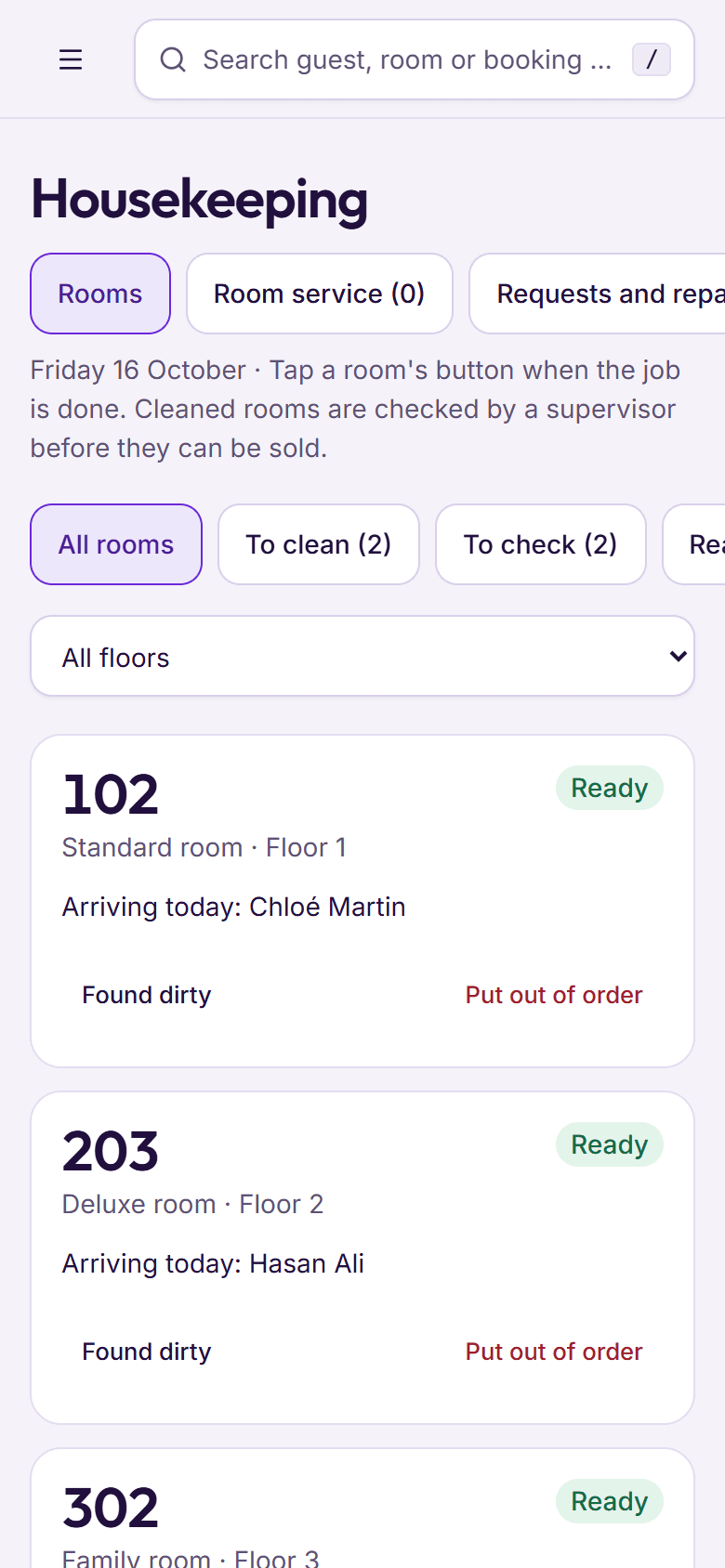
A room-cleaning checklist
A checklist isn’t there to tell an experienced housekeeper how to clean. It is there so nothing is forgotten on a busy morning, and so every room meets the same standard whoever cleaned it. Print it and keep it on the cart.
Check-out room
- Open the window or turn on the air, and check the room for anything left behind.
- Strip the bed and take out the used towels, counting them onto the cart.
- Empty the bins and replace the liners.
- Clean the bathroom: toilet, basin, shower or bath, mirror, floor, in that order.
- Put out fresh towels, bath mat and toiletries to the hotel’s standard.
- Make the bed with fresh linen.
- Dust surfaces, the headboard, lamps and the TV, and wipe switches and handles.
- Restock water, glasses, cups and anything your rooms always have.
- Check lights, air conditioning, the TV, the safe and the kettle work.
- Vacuum or sweep and mop the floor, starting from the far side.
- Look around once from the door, then mark the room cleaned.
Stay-over room
- Knock, wait, and announce yourself. Skip rooms with a do-not-disturb sign and come back later.
- Make the bed, and change linen on the days your hotel sets.
- Replace towels left on the floor or in the bath, and leave those hung up.
- Empty the bins, wipe the bathroom and restock toiletries and water.
- Leave the guest’s belongings where they are.
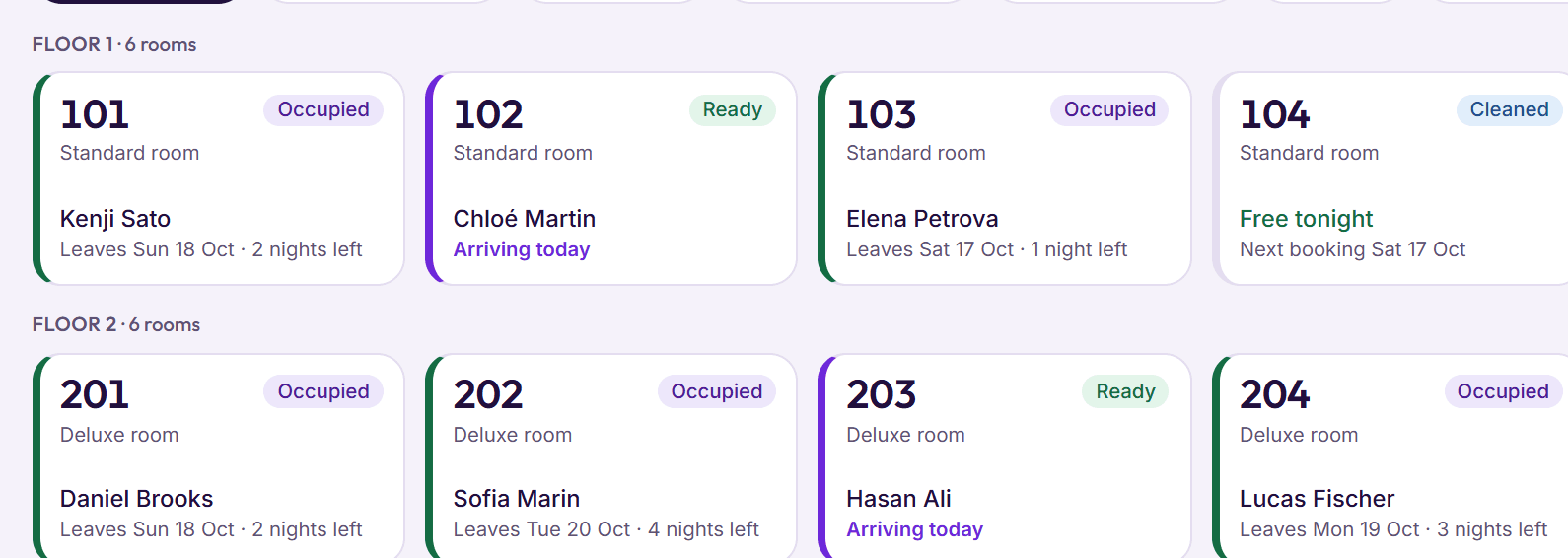
After cleaning, a supervisor checks the room against the same list before it is marked ready. A two-minute check catches the missing towel before the guest does. What each status means, from Dirty to Ready, is explained in hotel room status codes.
Requests and repairs
Through the day, guests ask for things and rooms break. Both need to be written down when they come in, given to someone, and ticked off when done. A request remembered by the person who took it is a request forgotten when their shift ends.
- Guest requests: towels, pillows, an extra bed, a cot, laundry. Note the room and the time, and mark it urgent if the guest is waiting.
- Repairs: a dripping tap, a broken lamp, a door that won’t lock. Report them with the room number and what is wrong, so the maintenance person brings the right tools.
- Rooms that can’t be used: a leak or a broken air conditioner takes the room off sale. Mark it Out of order with the reason, and check nobody is due in it tonight.
- Follow up: at the end of the shift, read the list of open requests and repairs, and hand over anything not done.
Linen counts
Linen is one of housekeeping’s largest costs, and one of the easiest to lose track of. Sheets go missing in the laundry, towels leave in suitcases, and stained items are thrown away without a note. A simple count each day shows where it goes.
| Line | Towels |
|---|---|
| Clean in the store at the start of the day | 120 |
| Sent to rooms | − 46 |
| Dirty sent to the laundry | 44 |
| Clean back from the laundry | + 40 |
| Clean in the store at the end of the day | 114 |
| Still at the laundry | 4 |
- Count dirty linen out to the laundry and clean linen back, by item.
- Keep enough for three full changes of every bed: one in the rooms, one at the laundry, one in the store.
- Note stained or torn items before they are thrown away, so the count still adds up.
- Count the whole store on a fixed day each week or month, not when it runs out.
The same habit works for toiletries and minibar stock: a count on a schedule shows what is being used, and what is going missing.
Lost property
Guests leave things behind every day: chargers, glasses, clothes, sometimes passports or cash. How the hotel handles them matters, both to the guest who calls a week later and to the housekeeper who found the item.
Hand it in at once
The housekeeper brings the item to the supervisor or the desk the same shift. Nothing is kept on the cart “for later”.
Log it
The room, the date, who found it and a short description. Give it a tag with a number and store it in one locked place.
Keep it for a set time
Pick a period, such as 90 days, and keep everything that long. Valuables and documents may need to go to the manager’s safe.
Record who collects it
When a guest comes back for an item, or it is posted to them, write down who took it and when.
A daily housekeeping checklist for supervisors
Every day
- Today’s arrivals and departures are read before the rooms are given out.
- Each room has one named housekeeper, and urgent rooms are spread across the team.
- Rooms with a guest arriving today are cleaned and checked first.
- Every cleaned room is checked before it is marked ready.
- Each request and repair is logged with the room number and ticked off when done.
- Rooms out of order have a reason, and none of them has a guest due in tonight.
- Dirty linen out and clean linen back are counted.
- Lost property is logged, tagged and locked away.
- Open requests and unfinished rooms are handed to the next shift by name.