What a room status is for
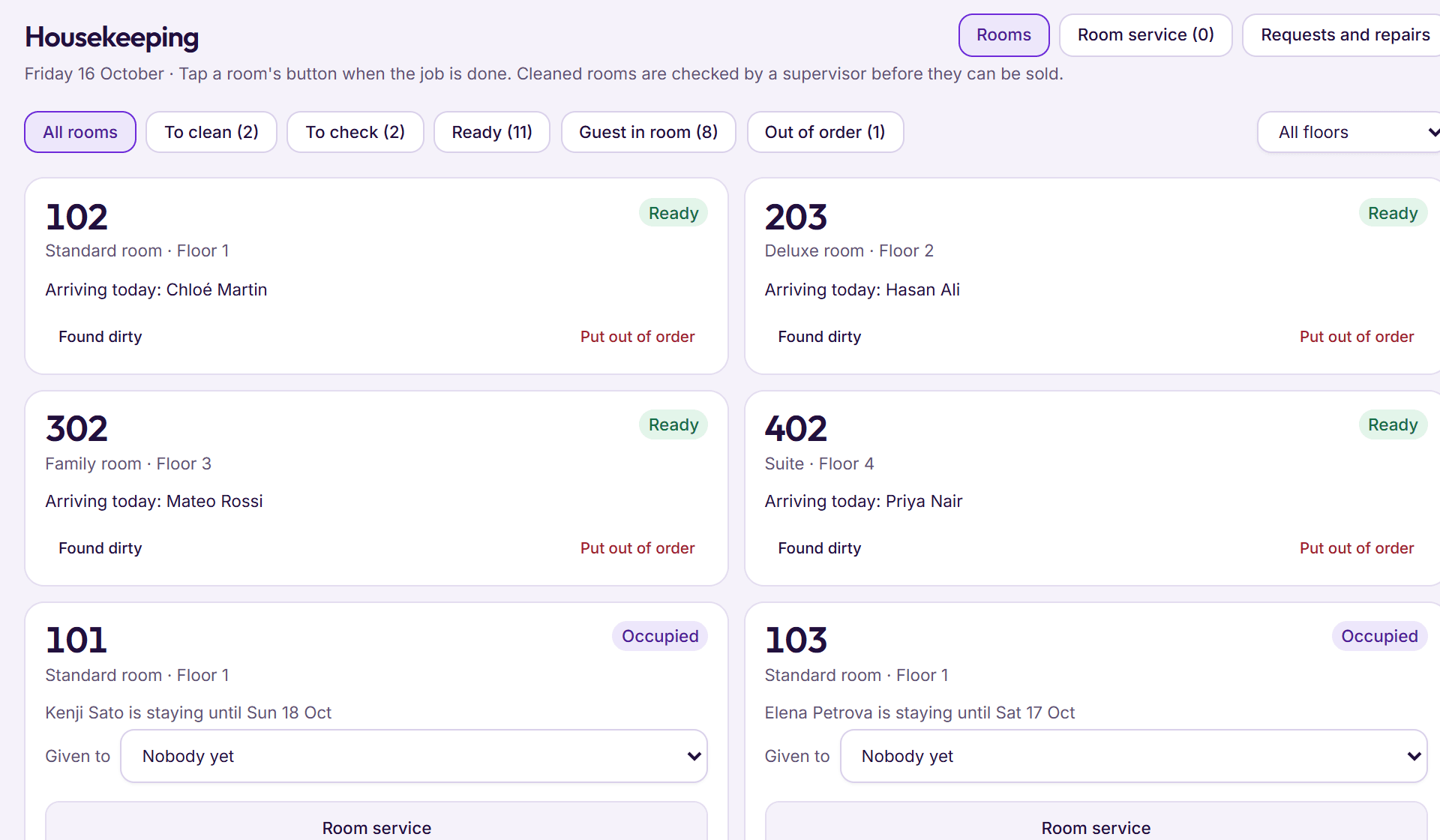
Every room in a hotel is in one state at any moment: someone is in it or not, and it is clean or not, checked or not, sellable or not. The room status is the shared word for that state. Housekeeping sets it as they work, and the front desk reads it before giving a room to a guest.
The status only helps if it is true. A room left on Dirty after it was cleaned is a room the desk can’t sell. A room set to Ready before anyone checked it is a complaint waiting to happen. Most room status problems come from the same two causes: the status was changed late, or it was changed by someone who didn’t look.
The five statuses that matter
Different systems use different names, but most hotels need only these five, in this order.
| Status | What it means | Who sets it |
|---|---|---|
| Dirty | The room needs cleaning. A guest has left, or a stay-over room hasn’t been serviced today. | Set when the guest checks out, or by housekeeping |
| Cleaning | A housekeeper is working in the room now. | The housekeeper, when they start |
| Cleaned | The housekeeper has finished, but nobody has checked the room yet. | The housekeeper, when they finish |
| Inspected | A supervisor has checked the cleaned room against the standard. | The supervisor or manager |
| Ready | The room can be given to a guest. | Follows the inspection, or the cleaning where there is no check |
| Out of order | The room is off sale, for a repair or another reason, until someone puts it back. | A manager, with a reason |
Many hotels treat Inspected and Ready as one step: once the supervisor has checked the room, it is ready to sell. Others keep them apart, so Inspected means “checked” and Ready means “checked, and the desk may give it now”. Either works, as long as everybody knows which your hotel uses.
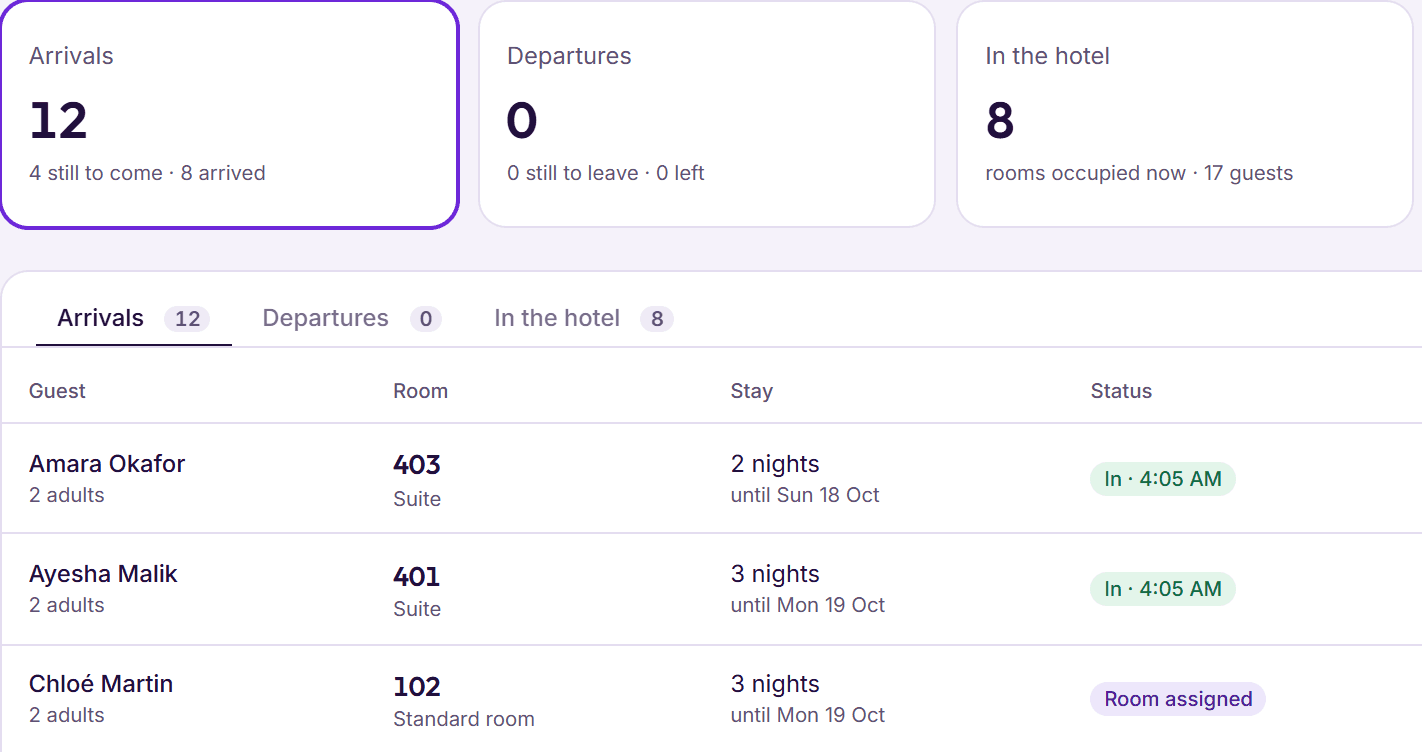
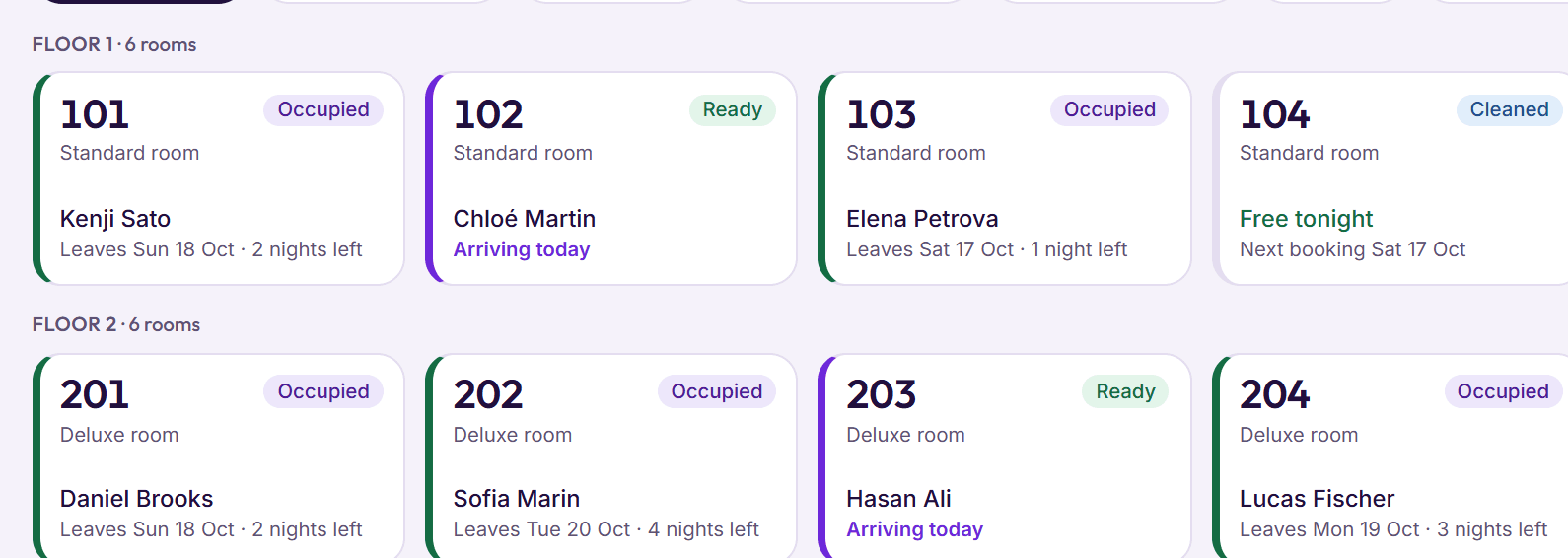
Alongside these, the desk needs to know whether a guest is in the room. A room can be occupied and dirty (a stay-over not yet serviced), occupied and clean, vacant and dirty (a check-out waiting) or vacant and ready. That pairing is where the industry’s short codes come from.
Industry room status codes, in plain words
Larger hotels and older systems often use two- or three-letter codes. They are handy on a printed report, but new staff have to learn them, and they are easy to misread under pressure. Here is what the common ones mean.
| Code | Stands for | In plain words |
|---|---|---|
| VC | Vacant clean | Nobody is in the room and it has been cleaned. Check whether it has also been inspected. |
| VD | Vacant dirty | Nobody is in the room and it needs cleaning, usually after a check-out. |
| VCI or VI | Vacant clean inspected | Nobody is in the room, it is clean and it has been checked: Ready. |
| OC | Occupied clean | A guest is staying, and the room has been serviced today. |
| OD | Occupied dirty | A guest is staying, and the room still needs servicing today. |
| OOO | Out of order | Off sale, usually for a repair. It isn’t counted as a room the hotel can sell. |
| OOS | Out of service | Not to be given for now, for something small, but still counted as a room the hotel has. |
| DND | Do not disturb | The guest has asked not to be disturbed. Housekeeping comes back later. |
| DO | Due out | The guest is due to check out today: in the Leaving today list. |
| CO | Checked out | The guest has left and the room is waiting to be cleaned. |
| LCO | Late check-out | The guest will leave later than the usual check-out time. |
| SO | Sleep out | The room is paid for, but the guest didn’t sleep in it last night. |
| SKIP | Skipper | The guest left without checking out or paying. |
| SLEEPER | Sleeper | The system shows a guest in the room, but the room is empty. Usually a check-out nobody recorded. |
Codes are fine for reports, but plain words are faster to learn and harder to confuse. If a new housekeeper can read “Dirty” and “Ready” on day one, nobody has to explain the difference between VC and VCI.
Why an inspected room before check-in saves complaints
The most common complaints in the first ten minutes of a stay are small and visible: a missing towel, hair in the shower, an empty soap dish, a bed made badly, the last guest’s water bottle under the desk. A housekeeper cleaning fifteen rooms on a busy morning will miss something now and then. A second pair of eyes catches it before the guest does.
An inspection doesn’t have to be slow. A supervisor walking a cleaned room for two minutes, against a short list, is enough. It costs far less than a guest asking for a different room, a free breakfast to say sorry, or a review that mentions the bathroom.
A two-minute room inspection
- The bed is made with fresh linen, and nothing is under it.
- The bathroom is dry and clean, with fresh towels and full toiletries.
- The bin is empty and has a new liner.
- Lights, air conditioning, the TV and the safe work.
- Nothing from the last guest is left in drawers, the wardrobe or the safe.
- Water, glasses and anything your rooms always have are in place.
- The door locks, and the window or balcony closes properly.
If you have no supervisor on some shifts, decide who checks the room instead: the front desk, a senior housekeeper, or nobody. Whatever you decide, write it down, so the status means the same thing on every shift.
How status moves from the housekeeper’s phone to the desk
In a hotel run on paper, status travels by walkie-talkie, by phone call or by a housekeeper walking down to reception with a list. Each hop is a delay, and each delay means a guest waiting in the lobby for a room that is already clean.
Check-out turns the room Dirty
When the desk checks a guest out, the room should go on the cleaning list at once, without anyone phoning housekeeping.
The housekeeper marks it as they finish
At the door of the room, on their phone, not at the end of the floor. A status changed an hour late is an hour the room couldn’t be sold.
The supervisor checks it
Walking the cleaned rooms in the order the desk needs them, rooms with a guest arriving today first.
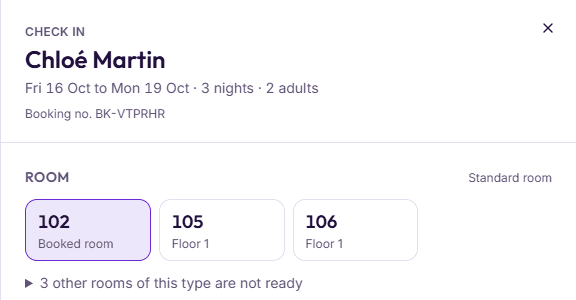
The desk sees Ready and gives the room
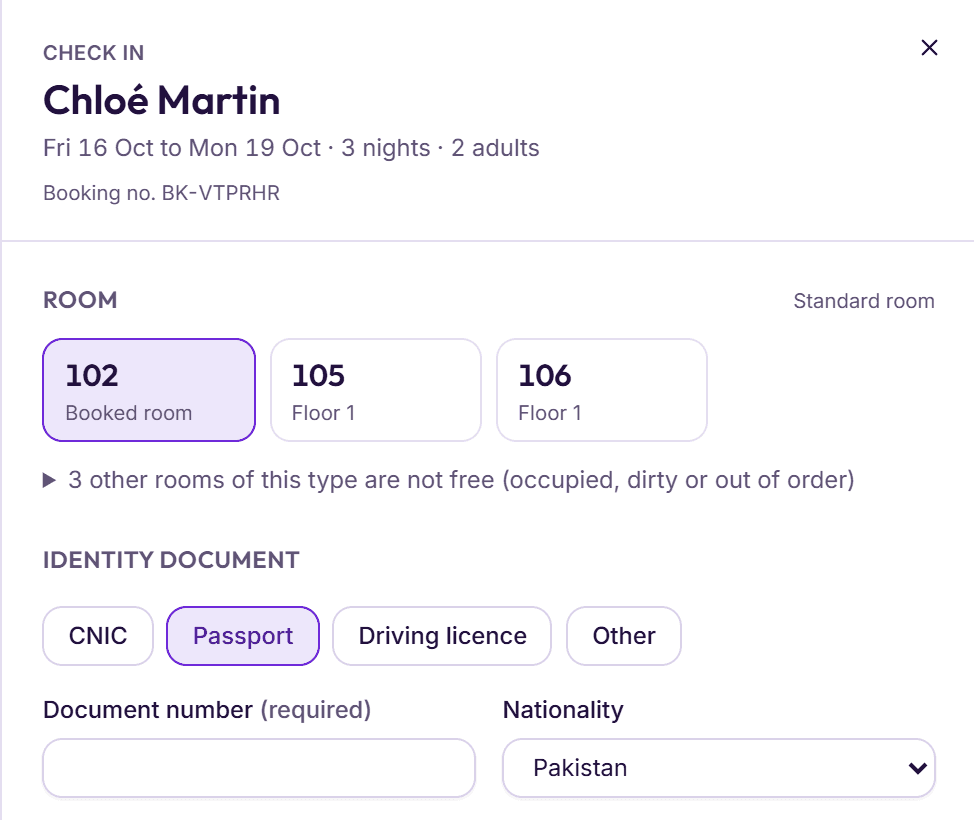
Check-in offers only rooms that are ready. A dirty room isn’t given, whoever is asking.
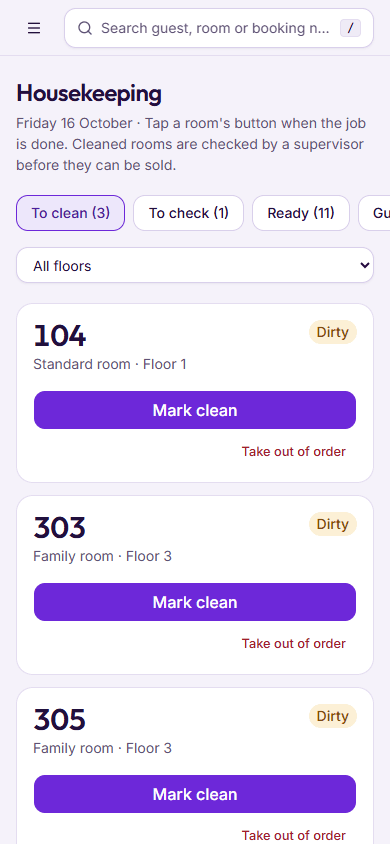
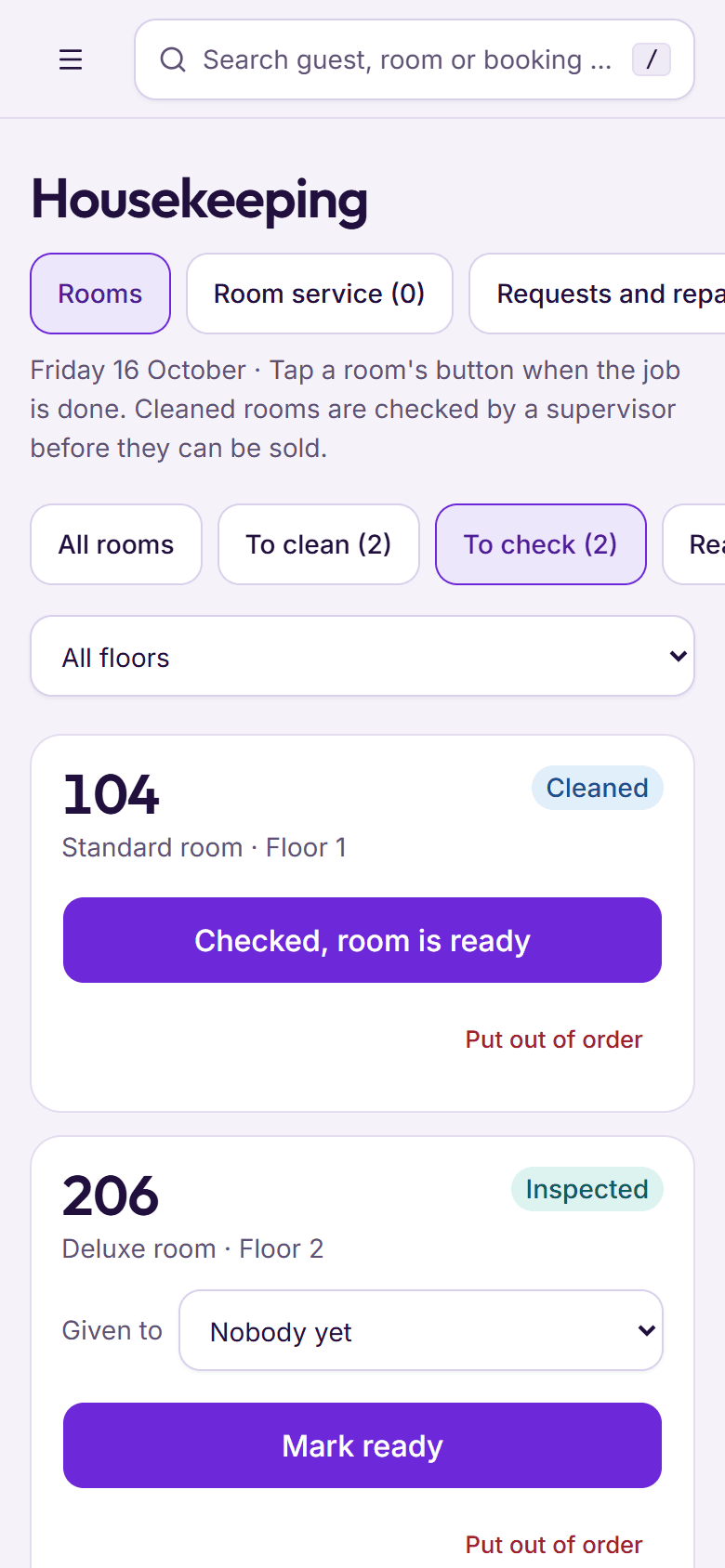
The phone matters most on upper floors and in buildings spread across grounds, where the housekeeper is furthest from the desk. If the signal is weak in some rooms, a system that keeps the tap and sends it later is worth more than one that needs a perfect connection.
Rules that keep room status true
- Change the status at the room, when the work is done. Not from memory at the end of the shift.
- One person per change. Whoever marks a room Cleaned or Ready is the one who did or checked it.
- Never set Ready to please a waiting guest. If the room isn’t checked, give a time instead.
- Out of order needs a reason and a name. A room off sale with no reason stays off sale for weeks.
- Check the rooms nobody touched. A room that has been Ready for three days may need a quick look before a guest goes in.
- Compare at the end of the day. If the desk says a room is empty and housekeeping found a guest in it, find out why before the Night audit.
Room status is one part of the desk’s day. For the rest, from bookings to the shift handover, read hotel front desk operations, and for the housekeeping routine itself, the housekeeping checklist and daily workflow.