Before the guest arrives
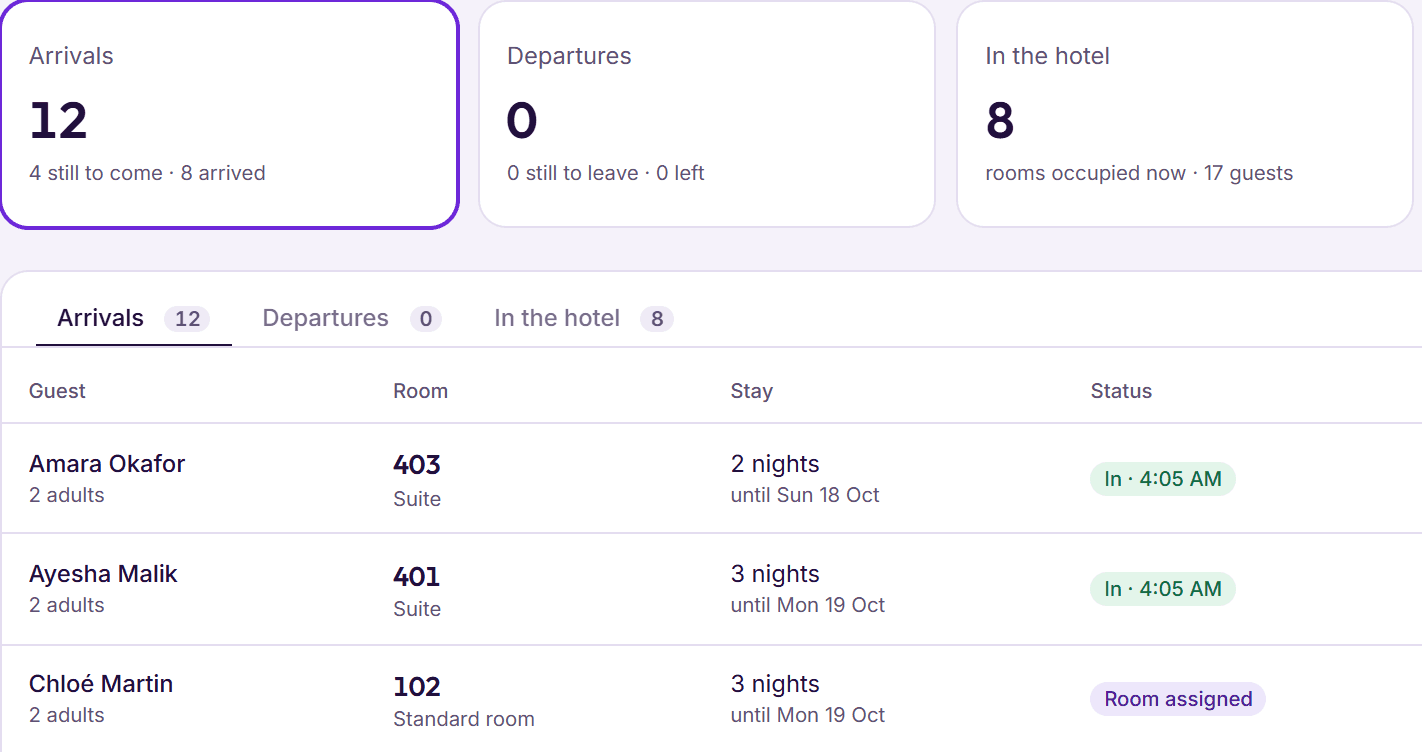
The fastest check-ins are prepared hours before the guest walks in. At the start of each shift, read the day’s arrivals, Arriving today, and sort out what can be sorted without the guest.
Arrivals preparation
- Each arrival’s room type, dates and rate match what the guest was told.
- Special requests, such as a cot, a quiet room or an early check-in, have gone to housekeeping.
- Rooms for the earliest arrivals are on housekeeping’s list first.
- Advance payments already received are recorded on the booking.
- Company stays show which charges the company pays and which the guest pays.
- Returning guests are recognised, so their details don’t have to be typed again.
For the rest of the desk’s day, from bookings to the Night audit, see hotel front desk operations.
The check-in procedure, step by step
Greet the guest and find the booking
Stand up, look up, and greet the guest before they speak. Ask for their name and find the booking by name, phone or booking number. A guest with no booking is a walk-in guest: book them first, then check them in.
Confirm the stay
Read back the dates, the room type, the number of guests and what is included, such as breakfast. Fix any mismatch now, not on the last morning.
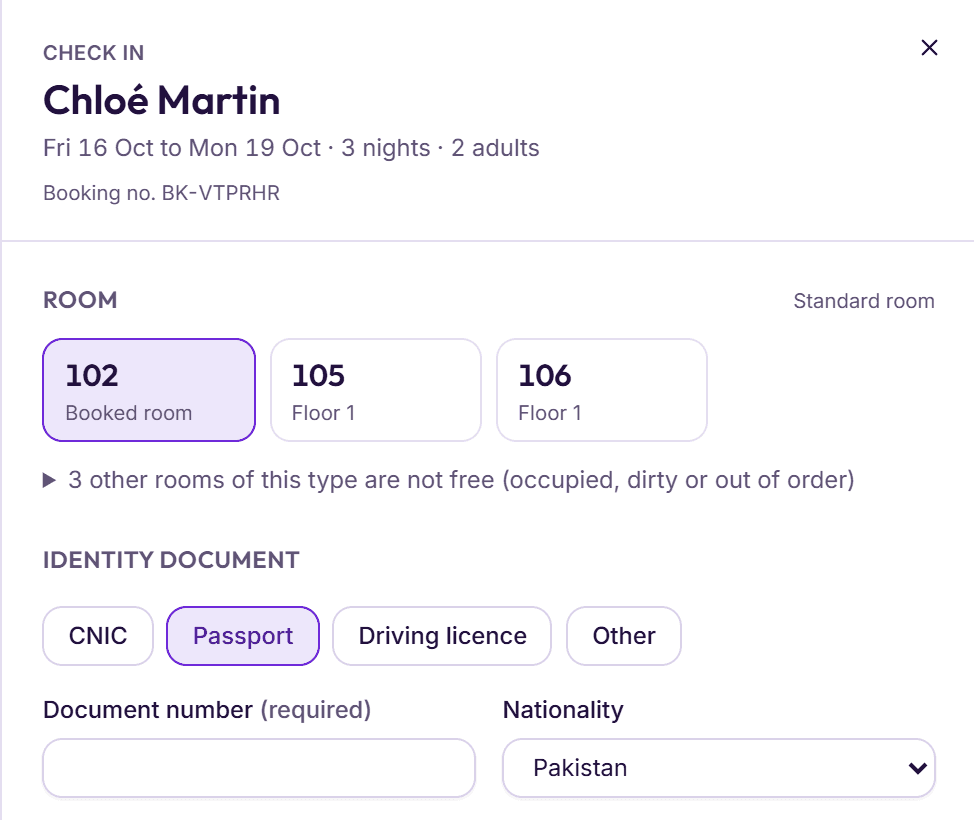
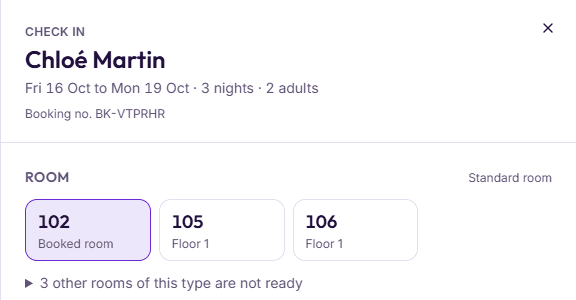
Choose a ready room
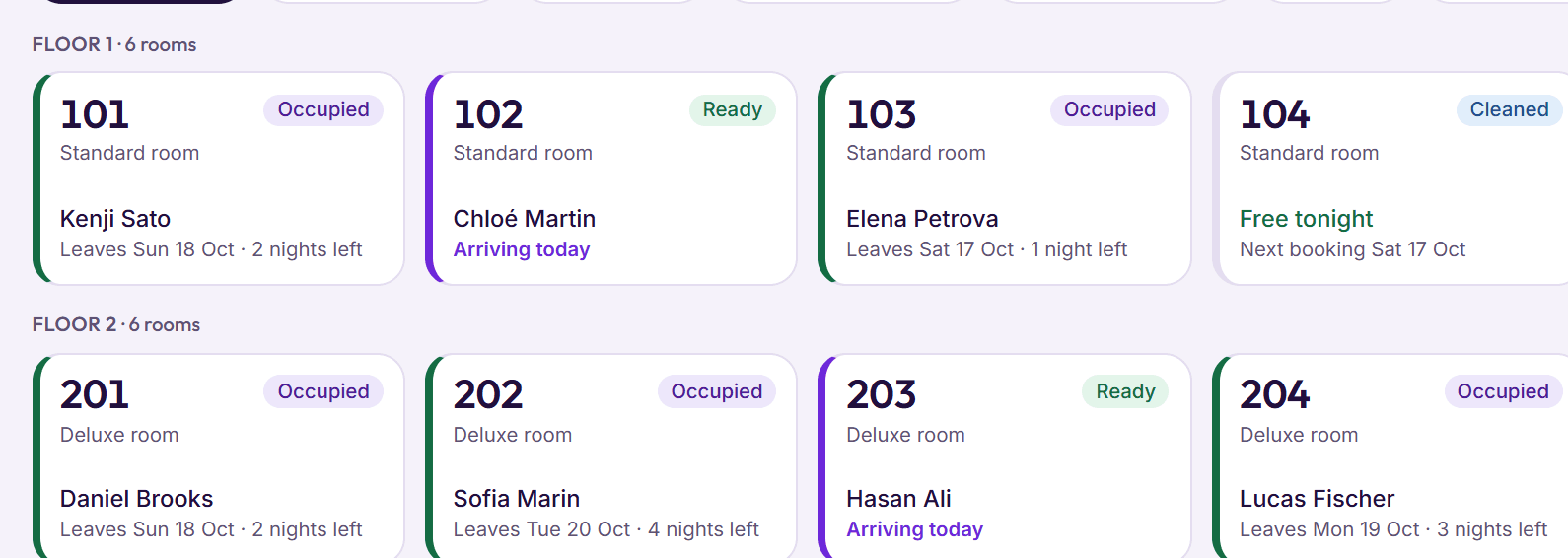
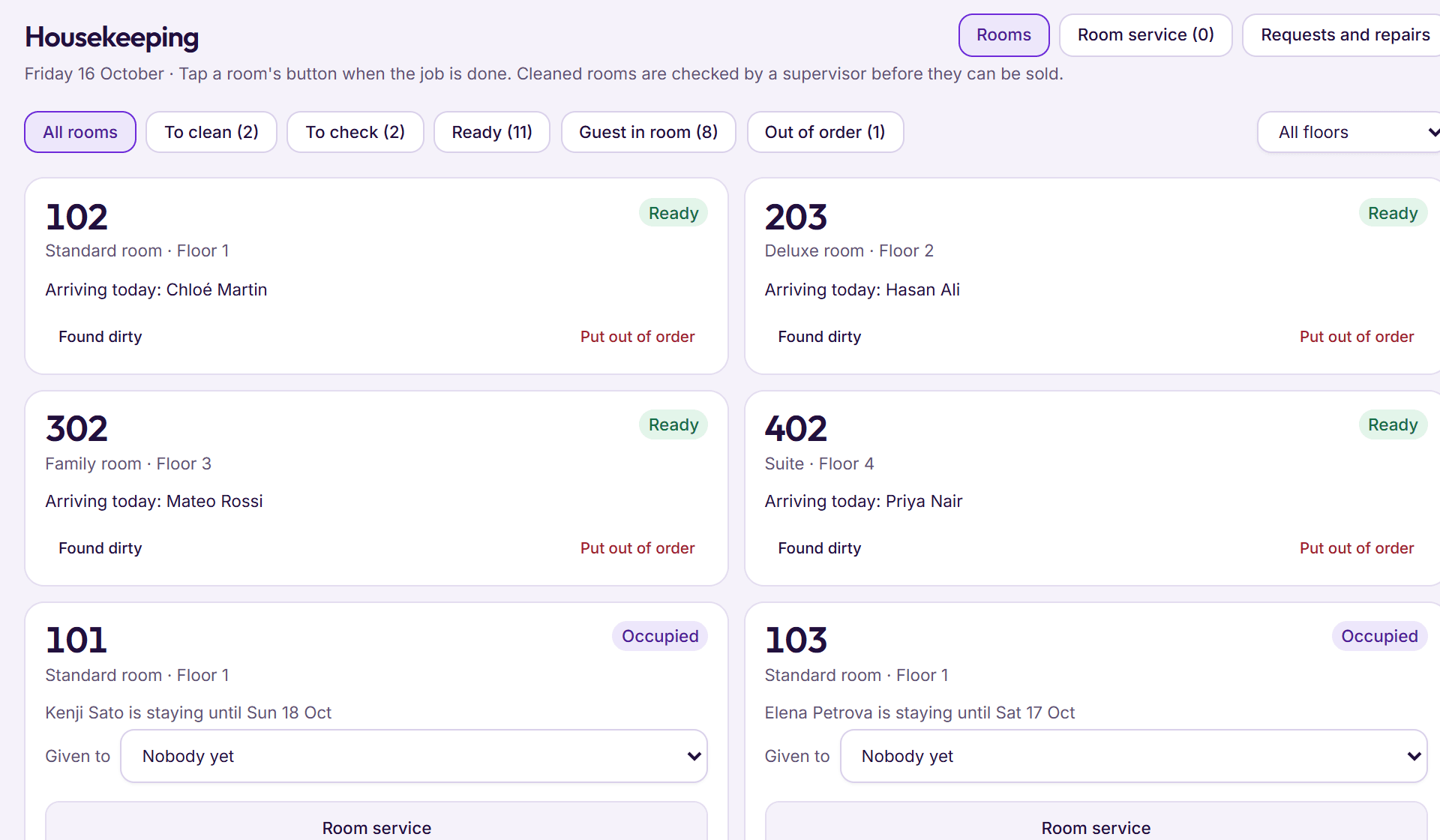
Give a room that housekeeping has marked ready, not one that is just empty. If the booked type isn’t ready yet, offer another ready room of the same type, or a time.
Record the guest’s ID
A national ID card, a passport or another ID your country accepts, checked against the person in front of you. For foreign guests, the passport and, where required, the visa.
Sign the registration card
The card is filled in from the booking and the ID. The guest checks the details and signs.
Settle the money
Say the total for the stay, take the advance payment your rules ask for, and agree who pays for what.
Hand over the key and explain the stay
Give the key without saying the room number aloud, and tell the guest the few things they need to know.
Only ready rooms
An empty room isn’t the same as a ready room. It may still be waiting to be cleaned, or cleaned but not checked. A guest who walks into an unmade bed, or a bathroom with the last guest’s towels, judges the whole stay by it.
Before giving a room, check its status. If no room of the booked type is ready, don’t guess. Offer a seat, a drink or the luggage room, give a time, and ask housekeeping to finish that room next. A wait of twenty minutes with an honest time is forgiven; an unclean room is not. What each status means is in hotel room status codes explained.
ID: national ID card or passport, and a visa for foreign guests
In many countries the law asks hotels to record who stays in each room, and some ask the hotel to report foreign guests to the authorities. Even where it isn’t required, recording ID protects the hotel: it is how you know who to call when something is left behind or a bill is disputed.
| Guest | Document | What to check |
|---|---|---|
| Citizen or resident | National ID card, passport or driving licence | The photo matches the guest, the name matches the booking, the card hasn’t expired. |
| Foreign guest | Passport | The photo and name, the nationality, the passport’s expiry date. |
| Foreign guest, where a visa is needed | Passport and visa | The visa type, number and expiry date. A visa that has expired is a question for the manager. |
| Every other adult in the room | The same as above | Many hotels record every adult, not just the person who booked. |
- Know your local rules. Which IDs are accepted, whether every adult must be recorded, and whether foreign guests must be reported, and by when.
- Look, don’t just type. Check the photo against the face. A copied number from someone else’s ID is still someone else’s ID.
- Keep ID details private. Never read an ID number aloud at the desk, and don’t leave copies on the counter.
- Return the document at once. Take the details you need and hand the card or passport back, unless the law requires otherwise.
The registration card
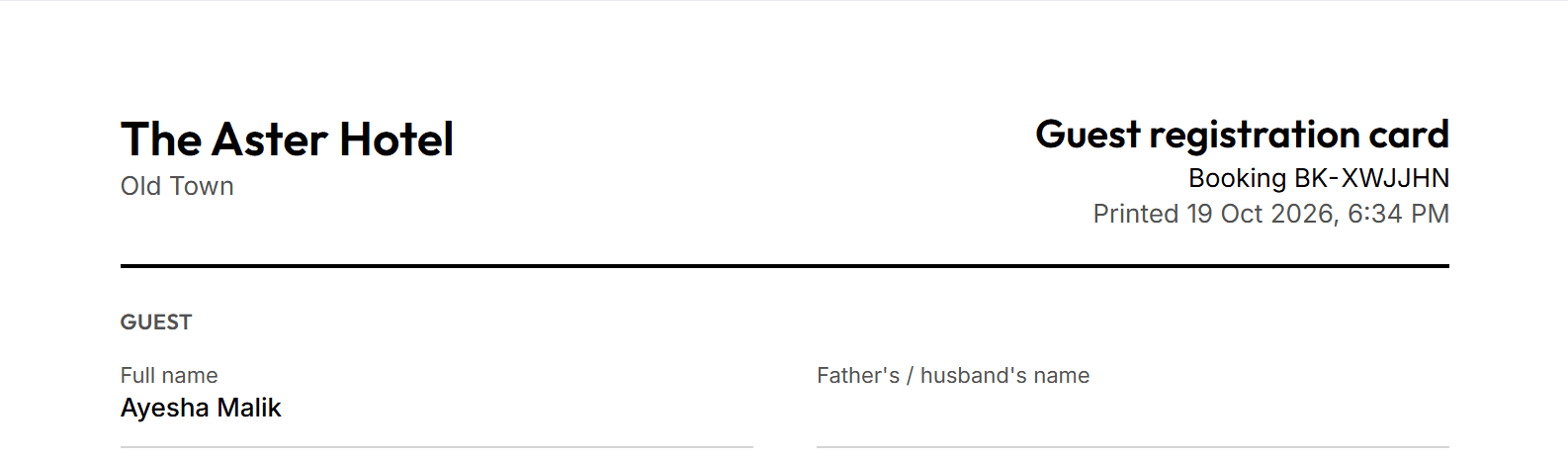
The registration card is the guest’s signed record of the stay: their name, address and ID, the dates, the room and the rate. Filled in from the booking, it takes the guest a minute to check and sign, and it gives the hotel a record that the guest agreed to the price and the house rules.
What a registration card should show
- The hotel’s name and the booking number.
- The guest’s full name, contact details and nationality.
- The ID type and number, and visa details for foreign guests where required.
- The arrival and departure dates, the room and the rate.
- The hotel’s house rules or a short line pointing to them, such as check-out time.
- A line for the guest’s signature and the date.
Taking the advance payment
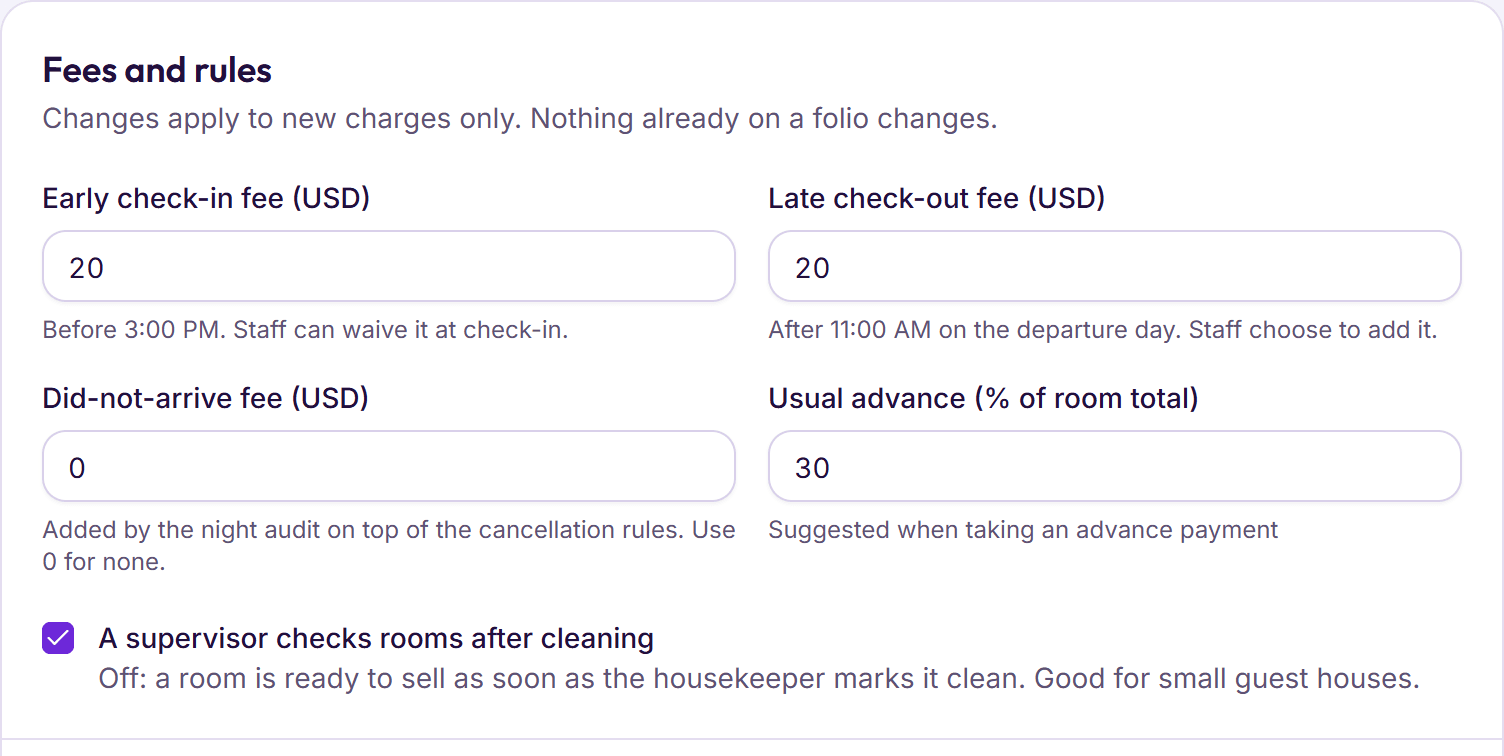
Most hotels ask for money before or at check-in: the stay itself, part of it, or an amount to cover extras like the restaurant and minibar. Decide the rule once, write it down, and apply it to every guest, so the desk doesn’t have to judge who looks trustworthy.
- Say the total before you take any money. The guest should hear the full amount for the stay once, clearly.
- Record how it was paid: cash, card, bank transfer or wallet, with a receipt for the guest.
- Take off any advance already paid, so the guest isn’t asked for it twice.
- Company stays: confirm what the company pays, usually the room, and take an amount for extras from the guest if your rules say so.
- Early check-in: if your hotel charges for it, say the fee and let the guest agree before it goes on the bill.
Keys
Whatever your hotel uses, metal keys or key cards, the rules are the same: one key per guest unless they ask for more, the room number never said aloud, and every key accounted for.
- Write the room number on the key card’s sleeve or point to it, rather than saying it in a busy lobby.
- Give a second key only to a guest registered in the room.
- Never give a key to someone who asks by room number alone. Ask for their name and ID.
- Note lost keys, and replace or recode them before the room is sold again.
What to say at check-in
A short, friendly script means every guest hears the same important things, and new staff don’t have to make it up. Adapt the words to your hotel, but keep the order.
Welcome
“Good afternoon, welcome to the hotel. May I have your name, please?”
The stay
“You’re with us for two nights, in a double room with breakfast. Is that right?”
The money
“The total for your stay is $240. Today I’ll take that, and $50 for extras, which we settle when you leave.”
The room
“Your room is on the third floor; the number is on your key. The lift is just to your right.”
The essentials
“Breakfast is from 7 to 10 in the restaurant. The Wi-Fi details are in your room. Check-out is at noon.”
The close
“If you need anything, just call reception. Enjoy your stay.”
A printable check-in checklist
Every check-in
- The booking is found, and the dates, room type and guests are confirmed with the guest.
- The room is marked ready, not just empty.
- The ID is checked against the guest, and a visa is recorded for foreign guests where required.
- The registration card is filled in, checked and signed.
- The guest has heard the total, and the advance is taken with a receipt.
- Any early check-in fee was agreed before it went on the bill.
- The key is handed over without saying the room number aloud.
- The guest knows breakfast times, the Wi-Fi and check-out time.