What hotel revenue leakage is
Hotel revenue leakage is money the hotel earned, or should have earned, that never reaches its books. A room night that was used but never charged. A charge that was right but taken off. Cash that came in and didn’t make it to the bank.
Most of it isn’t theft. It is a miscount, a missing receipt, a fee someone forgot or a favour nobody wrote down. That is why the fix isn’t suspicion. It is a record of every change to money, with a name, a time and a reason, and someone who reads the exceptions every day.
The ten leaks below are grouped by where they happen. Each has a small example in rupees and the check that catches it.
Leaks at the cash drawer
1. Cash short at the end of a shift
Each shift starts with a known amount in the drawer and takes cash from guests, the restaurant and advance payments. At the end, the drawer should hold the start amount plus what came in, less what went out. Wrong change, a cash payment entered as card, or a note handed over unrecorded: each one leaves the shift short.
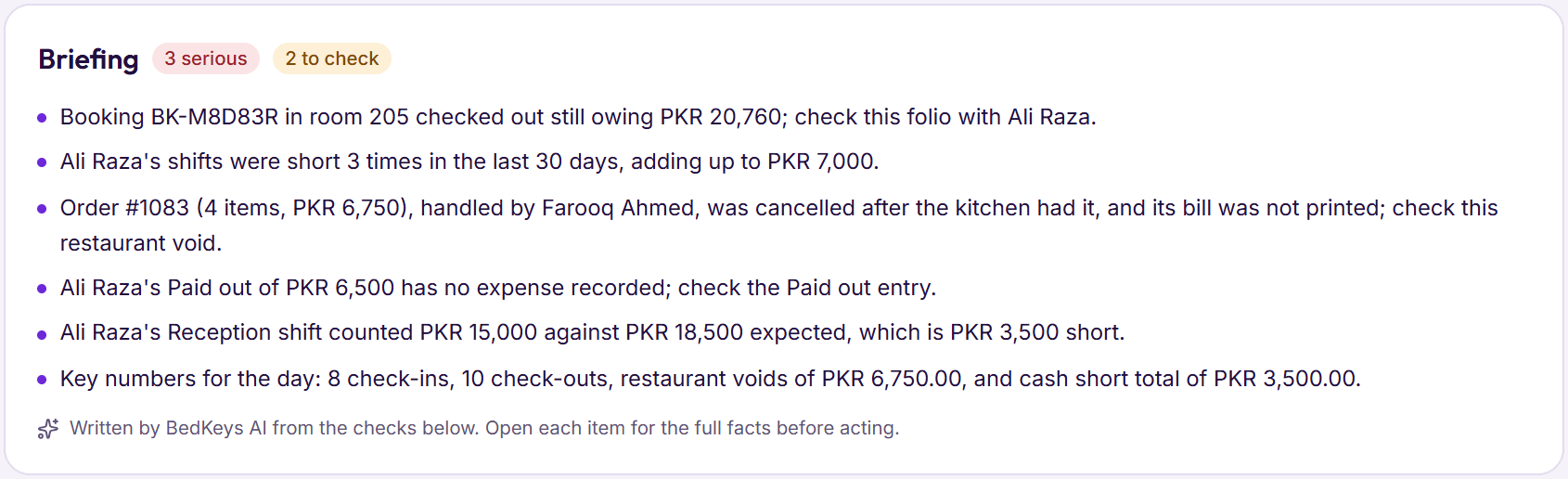
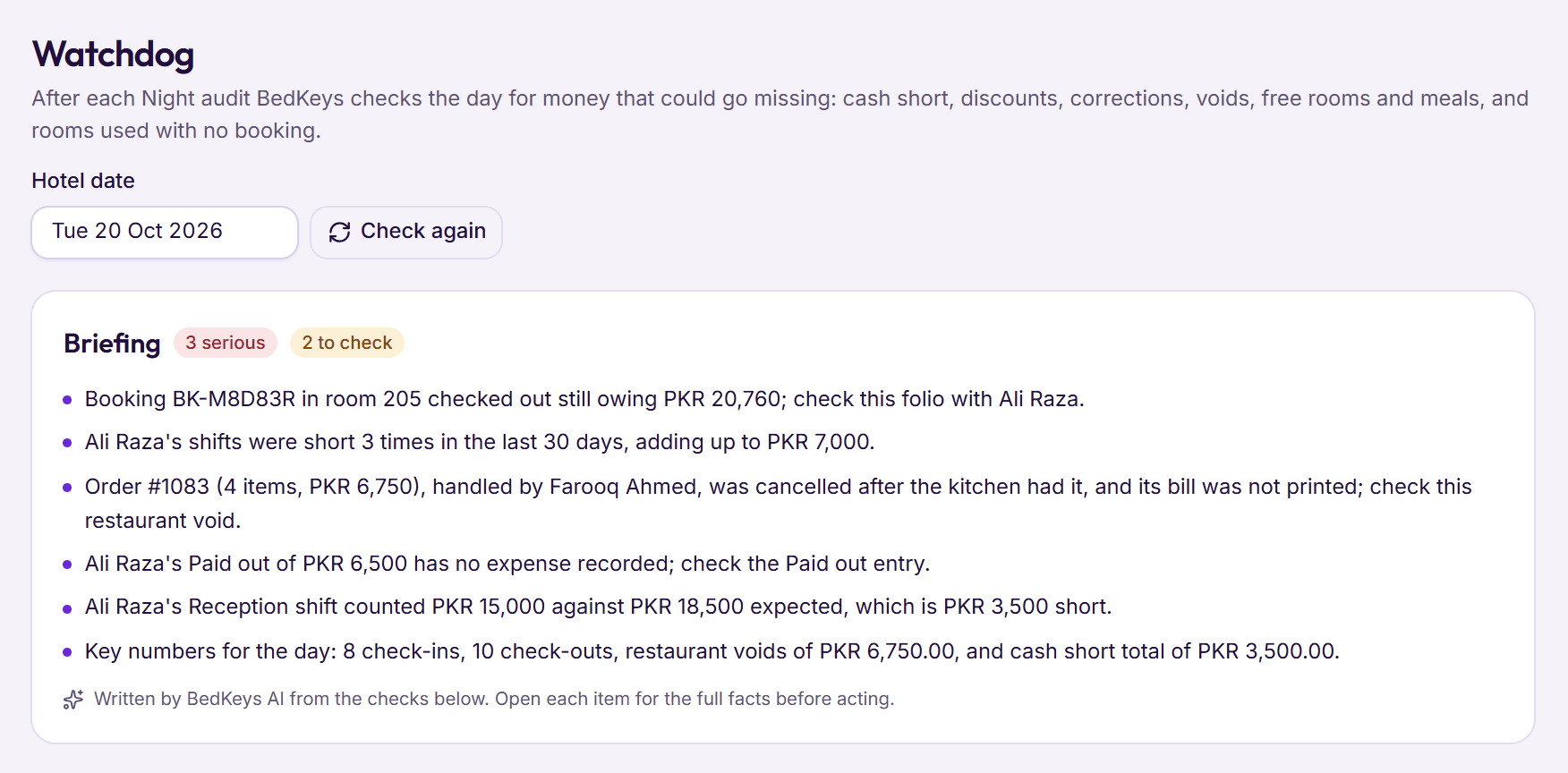
Example: the evening shift should end with PKR 26,000 in the drawer. The count comes to PKR 24,500. PKR 1,500 is short, and by the next morning nobody remembers why.
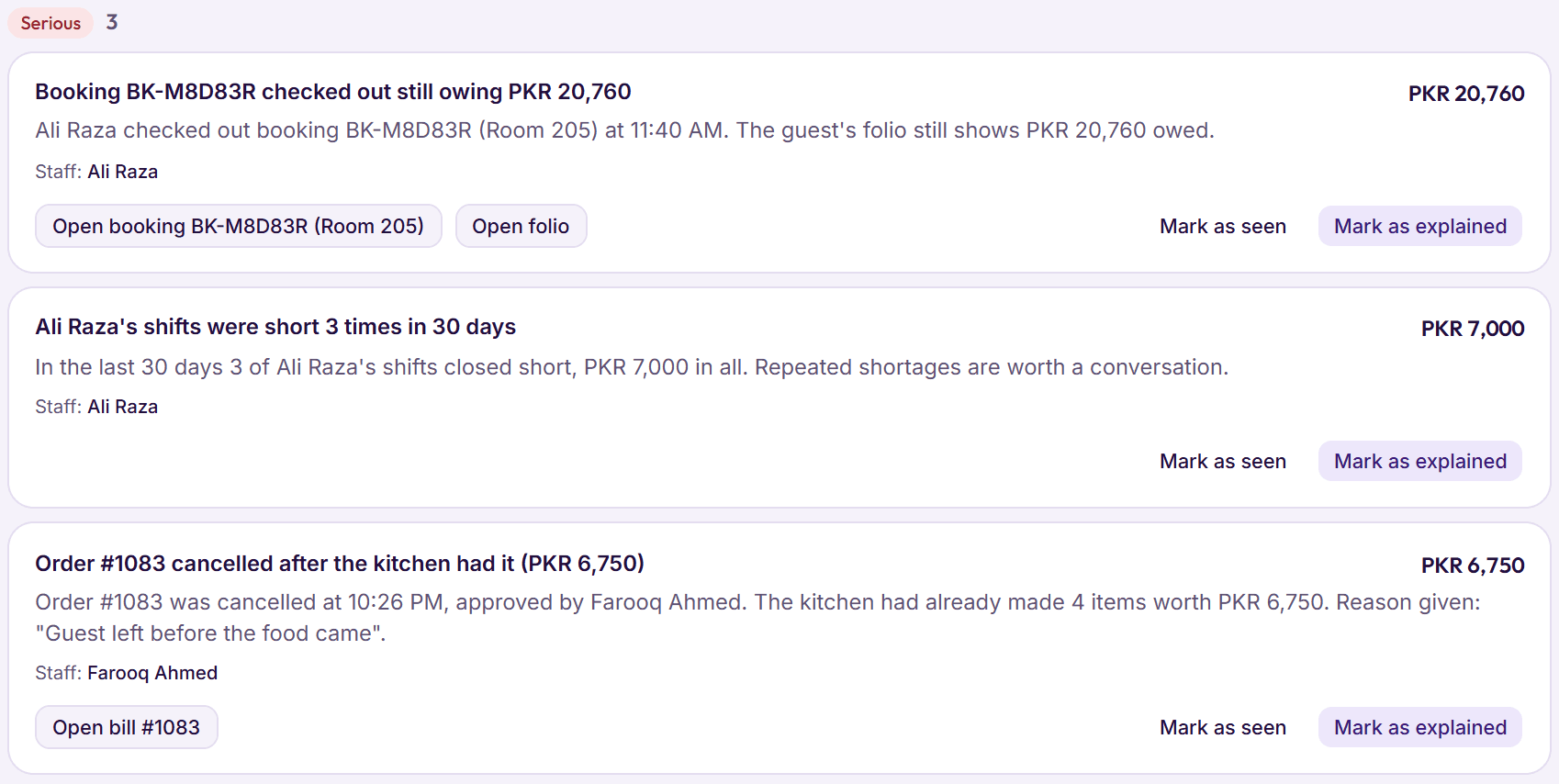
The check: the person who worked the drawer counts it at the end of every shift, and any short or over is recorded with their name. One short shift is usually a miscount. Three in a month from the same drawer is worth a calm conversation.
2. Paid outs with no expense behind them
Cash leaves the drawer during the day for real reasons: diesel for the generator, a plumber, a taxi for a guest. A petty-cash payout (in BedKeys, a Paid out) is normal. The leak is a Paid out that never becomes a recorded expense, so the cash is gone and the books can’t say what it bought.
Example: PKR 6,500 leaves the drawer for diesel. The receipt goes into a pocket and the expense is never entered, so at month end the books can’t show the cost.
The check: every Paid out carries a note, and each one is matched to an expense with its receipt the same day. A Paid out with no expense proves nothing; it is a question to ask while people still remember.
Leaks on the guest’s bill
The guest’s bill (in BedKeys, the folio) is where room nights, meals and extras add up. Two kinds of change can quietly lower what it collects.
3. Discounts nobody can explain
Discounts are part of selling rooms: a regular guest, a company rate, a long stay. They leak when anyone can give them, for any amount, with no reason written down.
Example: a room at PKR 18,000 a night gets PKR 4,000 off each night of a three-night stay, PKR 12,000 in all, with the reason left blank. On its own, it may be a good decision. If the same person gave PKR 35,000 in discounts that day, it is worth knowing.
The check: a reason on every discount, a manager’s approval above a limit you set, and a daily look at three things: any single large discount, each person’s total for the day, and any manager who approved their own.
4. Corrections and fees taken off
A charge entered twice, or on the wrong room, has to be corrected. That is normal. The leak is a correction used to take off a charge that was right: a minibar charge after the guest has gone, or a fee from your own rules, such as a late check-out, a cancellation, or a guest who did not arrive (often called a no-show; in BedKeys, Did not arrive).
Example: a guest booked two nights at PKR 15,000 and never came. Your rules keep the first night from the advance payment (often called a deposit). The PKR 15,000 fee is charged, then corrected away the next day with the reason “guest called”.
The check: charges and payments are never deleted, only corrected with a reason, and the original stays visible. Look harder at corrections made after check-out, on a day that has already closed, or above an amount you set, and at every fee taken off.
Leaks in the restaurant
5. Voids after the kitchen had the order
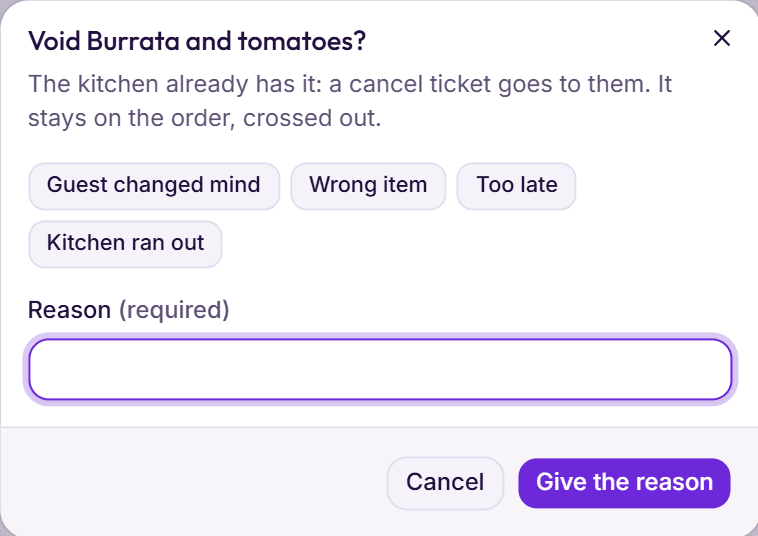
A void before the kitchen starts cooking costs nothing. A void after the kitchen has the ticket means food was made, and often served, but is off the bill. The reason is often good, such as a dish sent back. Either way, the food is used and nothing pays for it.
Example: table 6 orders a mutton karahi at PKR 4,200. The kitchen cooks it and it goes out. Twenty minutes later it is voided as “guest didn’t like it”. The stock is used and the bill is PKR 4,200 lower.
The check: a void after the kitchen ticket needs a manager’s approval and a reason, the kitchen gets a cancel ticket, and the dish stays on the order crossed out. Each morning, read the voids that came after the ticket.
6. Printed bills opened again, or paid less
Once a bill is printed and handed to the guest, the amount is set. Opening it again is sometimes needed: a dish added late, the bill put on the wrong table. The leak is a printed bill opened again and closed for less than the guest was shown.
Example: a bill prints at PKR 7,200. After the guest leaves, it is opened again, two drinks come off, and it closes at PKR 5,800. The record now says PKR 1,400 less than the bill the guest saw.
The check: keep who opened a printed bill again and what it said when it was printed. A printed bill that closes for less than its printed total should always be looked at.
Free meals and rooms
7. Complimentary and House Use meals and rooms
Every hotel gives things away: a dinner for a travel agent, a night for the owner’s family, a room for a visiting engineer. In BedKeys these are recorded as Complimentary or House Use. The leak is not the giving. It is giving that nobody adds up, so a free night here and a free dinner there never show as a cost.
Example: in one week, two House Use nights at PKR 16,000 each and three complimentary dinners worth PKR 9,500 together at menu prices. That is PKR 41,500 of rooms and food: fine if the owner agreed to it, and a surprise if not.
The check: value every free meal at menu prices and every free night at the room’s price, note who it was for, and read the total each week. Keep staff meals apart: they are an expected cost, and mixing them in hides the real giveaways.
Leaks at check-out and in the rooms
8. Guests who leave still owing
A busy morning, a guest in a hurry, a promise to pay by bank transfer tomorrow. The guest leaves and the folio still shows a balance. Some of these are collected later. Some are forgotten.
Example: a family checks out at 11 a.m. with PKR 20,760 still owing: two restaurant bills and the minibar, added after the folio was printed. Nobody notices until someone reads the month’s balances.
The check: check-out only at a zero balance, unless the balance goes to a company’s account on purpose. Each morning, list every guest who left yesterday with money still owing.
9. Late check-outs with no fee
Many hotels charge for a late check-out. Giving one free to a good guest is a fine decision. The leak is the fee that is simply never added, because nobody looked at the clock.
Example: check-out time is 12 noon, and your rules charge PKR 4,000 to stay until 4 p.m. The guest leaves at 3:30 p.m. and no fee is on the folio.
The check: compare each guest’s check-out time with yours. A late check-out with no fee should be a choice someone made, not something nobody noticed.
10. Rooms used with no booking
This is the hardest leak to see, because there is no bill to look at. A room can be let for a few hours and never entered, or used by a staff member resting between shifts, and left for housekeeping to find.
Example: room 204 shows empty and clean. At 9 a.m. housekeeping finds the bed slept in and the towels used. A night in that room sells for PKR 14,000.
The check: compare what housekeeping sees with what the bookings say. A room marked occupied with nobody checked in, or a clean, empty room found dirty, should be looked at the same day, while the night staff can still say what happened.
The ten leaks and their checks, at a glance
| Leak | Where it shows | The check |
|---|---|---|
| Cash short | The end-of-shift count | Count every shift; record short or over with a name |
| Paid out with no expense | The cash drawer | Match each Paid out to an expense and receipt the same day |
| Unexplained discounts | The folio | A reason on each; large ones and each person’s daily total read |
| Corrections and fees taken off | The folio | Never delete; read corrections after check-out and every fee taken off |
| Voids after the kitchen ticket | The restaurant bill | Manager approval, a reason, and a morning read |
| Printed bills opened again | The restaurant bill | Keep the printed total; look at any bill paid less |
| Complimentary and House Use | Restaurant bills and room nights | Value at menu and room prices; read the weekly total |
| Guests leaving owing | Yesterday’s check-outs | Zero balance or a company account at check-out |
| Late check-out, no fee | Check-out times | Compare each time with your rules |
| Room used with no booking | Housekeeping’s room status | Compare what housekeeping finds with the bookings |
How to review exceptions without accusing anyone
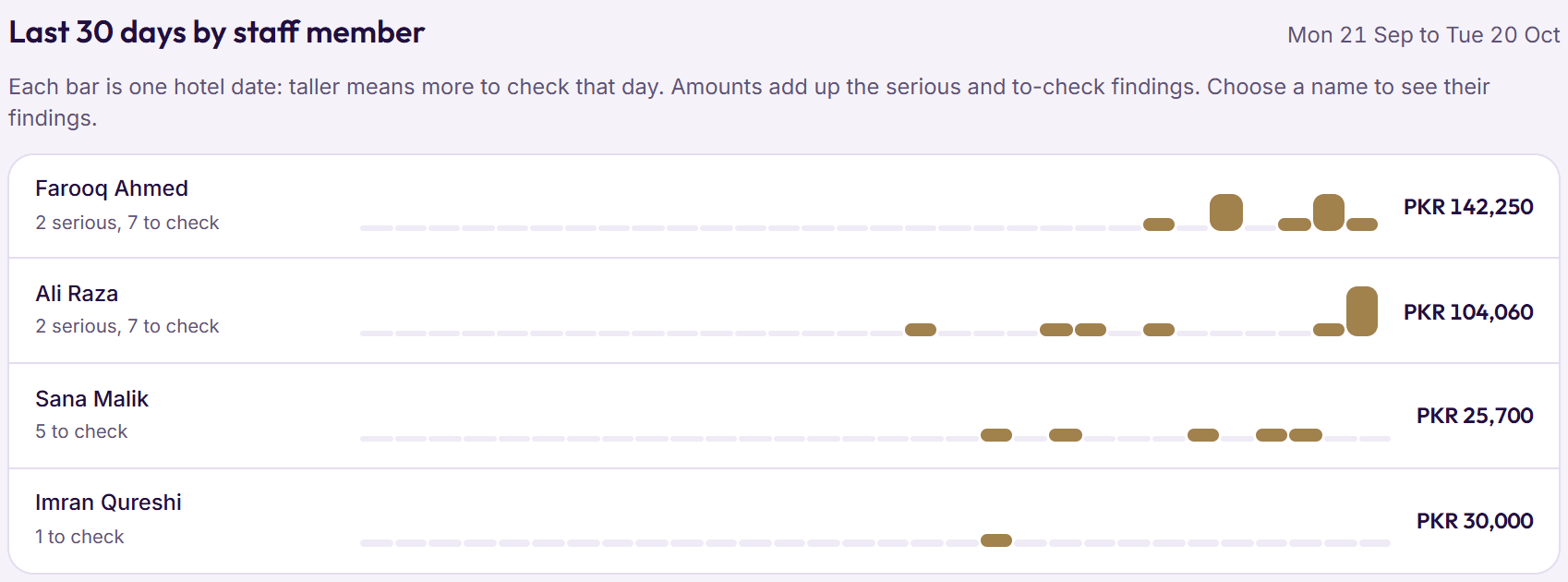
Every check above finds exceptions, not wrongdoing. A short shift is often a miscount, a void a dish sent back, a free night the owner’s own decision. If staff feel every finding is an accusation, they stop recording things fully. So treat each finding as a fact to understand: what the record shows, who did it and when. Then ask.
- Look at 30 days, not one. One short shift tells you little. Three short shifts in a month from the same person, or one person’s discounts far above the rest of the team, is a pattern worth a calm conversation.
- Compare people with the team, not with zero. What stands out is one person far above others doing the same job, or a total that keeps growing week on week.
- Open the record before you ask. Many questions answer themselves once you can see the folio, bill or shift behind them.
- Write down the explanation. When a finding has a good reason, mark it Explained with a short note: “Counted again with Ali, the money was in the safe.” Next month, nobody has to remember.
- Check everyone the same way. Managers and owners give discounts and House Use too. Checks that cover every role are fair, and staff can see that they are.
- Tell staff what is checked. People write fuller reasons and notes when they know someone reads them, and nobody feels watched in secret.

A ten-minute review, every morning
- Last night’s Night audit closed the day, and every cash shift was counted.
- Any shift short or over has a reason, and every Paid out has an expense behind it.
- Large discounts, and each person’s total, look like the business you expected.
- Corrections after check-out, fees taken off, voids after the kitchen ticket and printed bills opened again each have a reason.
- Complimentary and House Use meals and nights were agreed by someone who could agree them.
- No guest left owing, no late check-out went without a decision, and no room was used without a booking.
- Each finding you looked into is marked, with a note where there was a reason.