Where a hotel restaurant loses money
Most restaurant losses in a hotel aren’t one large theft. They are small gaps between steps: a dinner charged to a room whose guest left that morning, a dish cooked from a second copy of a ticket and sold for cash that never reached the till, a main course voided after it was eaten, a kilo of meat that left the store with no dish to show for it.
Each gap sits at a handover: from the table to the kitchen, from the kitchen to the bill, from the bill to the guest’s room, from the store to the plate. A good restaurant till (often called a POS, for point of sale) closes each handover with a record. The rest of this guide takes them one at a time.
Room charges: only for guests who are checked in
Letting guests sign meals to their room is one of the best things a hotel restaurant can offer. It is also where restaurant and rooms most often fall out of step.
- The guest has already left. A late breakfast is charged to room 214 at 11:30. The guest checked out at 10:00, and the charge lands on nobody’s bill.
- The wrong room. A server mishears 214 as 241, and a guest who never ate there finds a $45 dinner on their folio, or doesn’t notice and pays it.
- A visitor, not a guest. Someone gives a room number at the bar who isn’t staying in that room at all.
- The charge arrives after check-out. The guest settled their folio at 9:00, and a room-service order from 8:30 was put through at 9:15. The folio was zero when they left; now it isn’t.
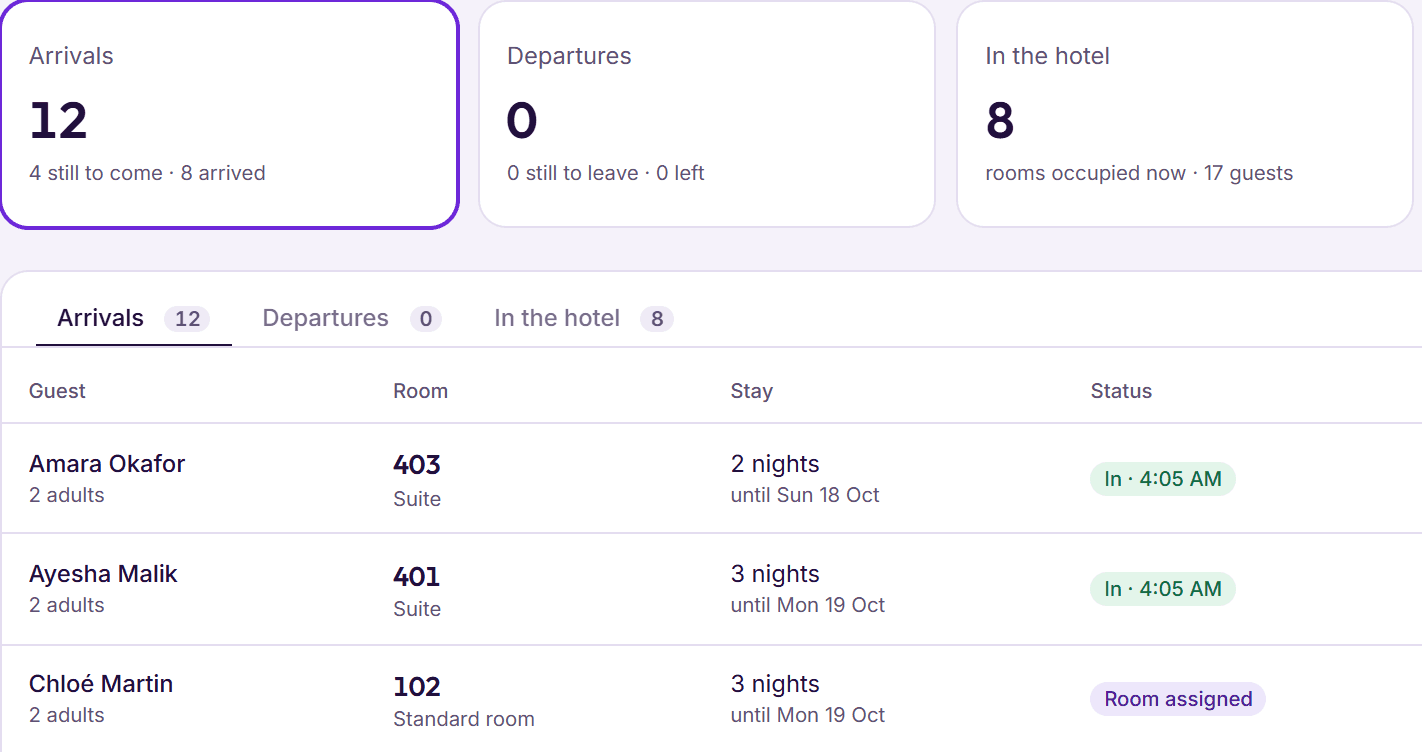
The rule that fixes most of this is simple: a meal can go on a room only while that room has a guest checked in, chosen from the list of in-house guests, not typed as a number. Then ask for the guest’s name as well as the room, and have them sign the bill.
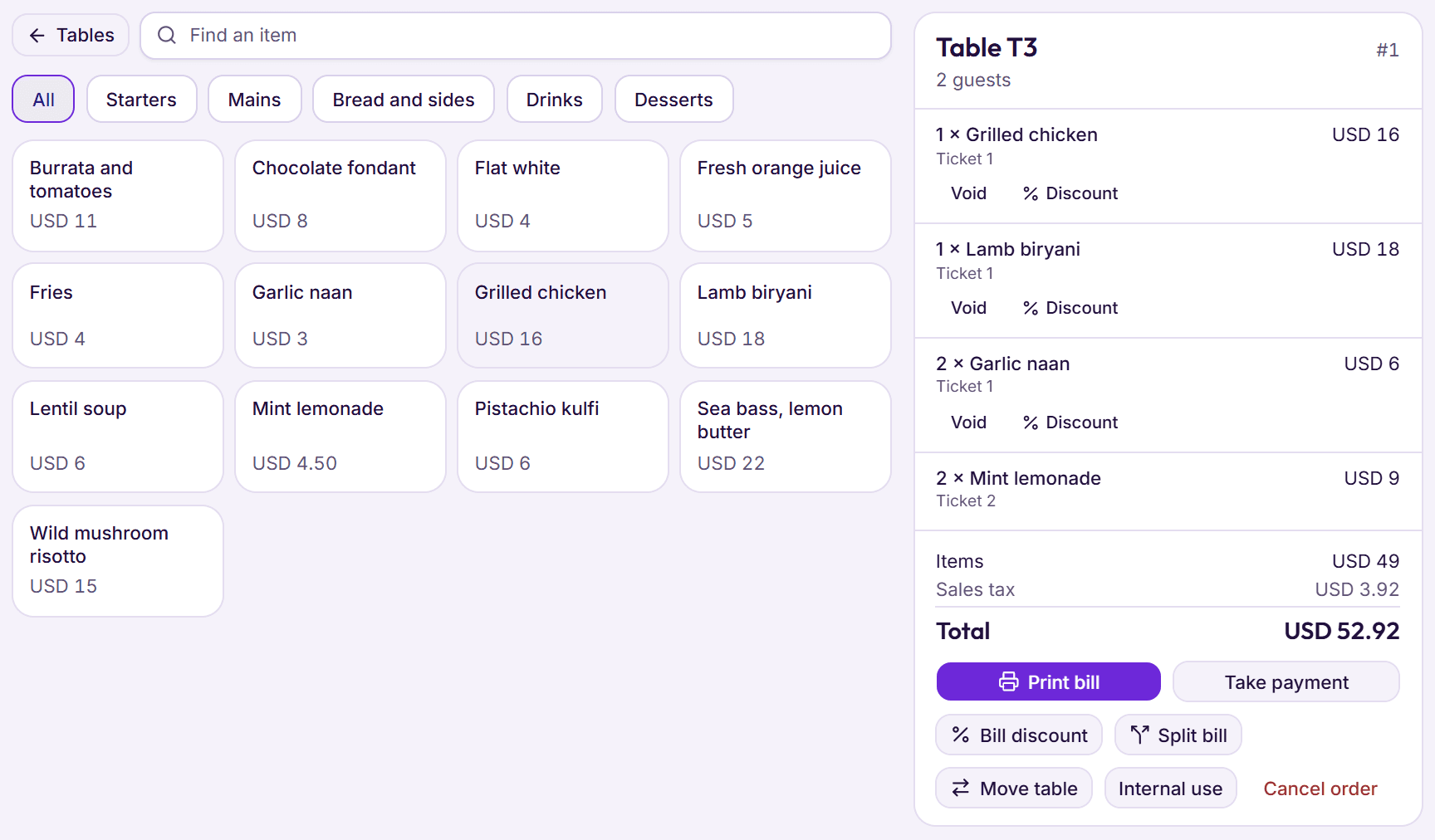
The second half of the rule is timing. A room charge should reach the guest’s folio the moment the bill is closed, with its share of the tax, so the desk sees it before check-out. If it travels on a paper slip carried to reception, some slips will arrive after the guest has gone.
Kitchen tickets that print once
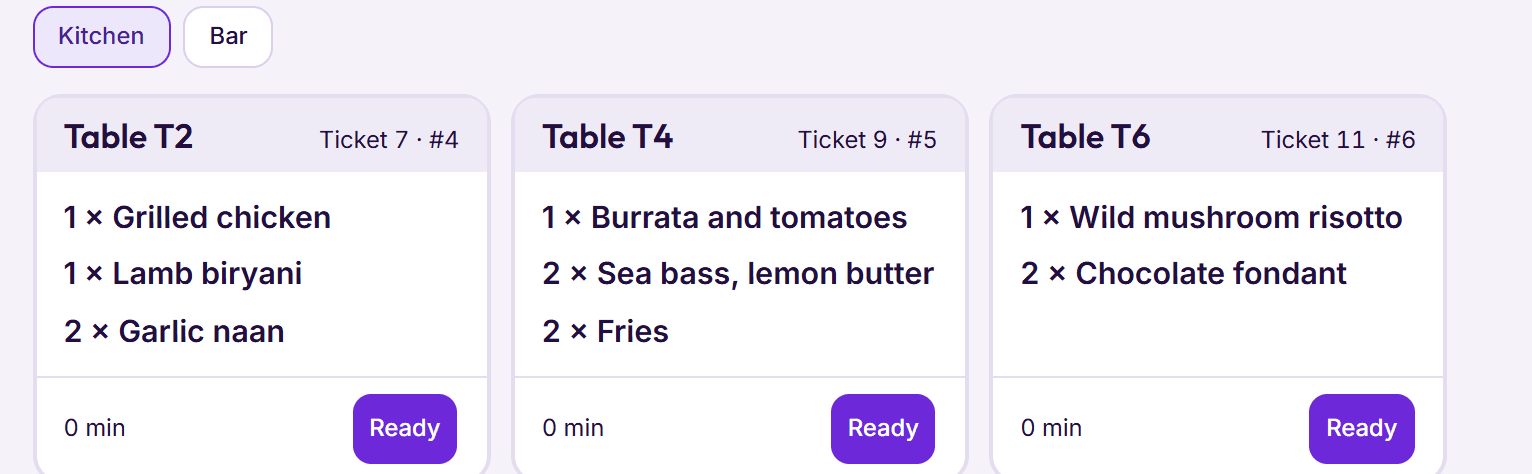
The kitchen ticket (sometimes called a KOT, for kitchen order ticket) is the instruction to cook. It is also the restaurant’s most important control, because food should only leave the kitchen against a ticket, and every ticket should come from an order on the till.
That control breaks when tickets can be printed again freely. A second copy of a ticket for two plates of grilled fish looks exactly like the first. If the kitchen cooks from both, two plates are made and one is billed. The second can be served to a cash customer whose money never reaches the till, and nothing on the order shows it happened.
Rules for kitchen tickets
- The kitchen cooks only from a ticket, never from a word at the pass.
- Each station (kitchen, bar, grill) gets its own ticket, numbered, with the table and the time.
- A ticket prints once. A copy, for a lost or smudged ticket, needs a manager and is recorded.
- Tickets are worked oldest first, and a ticket waiting too long is chased, not reprinted.
- A change after the ticket is sent goes to the kitchen as a new ticket: an addition or a cancel, never a crossed-out note.
Voids after the kitchen had the order
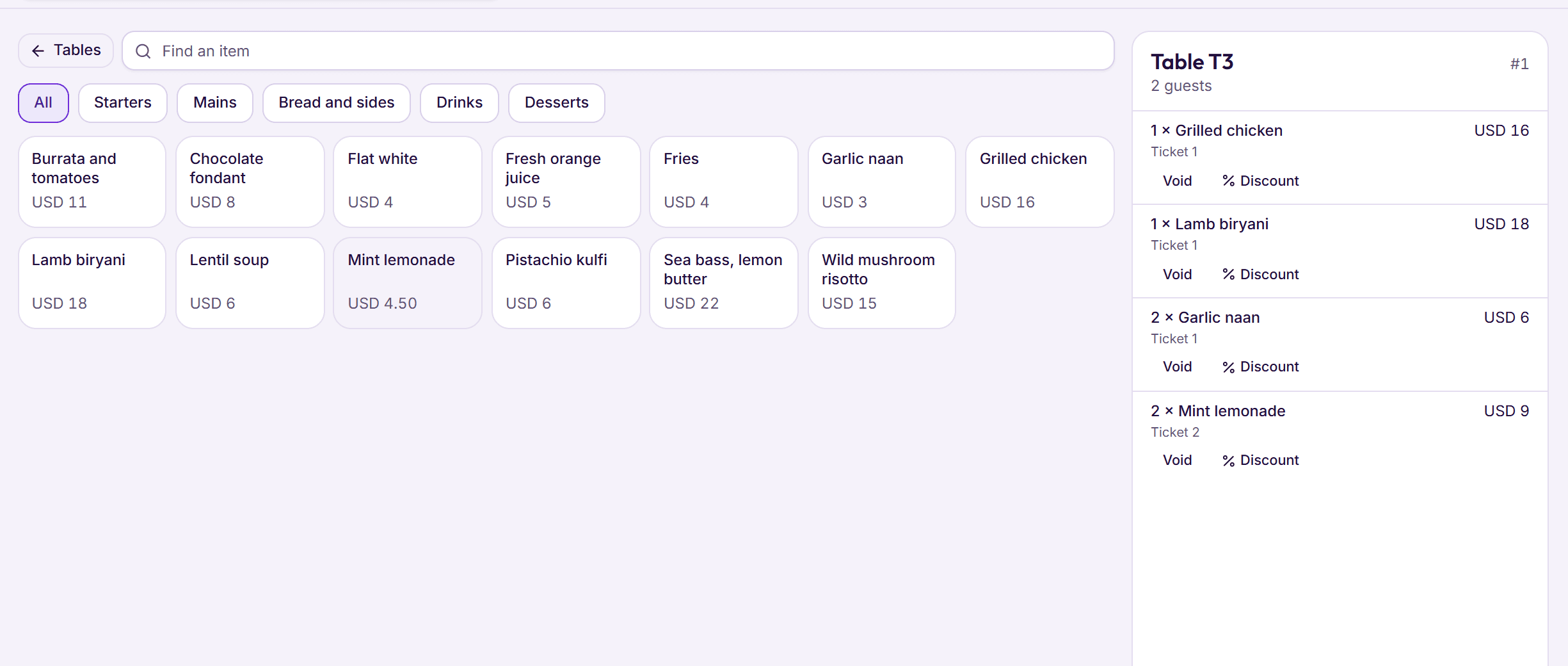
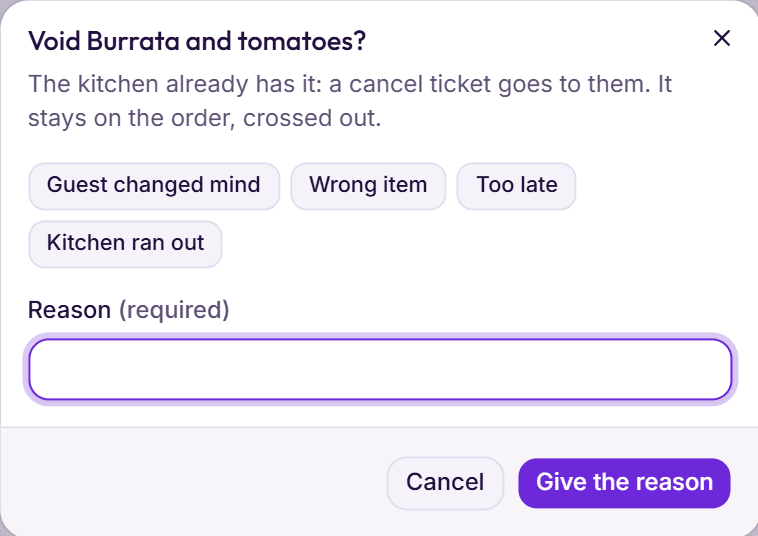
A void takes a dish off an order. Before the kitchen has the ticket, a void costs nothing: the guest changed their mind and no food was made. After the kitchen has it, a void means the ingredients are used and the bill is lower. Sometimes that is the right decision for the guest. It is never free.
| When the dish comes off | Food used? | What should happen |
|---|---|---|
| Before the ticket is sent | No | Staff change the order |
| After the ticket, before cooking | Sometimes | Manager approves; a cancel ticket goes to the kitchen at once |
| After it was cooked or served | Yes | Manager approves, with a reason such as “sent back” |
| After the bill was printed | Yes | Manager approves opening the bill again; the printed total is kept |
Example: table 6 orders a $28 steak. The kitchen cooks it, and it goes out. Fifteen minutes later it is voided as “guest didn’t like it”. The steak is used, the bill is $28 lower, and nothing pays for the meat. If the same server voids three dishes a night after the kitchen ticket, every night, that is worth knowing.
Three things make voids reviewable. The voided dish stays on the order, crossed out, instead of disappearing. The reason is required, chosen from a short list. And the manager who approved it is recorded with it. Our discount policy guide sets out who should approve what.
Recipes that take stock
A restaurant can’t tell whether food is going missing until it knows how much food each sale should use. That is what a recipe does: for each dish, the ingredients and how much of each. Once every dish has one, each dish sent from the till takes its ingredients off the store, and the store’s figures show what should be left.
Worked example: the grilled chicken uses 250 g of chicken a plate. The till sent 40 plates this week, so 10 kg should have left the store. The stock count shows 13 kg gone. The 3 kg gap, about $24 at $8 a kilo, is the question: bigger portions than the recipe, waste, staff meals nobody recorded, or plates that went out without being rung up.
- Start with the dishes that matter. Recipes for the twenty dishes that sell most, and for anything with expensive ingredients (meat, fish, spirits), catch most of the gap.
- Count on a schedule. High-value items weekly, the rest monthly. A count nobody does is the same as no recipes at all.
- Keep one store. If the kitchen, the bar and housekeeping draw on the same store, a bottle of water taken for a minibar is still accounted for.
- Set reorder levels. Running out mid-service leads to substitutions nobody records. Know before the dinner rush that an ingredient is short.
- Record staff and complimentary meals. They use stock too. Recorded, they explain part of the gap; unrecorded, they hide everything else.
Closing the gaps between the restaurant and the rooms
The leaks above happen where the restaurant and the hotel meet. A few rules, kept every day, close most of them. The same handovers come up at the front desk, which our guide to hotel front desk operations covers from the other side.
One record for rooms and restaurant
The till knows who is checked in, and a bill charged to a room appears on that guest’s folio straight away, with its tax. No paper slips walking to reception.
Restaurant cash goes into a counted shift
Cash taken at the till goes into a cash drawer with its own shift, counted at the end like the front desk’s. Our cash handover checklist works the same for the restaurant.
Check room charges before each check-out
The desk looks for restaurant bills on the folio before settling it, and the restaurant closes open room-service orders before the guest leaves.
Close the day with the hotel
Part of each Night audit is checking that restaurant bills charged to rooms are on the right guests’ folios before the day closes. Our Night audit guide has the full list.
Read the restaurant’s exceptions every morning
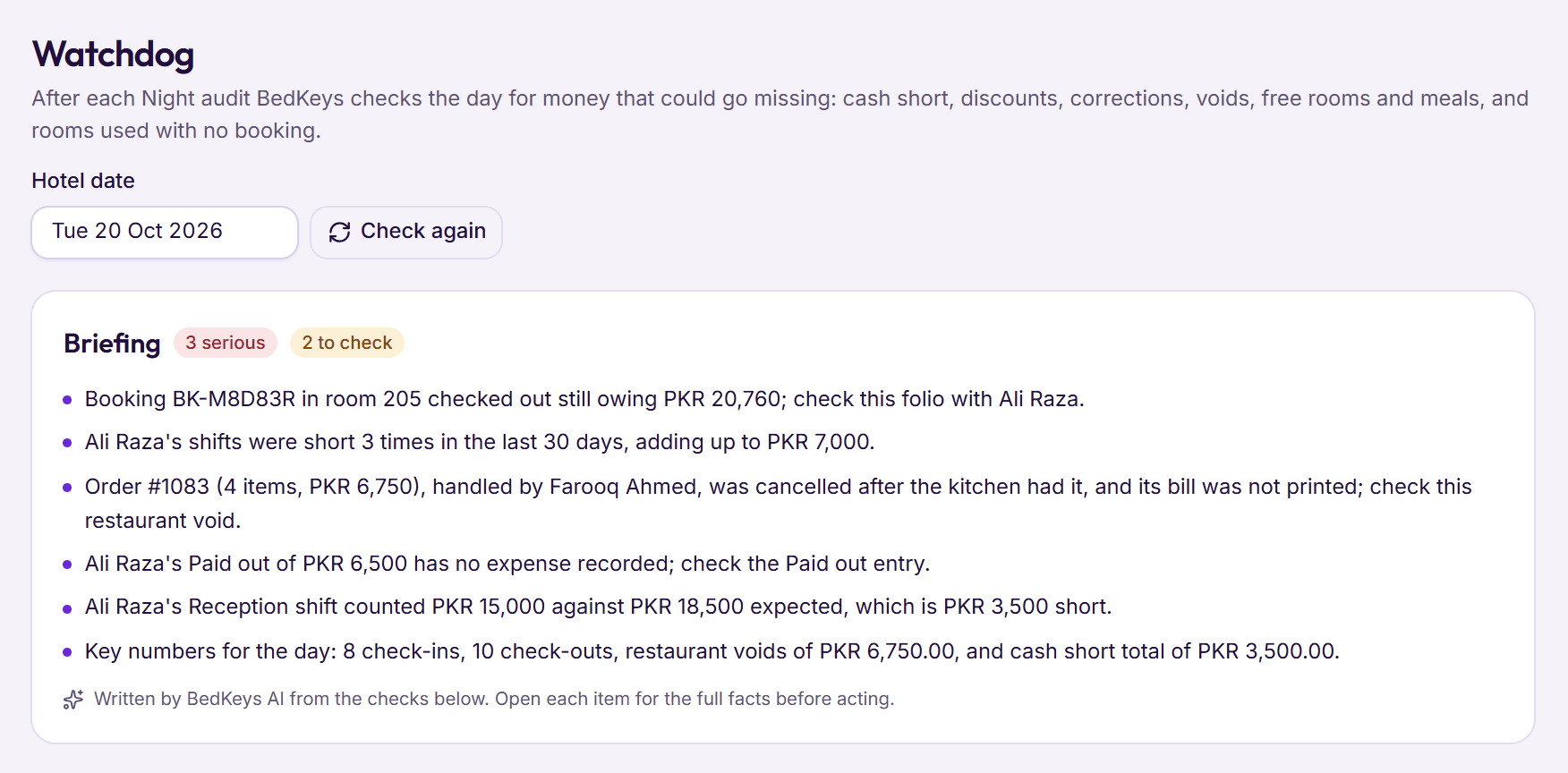
Voids after the kitchen ticket, printed bills opened again or paid less, complimentary meals, and each person’s totals. These are among the most common of the ten leaks in a hotel.
A restaurant close, every night
Before the restaurant closes
- Every open table and room-service order is settled, charged to a checked-in guest’s room, or knowingly left open.
- Every room charge has reached the right guest’s folio.
- The restaurant’s cash drawer is counted and its shift closed, with any short or over explained.
- Every void after the kitchen ticket has a reason and a manager’s approval.
- No printed bill was opened again and closed for less without a manager.
- Complimentary and staff meals are recorded, with who they were for.
- Anything sold out is marked unavailable, so tomorrow’s first orders don’t fail.