Why a discount policy matters more than the discounts
Most hotels don’t lose money because they give discounts. They lose it because discounts are given with no limit, no reason and no record of who agreed. A $20 discount for a returning guest is a good decision. Twenty of them in a week, from one person, with the reason left blank, is a problem nobody can see until the month’s revenue comes in short.
A written policy does three things. It tells staff what they are allowed to do without asking, so they can look after guests quickly. It tells them when to fetch a manager, so they aren’t blamed for a decision that wasn’t theirs. And it gives the owner something to check against, so a review is about the rule, not about the person.
Keep it to one page. A policy staff can’t remember is a policy they won’t follow.
Who may give what
Start with the roles you actually have, and give each a clear amount. Use amounts as well as percentages: “10%” means very different things on a $60 room and a $400 suite, and staff find a dollar figure easier to apply at the desk.
| Role | May give alone | Needs approval from |
|---|---|---|
| Front desk | Up to 10% of the room price, and no more than $20 a night | The duty manager, above that |
| Restaurant staff | Nothing on their own | A restaurant supervisor or manager, for any discount or void |
| Duty manager | Up to 25% of the room price, or a complimentary dish | The general manager, above that |
| General manager | Any discount within the agreed rates; a complimentary night | The owner, for House Use rooms or anything outside the rates |
| Owner | Anything | Nobody, but it is still recorded |
The last row matters. When the owner’s own discounts and free rooms are recorded like everyone else’s, staff see that the rule is about the money, not about them.
When a manager must approve
Beyond the amounts in the table, some situations should always need a manager, whatever the amount, because they are where honest mistakes and deliberate ones look the same.
- Any void after the kitchen has the order. The food has been made; taking it off the bill is a cost, not a correction.
- Any change to a bill the guest has already been given. A printed restaurant bill opened again and closed for less should never be a one-person decision.
- Any fee taken off. A late check-out fee, a cancellation fee, or the fee for a guest who did not arrive (often called a no-show; in BedKeys, Did not arrive). These fees exist in your rules for a reason; waiving one is a decision.
- Any complimentary or House Use room. A free night has a price, even if nobody pays it.
- A manager’s own discount above their limit. Nobody approves their own exception. A manager who goes over their limit asks the next person up.
Approval should be quick. If a manager has to walk across the hotel to approve a $5 dessert taken off a bill, staff will find a way around the rule. A PIN or password typed at the till or the desk, recorded with the approval, is enough.
A reason on every discount
A discount with no reason can’t be reviewed. A discount with a free-text reason like “ok” or “manager” can’t be reviewed either. Give staff a short list of reasons that match your real business, and ask for a short note only when they choose Other.
- Returning guest: a regular who stays several times a year.
- Company or agreed rate: a price agreed in advance with a business or a travel agent.
- Long stay: a stay over a set number of nights.
- Service problem: a room not ready on time, a noisy repair, a dish sent back.
- Price match: the guest showed a lower price for the same room and dates.
- Other: always with a note of what it was.
Example: a three-night stay at $150 a night gets $30 off each night, $90 in all, under Service problem, with the note “air conditioning broken on night one, moved room”. Anyone reading it a month later knows exactly what happened. The same $90 with the reason left blank is a question nobody can answer.
Complimentary and House Use rooms
Every hotel gives rooms and meals away. A complimentary room is given to a guest: a travel agent on a visit, a guest whose stay went badly, a wedding couple’s parents. A House Use room is used by the hotel itself: the owner’s family, a visiting manager, an engineer staying to fix the boiler. Both are normal. Both have a cost.
The rule is simple: record them like any other stay, at the full price, and mark them as free. A free night that isn’t in the system doesn’t show up anywhere, so nobody can say how many there were or what they were worth.
Example: in one month, four House Use nights at $120 each and six complimentary dinners worth $35 each at menu prices. That is $480 of rooms and $210 of food, $690 in all. If the owner agreed to each one, it is a known cost of running the hotel. If not, it is worth knowing about.
- Only the general manager or owner may give a complimentary room; only the owner may give a House Use room.
- Each free room or meal names who it was for and who agreed it.
- Staff meals are recorded separately. They are an expected cost, and mixing them in with complimentary meals hides the real giveaways.
- The month’s total of free rooms and meals, at full price, is read by the owner.
Restaurant voids after the kitchen has the order
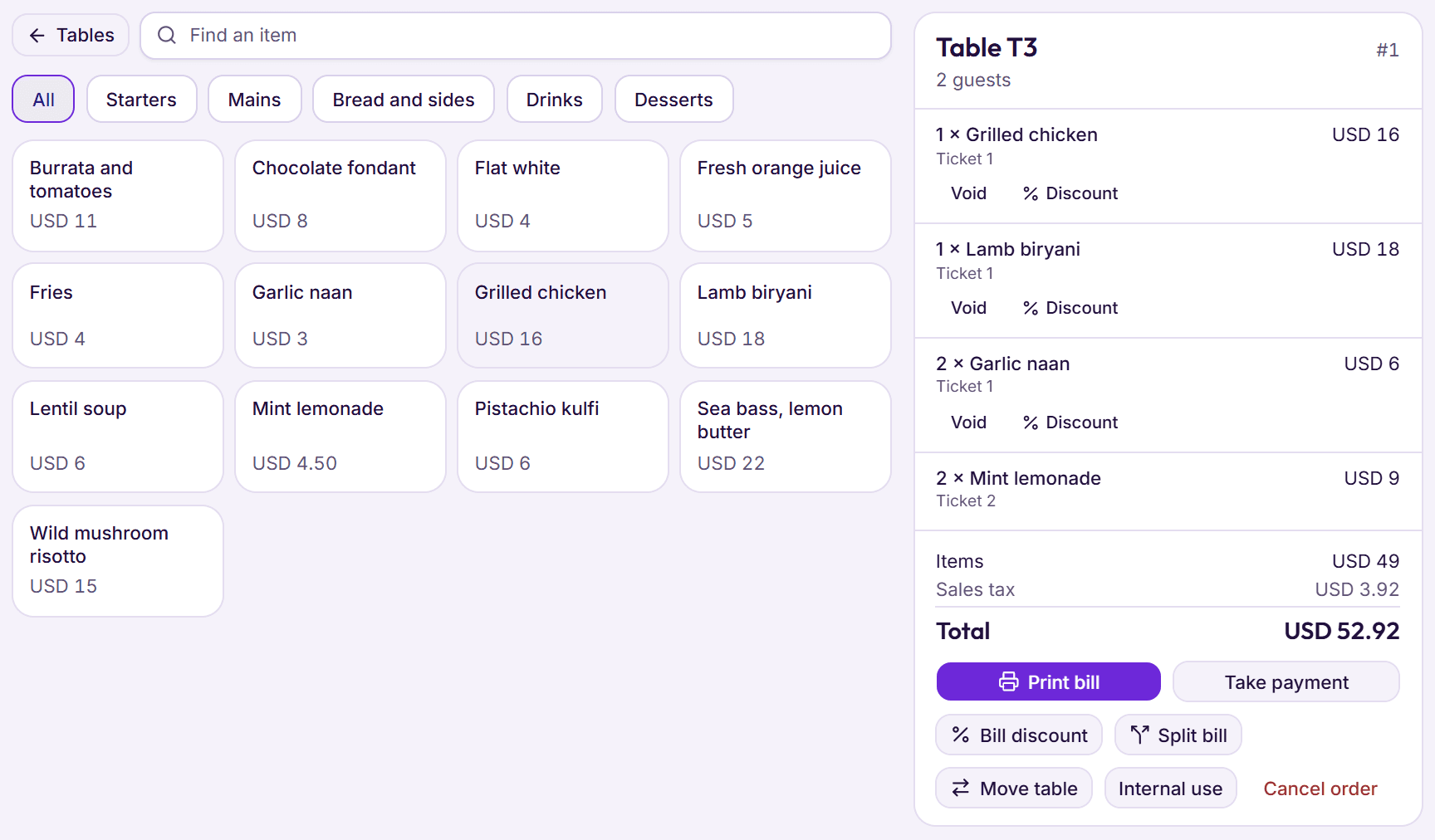
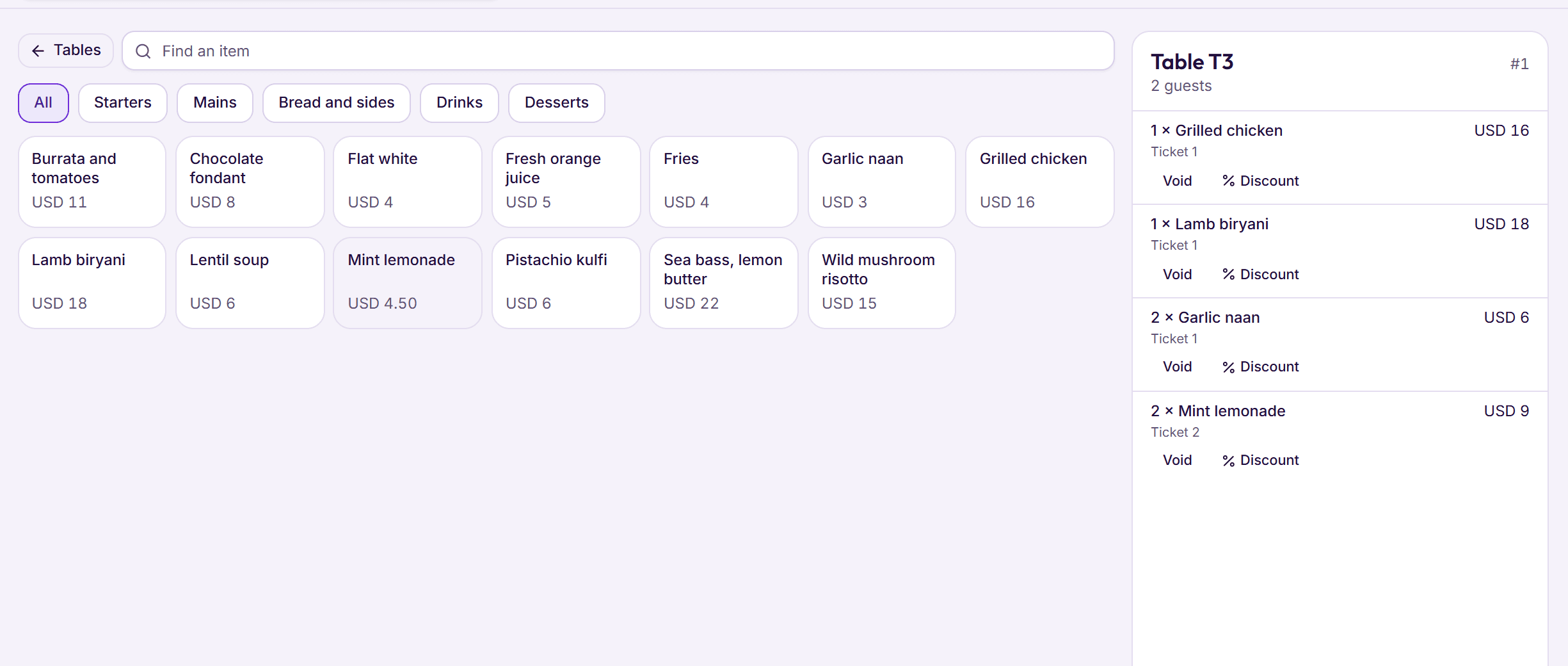
A void in the restaurant means a dish taken off an order. When that happens matters more than anything else about it.
| When | What it costs | The rule |
|---|---|---|
| Before the order is sent | Nothing: no food was made | Staff can change the order freely |
| After the kitchen has the ticket | The food, and often the bill too | A manager approves, a reason is given, the kitchen is told |
| After the bill is printed | Whatever the guest was shown | A manager approves opening it again; the printed total is kept |
Example: a table orders a $28 main course. The kitchen cooks it and it goes out. Ten minutes later it comes back, and it is voided as “guest didn’t like it”. That may be the right thing to do for the guest. But the ingredients are used and the bill is $28 lower, so it needs a manager’s approval, a reason, and a cancel ticket so the kitchen knows not to send another.
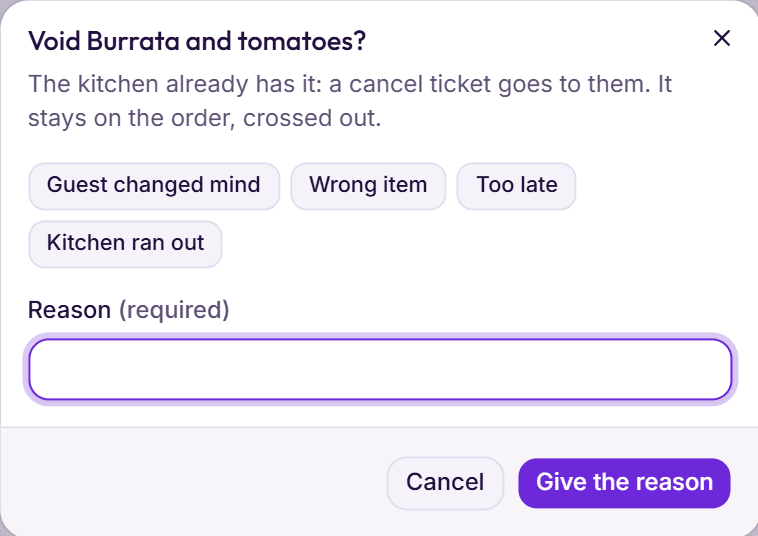
Our guide to running a hotel restaurant covers voids, kitchen tickets and room charges in more detail.
Your one-page policy
Write it down, print it, and go through it with every new member of staff on their first day. This is the whole policy for most hotels.
Discounts, free rooms and voids: the policy
- Each role has a discount limit, in dollars as well as a percentage.
- Above their limit, staff fetch the next person up. Nobody approves their own exception.
- Every discount has a reason from the list, and a note when the reason is Other.
- Voids after the kitchen has the order, bills opened again after printing, and fees taken off always need a manager.
- Mistakes are corrected with a reason, never deleted, and are kept apart from discounts.
- Complimentary rooms and meals are recorded at full price, with who they were for and who agreed them.
- House Use rooms are agreed by the owner and recorded like any other stay.
- Staff meals are recorded separately from complimentary meals.
- Every role, the owner included, follows the same rules and is checked the same way.
- Staff know what is checked, and that the owner reads it every morning.
How to review exceptions without accusing anyone
A policy is only as good as the review behind it. The review is also where most owners go wrong: they treat every exception as a suspicion, staff stop writing honest reasons, and the records get worse. The aim is the opposite. Treat each exception as a fact to understand, and save conversations for patterns.
Read the exceptions every morning
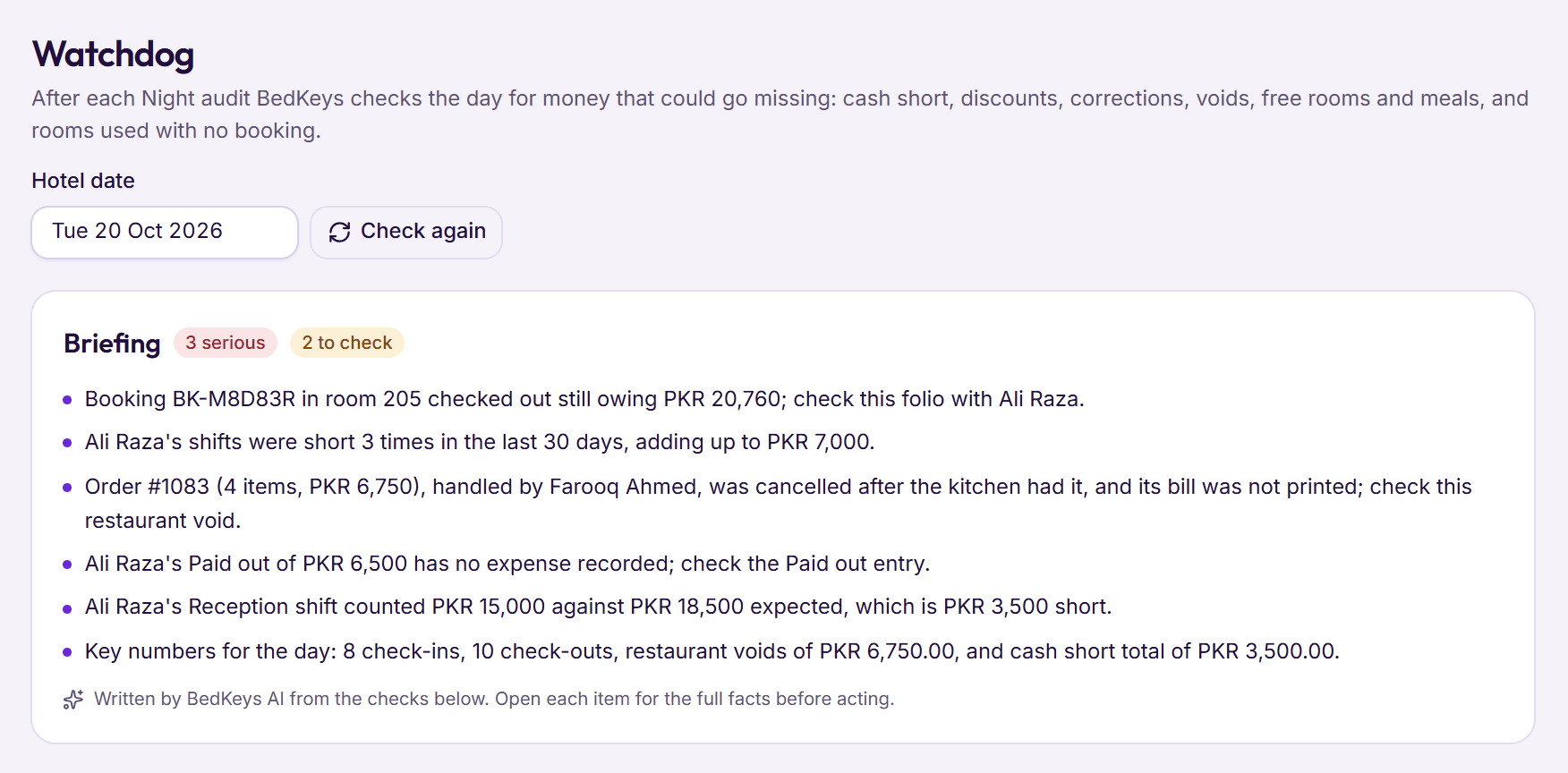
Large discounts, each person’s total for the day, voids after the kitchen ticket, bills opened again, fees taken off, and free rooms and meals. Straight after the Night audit is best, while people still remember.
Open the record before you ask
The folio or the bill shows the reason, who gave it and who approved it. Most questions answer themselves at this point.
Write down the explanation
When there is a good reason, note it next to the item. Next month nobody has to remember, and the person who gave the discount can see it was accepted.
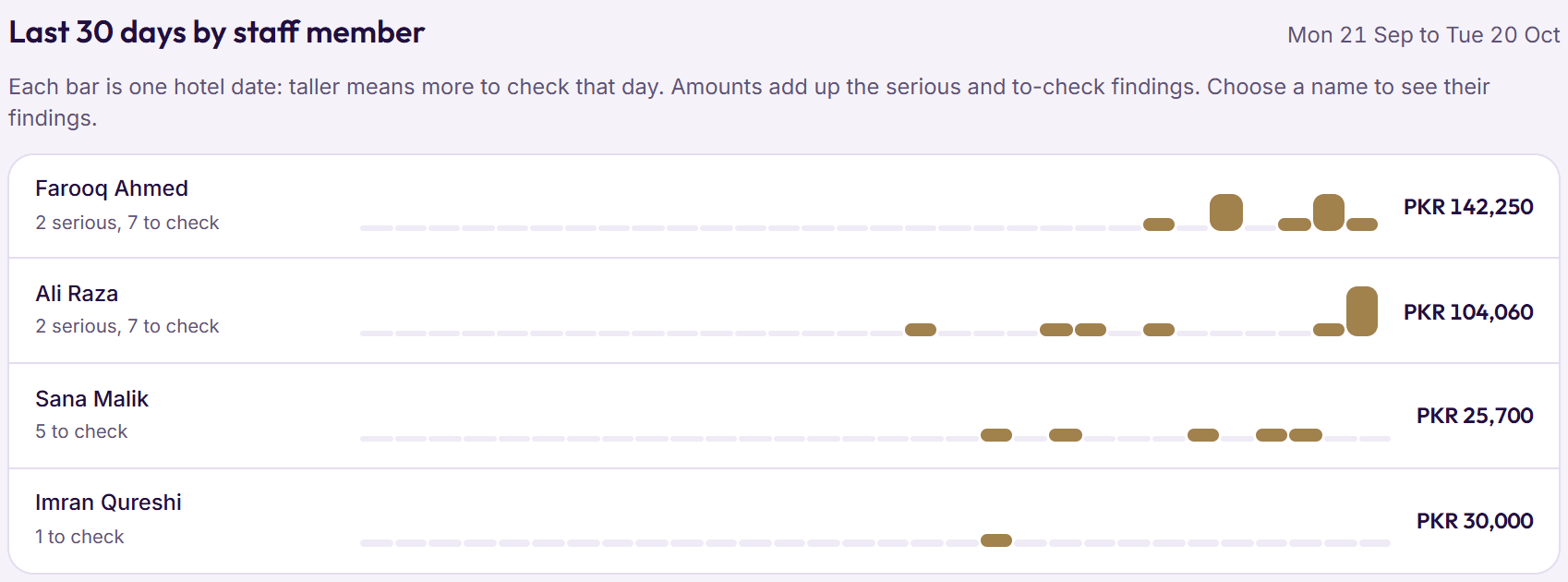
Look at 30 days, by person
Compare each person with others doing the same job, not with zero. One receptionist giving three times the discounts of the rest of the desk is worth a conversation; the desk giving discounts at all is not.
Talk about the rule, not the person
Start with what the record shows and what the policy says. Often the fix is a clearer rule or a better reason list, not a warning.
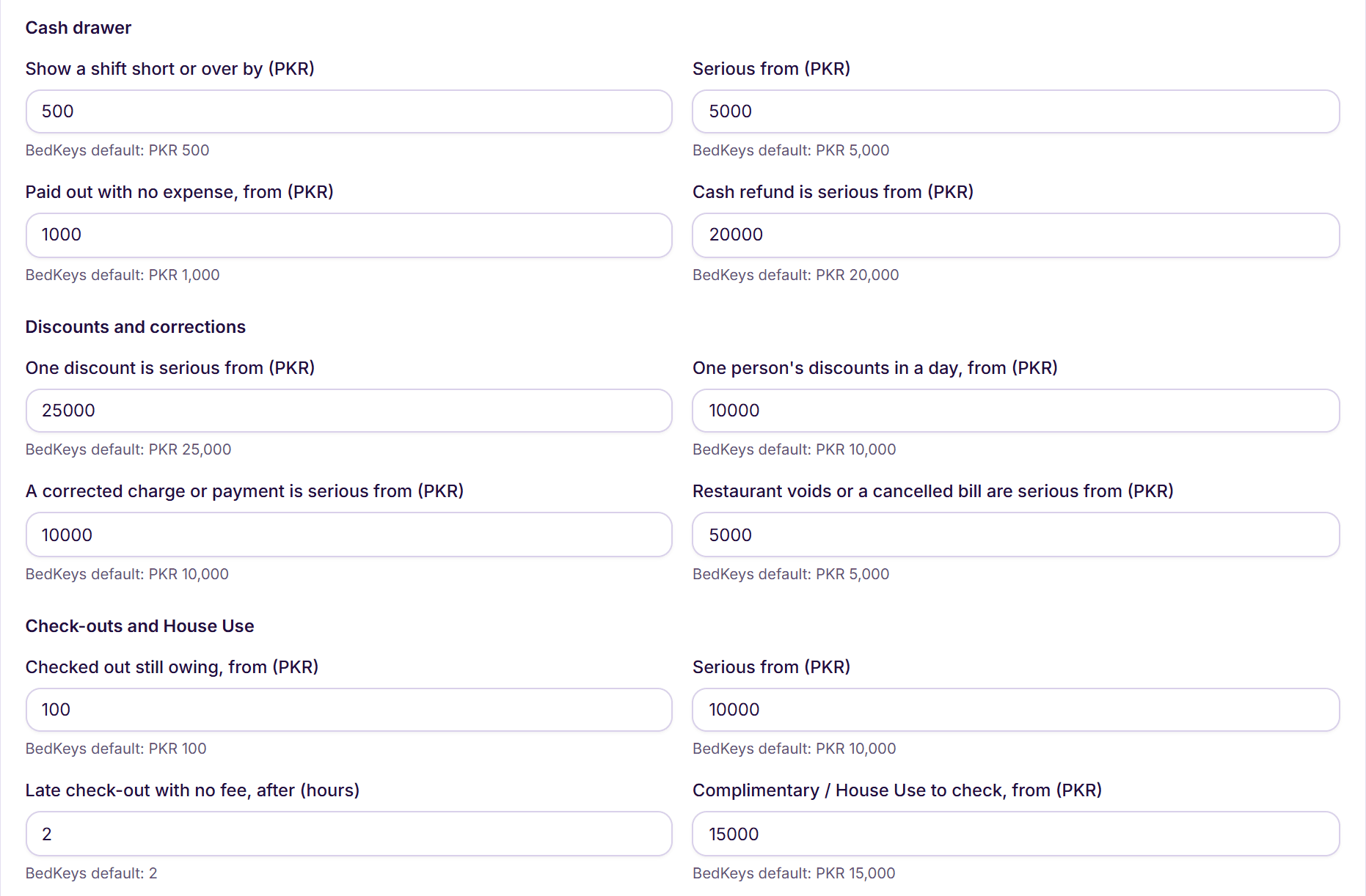
Set the review to match your policy. If the desk may give $20 a night on its own, a $15 discount isn’t worth reading every morning; a $200 one is. Decide the amount at which each kind of exception is worth a look, and change it as you learn what normal looks like for your hotel.
Discounts are one of ten common ways money slips out of a hotel. Our guide to hotel revenue leakage covers the others, from short cash shifts to rooms used with no booking.