What is a channel manager?
A channel manager is software that keeps a hotel’s rooms and prices in step across the places it sells them. In hotel language each of those places is a channel: online travel agencies (OTAs, the booking sites), wholesalers, and sometimes your own booking page.
Without one, each booking site has its own copy of your free rooms and prices, kept up by hand in that site’s own back office. With one, there is a single source: your hotel system. The channel manager reads it and updates every site for you.
It works in two directions. Out: your free rooms, prices and booking rules go from your system to each site. In: bookings, changes and cancellations made on those sites come back into your system, so they sit on the room grid with every other booking.
How a channel manager works, step by step
Your rooms and rates are set once
Room types, rates and prices live in your PMS. That is the one place staff change them.
Each site’s rooms are matched to yours
When you set it up, each room type and rate on each booking site is linked to the matching one in your system. This mapping is where most early mistakes happen, so check it carefully.
Free rooms and prices go out
The channel manager sends how many rooms of each type are free on each night, and the price, to every site. A change in your system goes out to all of them.
Bookings come back
A guest books on a site. The booking comes into your system with the guest’s details, dates, room type and price.
Every other site is updated
The room that was just sold comes off sale on every other site, so nobody else can book it.
The problem it solves: overbookings
An overbooking happens when two guests are confirmed for the same room on the same night. It is the classic result of selling on several sites by hand: the last room is booked on one site at 9:02 p.m., and on another at 9:05 p.m., before anyone has closed it there.
The cost is more than one lost booking. Someone has to tell a guest, often on arrival, that their room isn’t there, and find them another hotel. Most hotels pay for that room and the taxi to reach it.
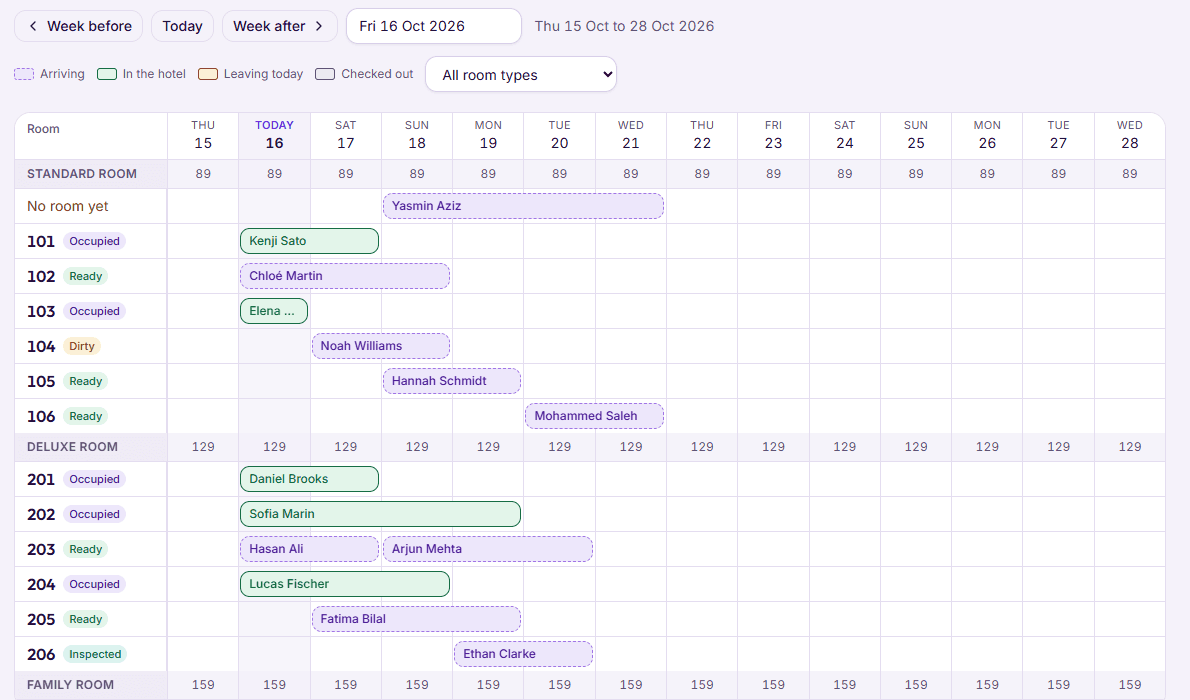
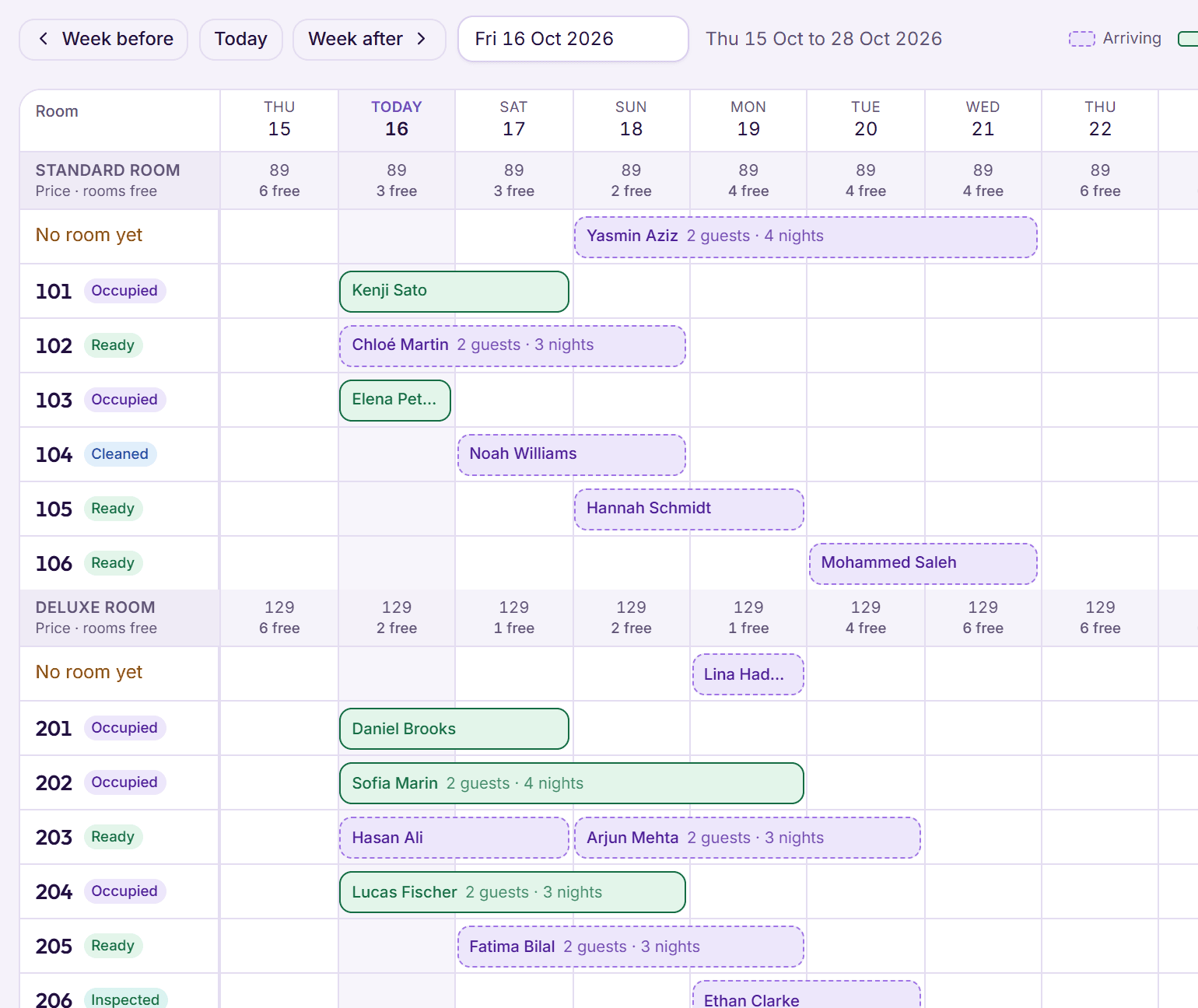
A channel manager cuts this risk, but doesn’t remove it entirely. Updates take a moment to travel, and a mismatch in the room mapping can still offer rooms you don’t have. A clear room grid, where you can see every booking from every source, is still the place to check.
Keeping prices in step
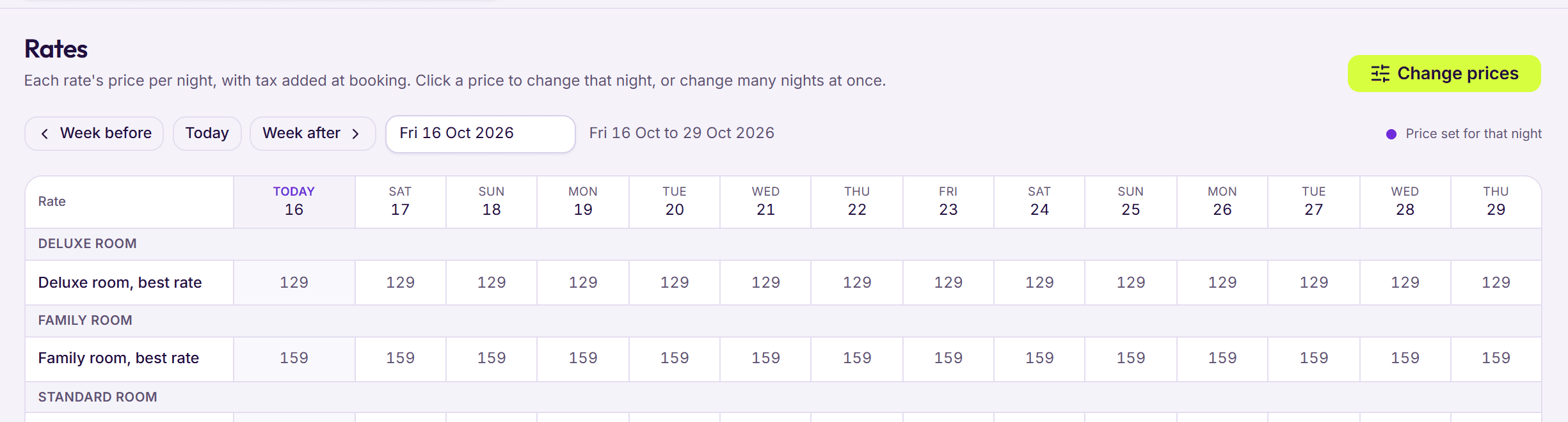
The second job is prices. Without a channel manager, raising your price for a holiday weekend means logging in to every site and changing it there, one by one. Miss one, and that site sells the weekend at last month’s price. With one, you change the price once in your own system and it reaches every site.
Most channel managers can also send booking rules alongside the price, such as a minimum stay on busy dates or dates closed to new arrivals. Check which rules a provider sends to which sites, because not every site accepts every rule.
Channel manager, booking engine and PMS: what each does
The three are often sold together and easily confused. They do different jobs.
| System | What it does | Who uses it |
|---|---|---|
| PMS | Runs the hotel: bookings, check-in, room status, folios, the Night audit and reports. The one true record of rooms and bookings. | Your staff, every day |
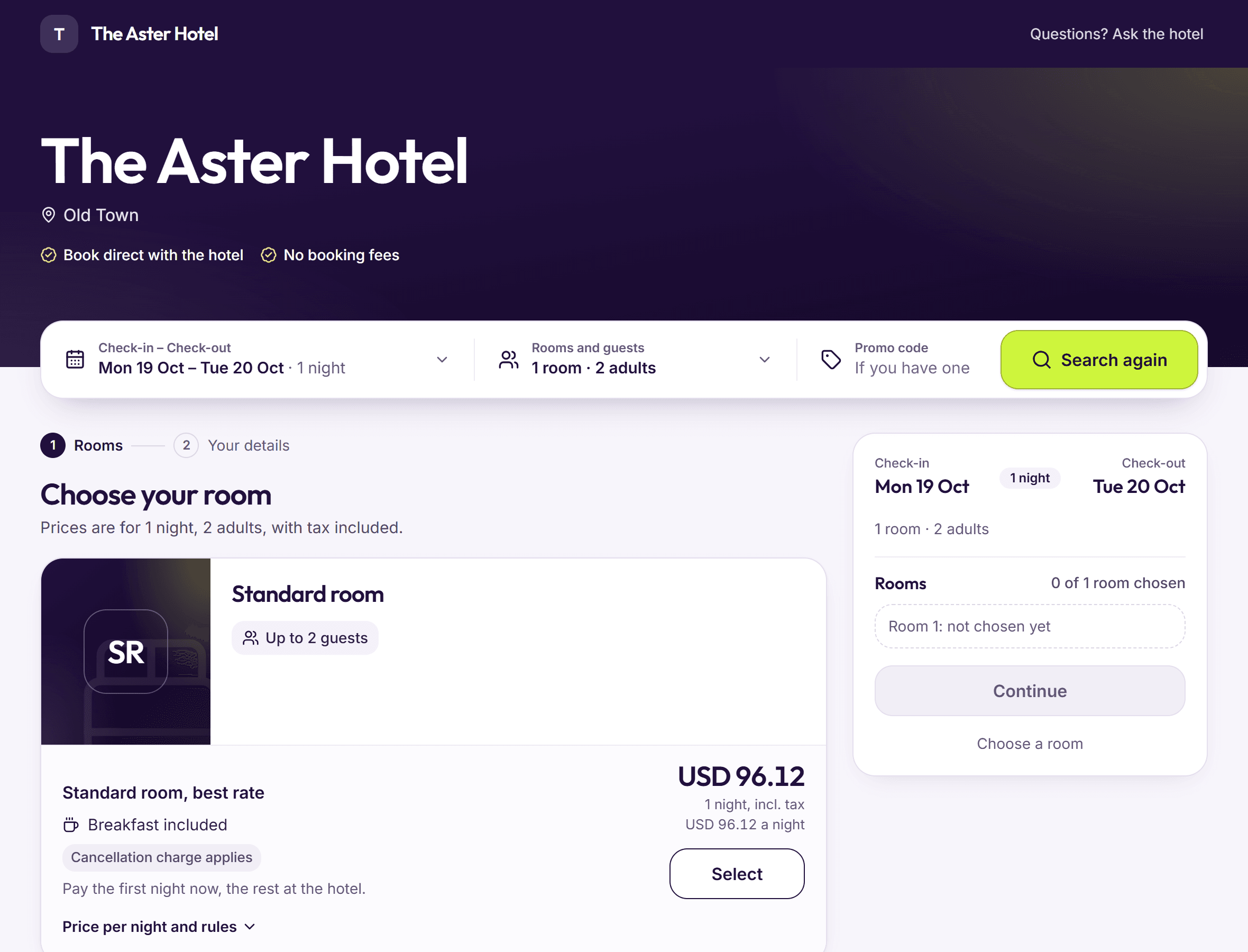
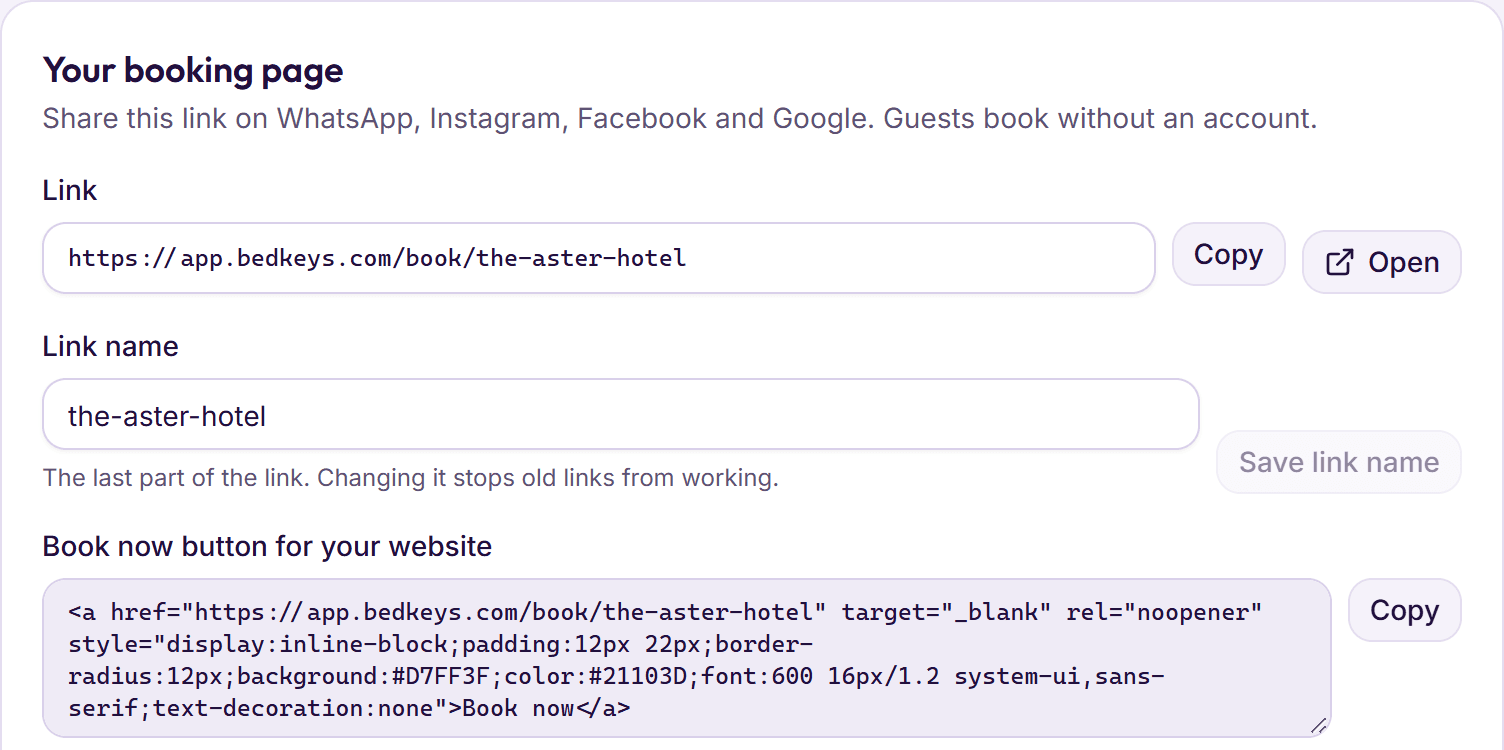
| Booking engine | Takes bookings on your own website or link, with no booking site in between and no commission. | Guests who come to you direct |
| Channel manager | Sends free rooms and prices out to the booking sites and brings their bookings into the PMS. | Runs in the background, between systems |
Our guide to hotel booking engines covers the second in detail, and what a hotel PMS is covers the first.
Can a small hotel manage without one?
Yes, often. Many small hotels sell on one or two booking sites and take most of their bookings by phone, WhatsApp, at the desk and on their own booking page. For them, a channel manager can cost more than the overbookings it would prevent. What matters is a strict routine, followed every time.
Selling on booking sites without a channel manager
- Keep every booking, from every source, in your PMS. It is the only record of what is free.
- Give one person per shift the job of updating the booking sites.
- When a booking arrives from anywhere, close that room on every other site straight away.
- Don’t offer your last room or two on the booking sites on busy nights; keep them for direct guests and the desk.
- Change prices in your PMS first, then on each site, on the same day.
- Check each site’s bookings against the room grid every morning and every evening.
- Close a site’s sales for a night as soon as it is nearly full, rather than waiting for the last room.
Signs you need a channel manager
- You sell on three or more booking sites, and updating each one takes more than a few minutes a day.
- You have had an overbooking in the last few months, or a near miss.
- Booking sites bring a large share of your bookings, so their rooms have to stay open right up to the last one.
- You change prices often, by season, weekday or how full you are.
- Nobody is at the desk at night, when bookings still arrive.
- You run more than one hotel, each with its own rooms on each site.
If none of these fit, spend the time on direct bookings instead. Every guest who books with you directly is one less booking to keep in step, and no commission to pay. Our guides on direct bookings and booking-site commission and how to get more direct bookings show where to start.
What to ask a channel manager provider
Channel managers look alike in a demo. The differences show when a site goes down, a mapping is wrong or a booking is changed at midnight. Ask each provider these questions, and ask to see the answers working, not on slides.
| Ask | Why it matters |
|---|---|
| Which booking sites do you connect to, in my market? | A channel manager is only as good as its list. Check the sites you use now and the ones you plan to add. |
| Is the connection two-way, for every site? | Bookings, changes and cancellations should all come back, not only new bookings. |
| How fast does a booking close the room elsewhere? | Seconds or minutes is what you want. Every minute of delay is a chance of an overbooking. |
| Does it connect to my PMS directly? | If bookings arrive in a separate system that someone has to retype, you have moved the problem, not solved it. |
| What does it send: rooms, prices, booking rules? | Some send only free rooms. Check prices and rules such as a minimum stay are included. |
| What happens when a connection fails? | Ask how you are told, how fast, and what the provider does about bookings made while it was down. |
| Who helps with an overbooking or a wrong mapping? | Find out the support hours, in your time zone, and whether you reach a person. |
| What does it cost in total? | A monthly fee, a fee per site, a fee per booking, set-up costs: add them up for a real month. |
| How long is the contract, and how do I leave? | Check the notice period, and that your bookings stay in your PMS if you stop. |