What is a hotel booking engine?
A hotel booking engine is the software behind the Book now button on a hotel’s website. The guest enters their dates, sees which rooms are free and what they cost, fills in their details and books. The booking goes straight to the hotel, with nobody at the desk typing it in.
It is not the same as a channel manager. A channel manager sends your free rooms and prices out to booking sites and brings their bookings back. A booking engine is your own shop window: the bookings it takes come from guests who came to you.
Most booking engines look alike in a demo. The differences show when a real guest books on a phone late at night, or when the booking reaches your desk.
Prices with tax, shown up front, on a phone first
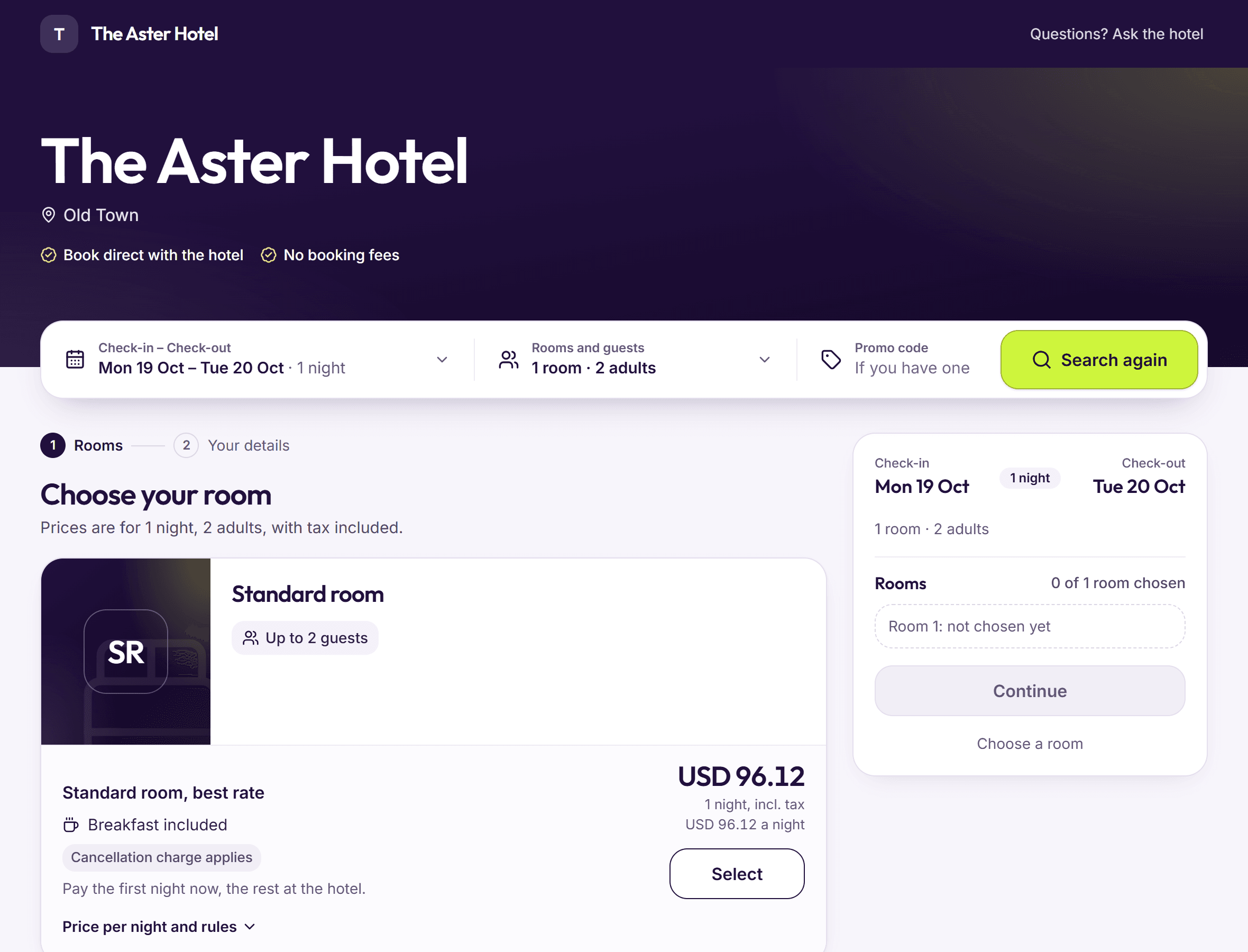
The first price a guest sees should be the price they pay. A room shown at one price, with a larger total at the last step once tax is added, feels like a trick, and it gives the guest a reason to stop and compare.
Ask to see the room list on a phone, not a laptop. Guests who find you on Instagram, WhatsApp or your Google listing are usually holding one. Check that the photos load and the prices are easy to read.
- A price with tax on every room and rate, from the first screen.
- Photos, beds and how many rooms are left for each room type.
- Other dates suggested when the guest’s dates are full, so they don’t leave with nothing.
Booking without an account, with the cancellation deadline in view
A guest booking one stay doesn’t want a password. An account adds a step for no gain: a name, a mobile number and an arrival time are enough to hold the room and reach the guest.
Before the guest confirms, the page should show the free-cancellation deadline: the date until which they can cancel without a charge. A guest who saw the rule before booking has much less to argue about later.
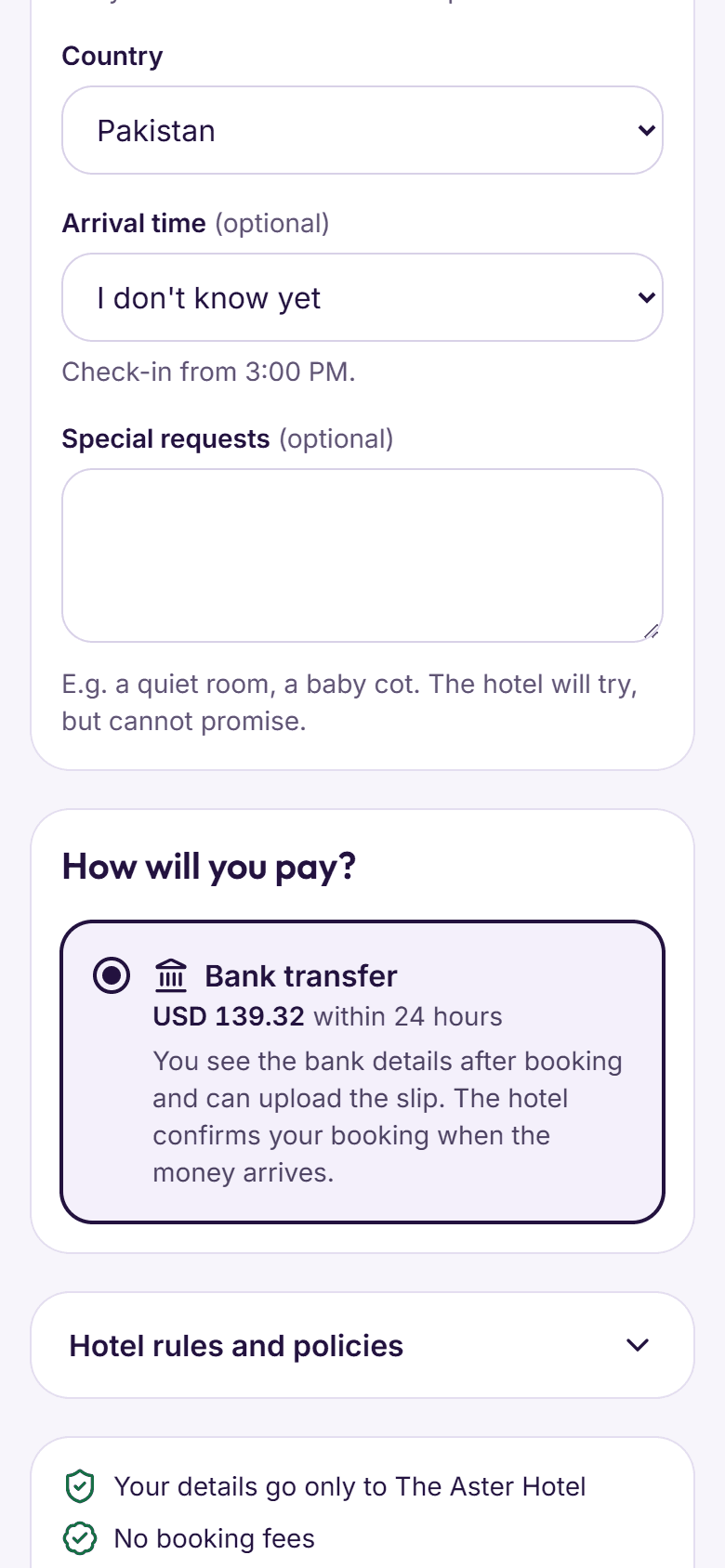
The advance rule: what guests pay now
Many hotels ask for a deposit (in BedKeys, an advance payment) to hold a room. Your booking engine should let you set the rule yourself, rather than take the same amount from everyone.
- Nothing now. The guest pays at the hotel. Easiest for the guest, and riskiest for you on busy dates.
- The first night. A common middle ground: if the guest doesn’t come, the first night is covered.
- A percentage of the stay, for longer or larger bookings.
- The full stay, for the dates when an empty room hurts most.
Ask how guests pay the advance. With bank transfers, the desk needs a clear list of transfers waiting, and an unpaid booking should cancel itself after a time you choose, so the room goes back on sale. When a guest never comes (a no-show; in BedKeys, Did not arrive), the advance and your cancellation rules decide what you keep.
Promo codes, ready-made links and a Book now button
A booking engine only earns its fee if guests reach it. Three tools do most of the work.
- Promo codes. A code with its own discount, and ideally a minimum number of nights, lets you reward returning guests or fill quiet weeks without lowering your public price.
- Ready-made links. A link with the dates, number of guests or a promo code already filled in. Staff send it on WhatsApp in reply to a question, and the guest lands on the right rooms.
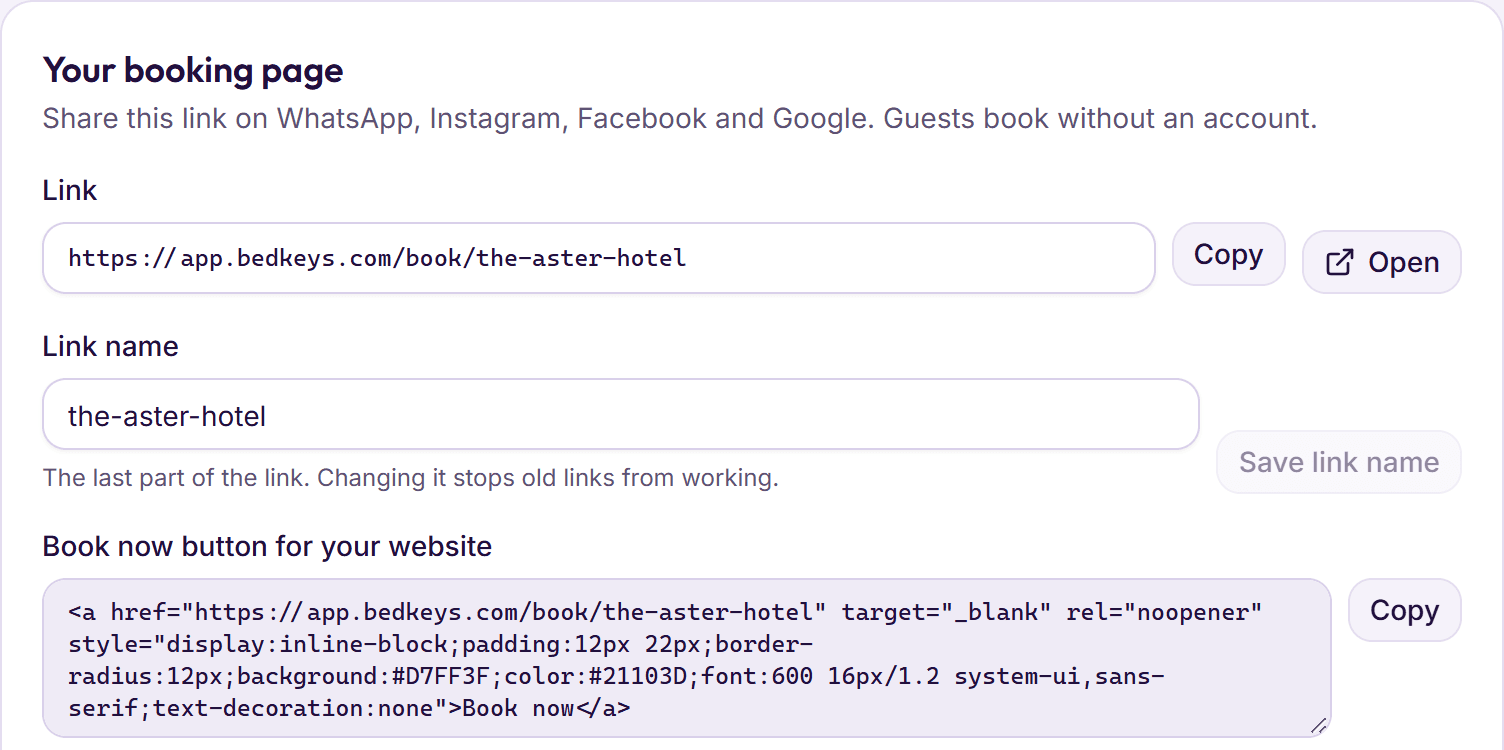
- A Book now button. A button or search box you paste into your own website, which opens your booking page. If you have no website, the page’s own link should work on its own, on Instagram or your Google listing.
Ask, too, for a cut-off for tonight. Without one, a guest can book a room for tonight at 11 p.m., when nobody is at the desk to check them in.
Bookings that land in your PMS with everything else
This is the part a demo often skips. If online bookings arrive as emails that someone has to type in, sooner or later a room is sold twice. Ask the seller to make a test booking and show you where it goes.
- The booking appears in the PMS by itself, and the room comes off sale the moment it is booked.
- Online bookings sit with every other booking and on the room grid, marked so you know where they came from.
- They follow the same rates, tax and cancellation rules as bookings taken at the desk.
- A room out of order tonight isn’t offered online.
- An advance paid before arrival comes off the folio at check-in, like any other.
What it costs: monthly fees and commission
Booking engines are paid for in one of three ways: a monthly fee, a commission on each booking, or both. Ask which, and work it out on a real month of your own bookings.
A monthly fee is a known cost. A commission grows with every booking, so the more direct bookings you win, the more you pay, which works against the reason you wanted the engine.
Ask what the price includes, too. An engine that needs a separate system to reach your front desk costs more than its price.
A checklist before you choose a booking engine
Take this to every demo. Ask the seller to show each point on a phone, with a test booking, not on slides.
Before you choose a hotel booking engine
- Every price includes tax, from the first screen to the confirmation.
- The page is easy to use on a phone: photos, prices and the button to book.
- Guests can book without making an account.
- The free-cancellation deadline is shown before the guest confirms.
- You set the advance rule: nothing now, the first night, a percentage or the full stay.
- Promo codes can have their own discount and a minimum number of nights.
- You can share ready-made links with the dates or a promo code filled in.
- A Book now button or a search box goes on your own website.
- Bookings land in your PMS by themselves, and the room comes off sale at once.
- You know exactly what you pay: a monthly fee, a commission, or both.