What a hotel cancellation policy has to say
A hotel cancellation policy is the rule for what a guest pays if they cancel, change their dates or don’t arrive. It sits on each rate, not on the hotel as a whole: a flexible rate and a cheaper non-refundable rate can sit side by side for the same room.
Guests rarely argue with a rule they saw before booking; they argue with one they discover afterwards. The test of a good policy is whether a guest can read it in ten seconds and know where they stand. It should answer five questions.
- Until when is it free? A date and a time, in the hotel’s own time, not “48 hours before” left for the guest to work out.
- What does it cost after that? The first night, a share of the stay, or the whole stay.
- What happens if the guest doesn’t arrive? Usually the same charge as a late cancellation, sometimes more.
- What does the guest pay now? Nothing, or an advance payment, and whether it can come back.
- How does the guest cancel? By message, by phone or on your booking page, and when a cancellation counts as received.
The four policies most hotels use
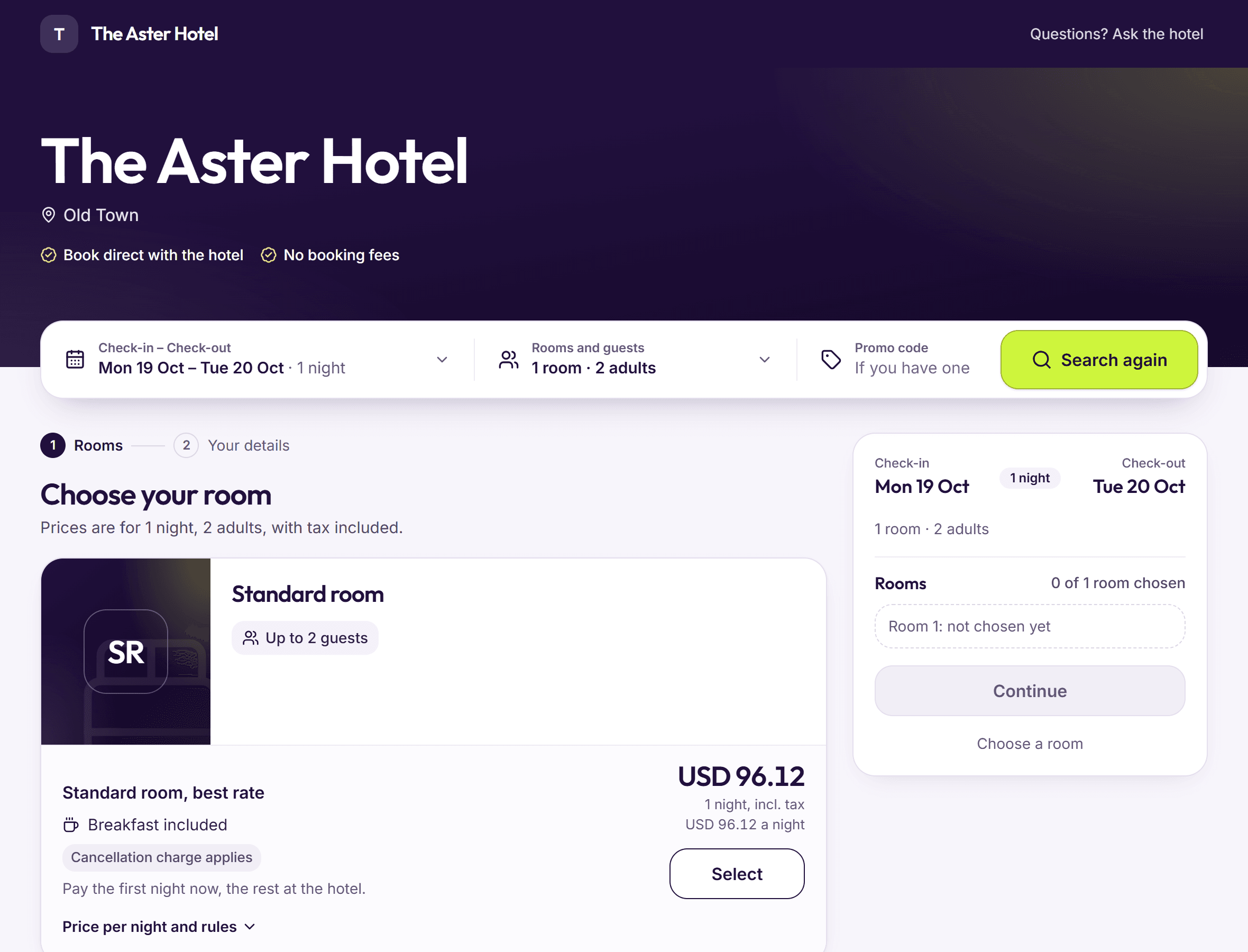
Almost every hotel cancellation policy is one of four shapes: free until a cut-off, then a charge that grows from the first night to the whole stay. The last shape, with no free period at all, is the non-refundable rate.
| Policy | Cancelled before the cut-off | Cancelled after the cut-off | Did not arrive | Suits |
|---|---|---|---|---|
| Free, then the first night | Nothing | $120 | $120 | Most rates, most of the year |
| Free, then a share (50%) | Nothing | $180 | $180 | Long stays and busy seasons |
| Free, then the whole stay | Nothing | $360 | $360 | Peak dates, events, groups |
| Non-refundable | $360 | $360 | $360 | A cheaper rate for guests sure of their plans |
The first-night policy is the common middle ground: it covers the night a late cancellation makes hardest to resell. A share or the whole stay suits dates when every night is hard to resell, such as a festival weekend.
Non-refundable rates: when they make sense
A non-refundable rate trades flexibility for price. The guest pays less and gives up the right to cancel for free; you get money you can count on. It works best as a second rate next to a flexible one, so the guest chooses, rather than as the only rate you sell.
- Make the saving worth it. A room at $120 on the flexible rate and $108 non-refundable (10% less) gives a real reason to choose it. A $2 saving doesn’t.
- Take the payment at booking. A non-refundable rate with nothing paid is only a promise. Ask for the full stay as an advance payment.
- Say what can still change. Many hotels allow a date change on a non-refundable rate, once, if the new dates are free. If you do, say so; if you don’t, say that too.
Choosing the cut-off
The cut-off is the moment the free period ends. Set it at the time you need to resell a room.
- 24 to 48 hours: city hotels, business guests, quiet periods.
- 3 to 7 days: weekends, holidays and hotels far from a city, where last-minute guests are fewer.
- 14 to 30 days: groups, weddings, events and the few peak weeks of the year.
Always give the cut-off as a time of day in the hotel’s own time: “free until 2 p.m. hotel time, 2 days before arrival”. A guest booking from another time zone shouldn’t have to guess whether they are still in time.
How much advance payment to ask for
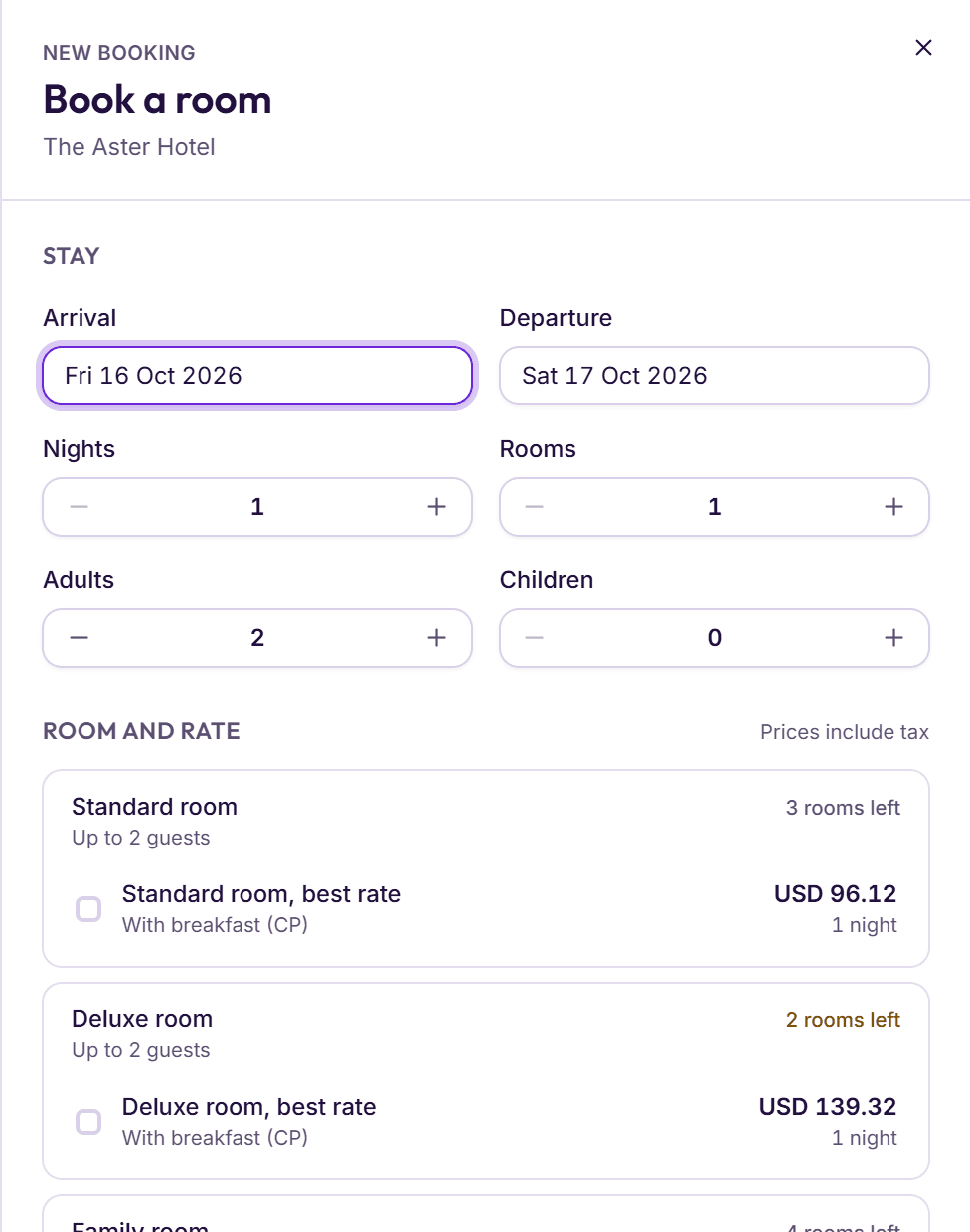
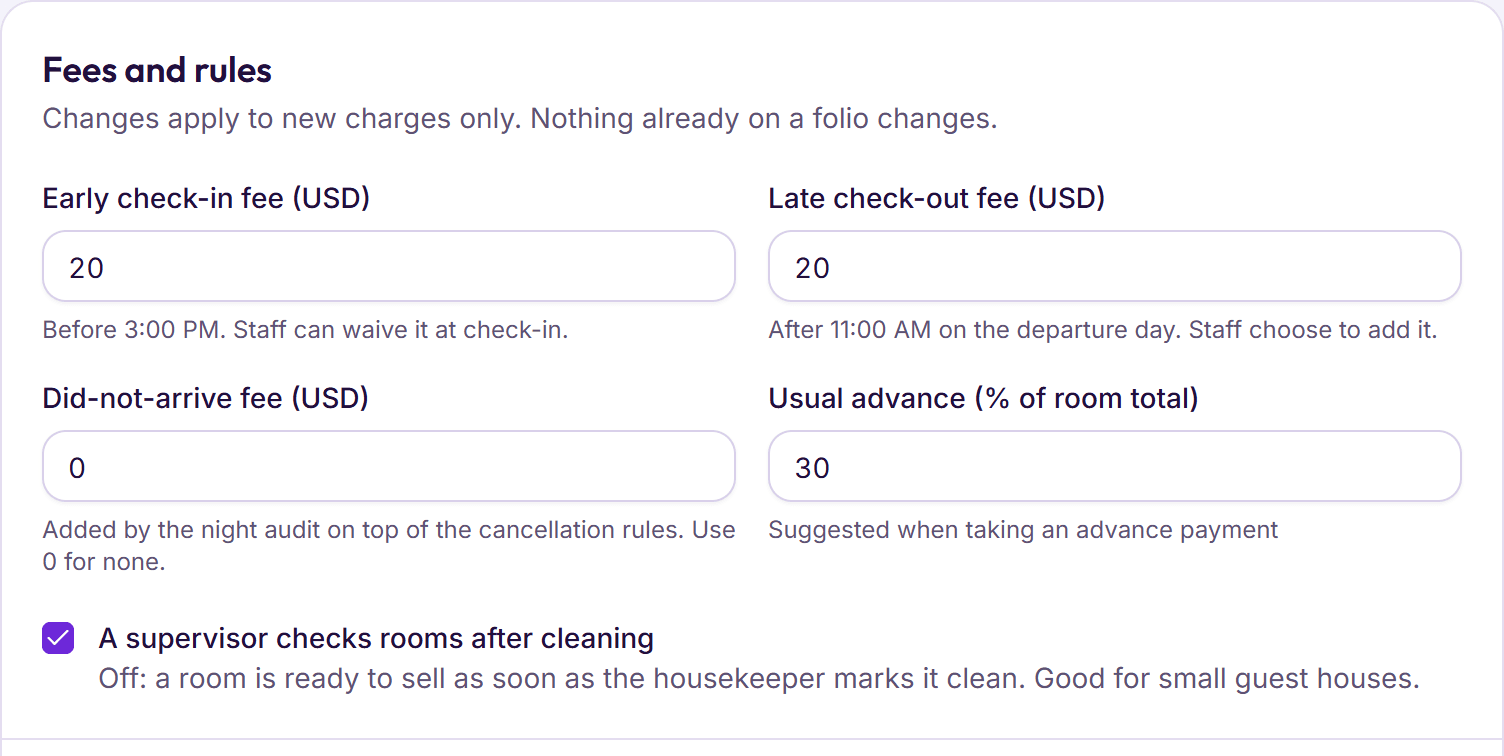
An advance payment (often called a deposit) holds the room and covers you if the guest cancels late or doesn’t arrive. The simplest rule of all: ask for what you would charge after the cut-off. If your policy charges the first night, take the first night as an advance. Then a late cancellation costs the guest exactly what they have already paid, and nobody has to chase money from a guest who isn’t coming.
Ask for less than the charge and you will have a gap to collect. On a 50% policy for a $360 stay, a $120 advance leaves $60 owed by a guest who has already decided not to come. In practice, that $60 is rarely paid. Our guide to hotel booking engines covers the usual advance rules: nothing now, the first night, a percentage or the full stay.
When to keep an advance, and when to give it back
Keeping an advance should never be a judgement made at the desk on the day. It follows the rate’s rule, the same for every guest. Work through the same steps each time.
Find the rate and its rule
Look at the rate the guest booked, not today’s rate. The rule that applies is the one shown to the guest when they booked.
Check the time of the cancellation
Compare when the guest cancelled with the cut-off, both in the hotel’s own time. A message sent at 1:50 p.m. against a 2 p.m. cut-off is in time.
Work out the charge
Before the cut-off, nothing. After it, the first night, the share or the whole stay, as the rule says.
Set the charge against the advance
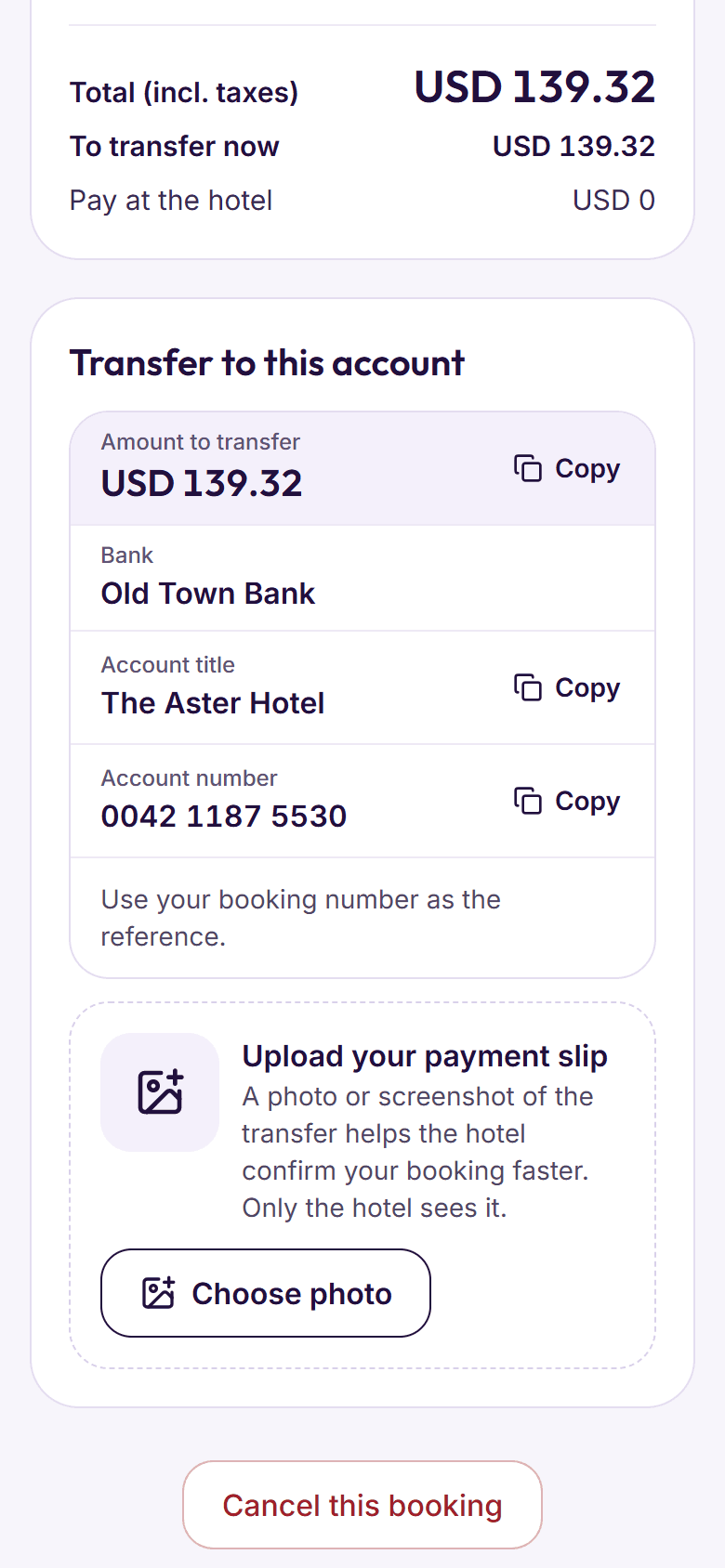
Keep the advance up to the charge. Give back anything above it, by the same way it was paid where you can, with a receipt.
Tell the guest in one line
What the rule was, what it costs them in total, and what comes back. Then record the reason on the booking.
How to explain a kept advance to a guest
Most complaints about a kept advance come from how it was explained, not the amount. A guest told “it’s our policy” feels cheated. A guest shown the rule they agreed to and the total they pay usually accepts it.
- Lead with the rule they saw. “Your booking was free to cancel until 2 p.m. on 12 March.”
- Give one total, not two amounts. Say what they pay in all, not a penalty here and an advance there.
- Say what comes back and when. If anything is due back, say how and by when it will reach them.
- Offer new dates, if you choose to. A date change for the same price often keeps the guest without giving up the money.
Guests who do not arrive
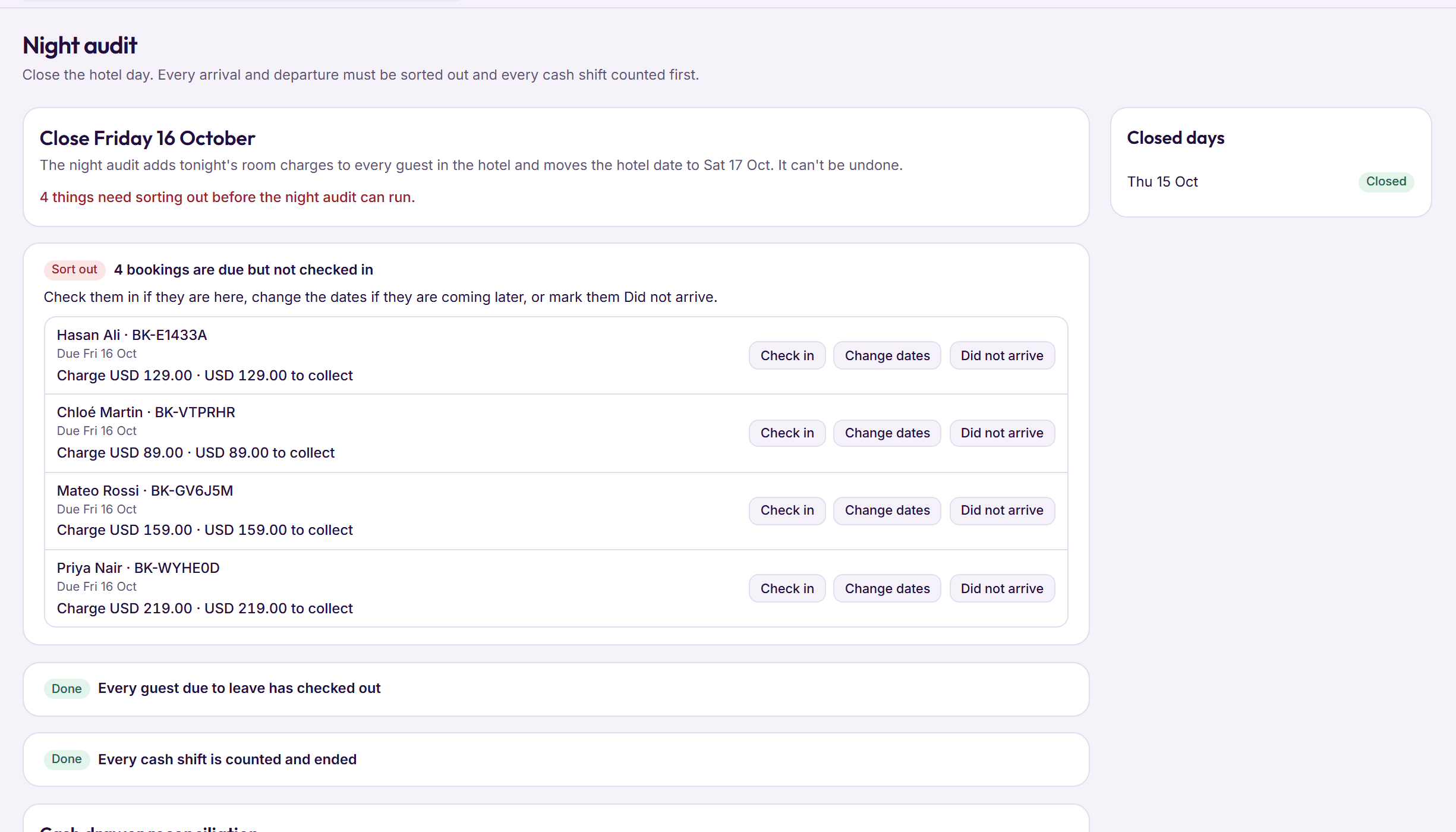
A guest who never comes and never cancels is a no-show (in BedKeys, Did not arrive). Treat it as a late cancellation: the same charge, taken from the advance, and the room freed for anyone who walks in. Do it at the end of the day, during the Night audit, not the next morning, so the room counts as free and the charge lands on the right day.
Before marking a guest as not arrived, check for a late message or a delayed flight. A guest who turns up at midnight to find their room sold is a far bigger problem than a fee taken a few hours later.
Cancellation policy wording you can copy
Use the wording below on your booking page, your rate descriptions and your confirmation messages. Change the times and amounts to suit your hotel, and keep the same wording in every place, so the guest never reads two versions.
| Policy | Wording to copy |
|---|---|
| Free, then the first night | Free cancellation until 2 p.m. hotel time, 2 days before arrival. After that, or if you don’t arrive, we charge the first night. |
| Free, then a share | Free cancellation until 2 p.m. hotel time, 7 days before arrival. After that, or if you don’t arrive, we charge 50% of your stay. |
| Free, then the whole stay | Free cancellation until 2 p.m. hotel time, 14 days before arrival. After that, or if you don’t arrive, we charge the full stay. |
| Non-refundable | This rate is paid in full when you book and can’t be cancelled or refunded. It costs less than our flexible rate. |
| Advance payment | We ask for the first night as an advance to hold your room. It comes off your bill when you check in. |
Exceptions: when to bend the rule
There will be cases where keeping the money feels wrong: a closed airport, a road washed out, a guest in hospital. Decide in advance who may make an exception (the owner or the manager, not whoever is at the desk) and write down the reason on the booking. An exception nobody recorded looks, a month later, exactly like a refund nobody can explain.
A useful middle way is to keep the advance as credit for a stay within, say, 6 months, with the expiry date in writing.
A checklist before you publish your policy
Before your cancellation policy goes live
- Each rate has its own rule: free until a cut-off, then the first night, a share or the whole stay.
- The cut-off is a date and a time in the hotel’s own time.
- The advance payment matches what you would charge after the cut-off.
- A non-refundable rate, if you sell one, costs clearly less than the flexible rate.
- The policy is shown before the guest confirms, and repeated in the confirmation message.
- The same wording is used on your booking page, your messages and at the desk.
- Guests who don’t arrive are marked at the Night audit, with the charge taken from the advance.
- Only the owner or manager can make an exception, and the reason is written on the booking.
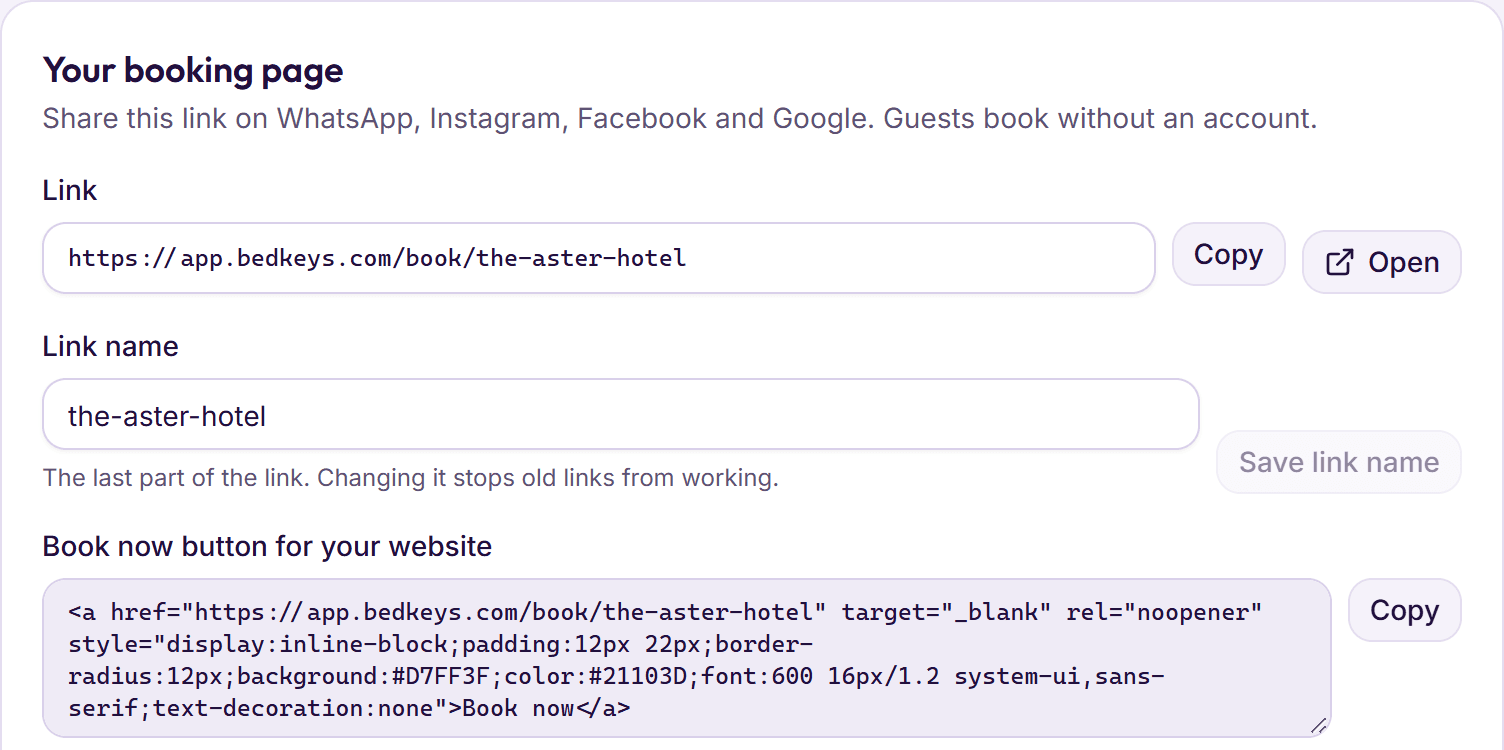
A clear policy also helps you win bookings from the booking sites, because guests compare the rules as well as the price. Our guide to direct bookings and booking-site commission shows what each booking really costs, and how to get more direct bookings covers where to share your booking link.